
Blogs


What to Do After 12th? Explore the Best Engineering Courses for a Bright Future
December 9, 2025 | By BMU
Engineering has always been a top career choice for students completing their 12th grade in the science stream, offering a world of innovation and immeasurable possibilities. For many students wondering after 12th science what to do, engineering becomes a strong and future-ready option. However, with numerous branches of engineering to choose from, finding the best engineering course after the 12th can be overwhelming.
Whether you are drawn to creating avant-garde machines, designing ground-breaking infrastructure or developing AI solutions, this guide will help you propel what to do after 12th. Let’s dive into the best engineering courses to lead you to a bright and rewarding future!
Top 10 Engineering Courses After 12th
1. Bachelor of Technology (Computer Science)
Amongst many popular engineering courses, Computer Science Engineering (CSE) is at the forefront of the digital era. This engineering discipline emphasises software development, artificial intelligence, cyber-security, algorithms and machine learning.
With the rapid rise of IT-based industries and technology, you can bag immense job opportunities in various areas such as software development, data science, cloud computing and more.
As per the reports shared by the BLS, information technology jobs, including computer science and engineering, are anticipated to rise by 15% by 2031, which is more than average. After completing a 4-year B.Tech. (CS) degree, there are ample career opportunities. Some of the potential ones are:
- Software Developer
- Full Stack Software Developer
- Data Analyst
- Data Scientist
- Database Administrator
2. Bachelor of Technology (Mechanical Engineering)
This four-year undergraduate course covers areas like thermodynamics, fluid mechanics and material science, equipping you with the skills required to design and develop mechanical systems. With mechanical engineering being significant to almost all production industries, it remains a highly stable and lucrative career choice.
At the present time, mechanical engineers are in high demand, as it is assumed to grow by 11% by the end of 2033. On average, about 19,000 plus candidates are hired in India annually. Hence, the course will be rewarding and promising. Some of the most in-demand career options are:
- Mining Engineer
- Water Engineer
- Aerospace Engineer
- Mechanical Engineer
- Automotive Engineer
3. Bachelor of Technology (Electrical and Electronics Engineering)
If you choose to pursue this 4-year course, you can explore multiple fields, such as telecommunications, automation, renewable energy and consumer electronics.
According to a recent report shared by the BLS, the employment rate of electrical and electronics engineers is anticipated to surge by 7 per cent between 2024 and 2034, much faster than the average for all occupations. Additionally, 19,700 openings for electrical and electronics engineers are anticipated each year in the coming decade. Below is a list of some in-demand career options:
- Power Engineer
- Electronics Engineer
- Control Engineer
- Telecommunications Engineer
- Instrumentation Engineer
4. Bachelor of Technology (Civil Engineering)
In this 4-year course, you can learn and master structural analysis, construction management and urban development, which will prepare you for roles in construction companies, government projects and environmental management.
The Bureau of Labor Statistics projects 6.5% employment growth for civil engineers between 2023 and 2033. Some of the top-rated career options are:
- Building Control Surveyor
- CAD Technician
- Consulting Civil Engineer
- Civil Engineering Contractor
- Design Engineer
5. Bachelor of Technology (Information Technology)
This course will prepare you to manage IT infrastructure, networks, databases and cloud computing. After completing this 4-year course, you'll have outstanding opportunities in fields such as systems administration, cybersecurity and tech consulting.
From 2024 to 2034, overall employment in computer and information technology occupations is projected to grow by 15%, which is much faster than the average for all occupations. This is largely due to increases in digital transformations across all industries and the need for employees who can help organisations effectively manage their use of technology. The promising career paths are:
- Computer Programmer
- IT Analyst
- Network Engineer
- Data Scientist
- Systems Engineer
6. Bachelor of Technology (Aerospace Engineering)
This 4–year technical course amalgamates mechanical and electrical engineering principles to train you in aerodynamics, propulsion systems, avionics and space exploration technologies. You can find exciting opportunities in aviation organisations, space agencies and research institutions, making it an exceptional career choice if you are passionate about flight and space technology.
The employment rate for aerospace engineers is estimated to grow 6% by 2034, which is faster than average for all occupations. Below are some of the major career opportunities after completing an aerospace engineering degree:
- Mechanical Engineer
- Aircraft/Spacecraft Designer
- Data Processing Manager
- Military Aerospace Engineer
- Inspector and Compliance Officer
7. Bachelor of Technology (Chemical Engineering)
A Bachelor of Technology (B.Tech) in Chemical Engineering is a four-year undergraduate degree that teaches students how to apply principles of chemistry and engineering to design, develop, and optimize chemical processes and equipment for manufacturing products.
According to the BLS report, the employment rate of chemical engineers is anticipated to surge by 3 per cent between 2024 and 2034, much faster than the average for all occupations. Additionally, approx. 21,600 openings for chemical engineers are predicted annually over the decade. Many of those openings are anticipated by the workers who will exit or transfer to different occupations. Some of the potential career paths are:
- Process Engineer
- Environmental Engineer
- Petroleum Engineer
- Energy Engineer
- Materials Engineer
8. Bachelor of Technology (Biomedical Engineering)
If you are curious about the intersection of medicine and technology, Biomedical Engineering will be the right choice. This 4-year course covers the development of medical devices, diagnostic tools and biotechnology solutions.
The employment of bioengineers and biomedical engineers is projected to grow by 5% from 2024 to 2034, faster than the average for all occupations. In addition, around 1,100 openings for bioengineers and biomedical engineers are projected every 12 months over the next decade. Some of the potential career paths are:
- Biomedical Engineer
- Biomaterial Engineer
- Clinical Engineer
- Medical Imaging Specialist
- Biomedical Research Scientist
9. Bachelor of Technology (Artificial Intelligence and Data Science)
With AI and Data Science revolutionising sectors globally, this 4-year course is gaining immense popularity. It covers machine learning, data analytics, neural networks and data management. If you pursue this course, you will be well-positioned to work on ground-breaking technologies shaping the future of business and society.
The Bureau of Labor Statistics (BLS) revealed that the employment rate for data scientists will surge by 34% between 2024 and 2034, which is much faster in comparison with other occupations. This means that the future of B.Tech. (AI & DS) graduates will be lucrative. Some of the in-demand career paths are:
- Machine Learning Engineer
- Data Engineer
- Data Analyst
- Business Intelligence Developer
- Business Analyst
10. Bachelor of Technology (Electronics and Computer Engineering)
B.Tech. Electronics and Computer Engineering is among the most sought-after courses after 12th. With an immense focus on technologies such as AI, IoT and embedded systems, you will gain hands-on experience in both hardware and software aspects.
According to the BLS, the employment of electrical and electronics engineers is expected to rise by 7% by 2034. Therefore, this four-year course will be highly promising and open ample career opportunities. Here are some of the most in-demand jobs:
- System Control Engineer
- Software Developer
- Electronic Design Engineer
- System Analyst
- Software Engineer
Key Factors for Selecting Future-Ready Engineering Courses
As the demand for proficient engineers is skyrocketing, so is the demand for pursuing engineering courses globally. Hence, it is essential to focus on courses that will remain pertinent in the future. Below are the major key factors to consider:
- Emerging Technologies
- Industry Demand
- Interdisciplinary Learning
- Global Relevance
- Adaptability to Change
- Job Opportunities and Career Growth
- Accreditation and Quality of Education
Eligibility Criteria for the Best Engineering Course after 12th
You need to fulfil the required eligibility criteria to be admitted to an engineering course after 12th grade, which is mentioned below:
- You must clear your 12th standard with a minimum aggregate of 60% from any recognised board in four subjects- Physics, Mathematics, English and one additional subject from Chemistry, Biology or Technical Vocational subjects.
- IB Board with a minimum score of 24 in Physics, Mathematics, Chemistry and Biology.
- For Cambridge/IGCSE examinations, Physics, Mathematics, Chemistry at the A Level and English at the AS Level.
- You need to clear one of the following entrance examinations: JEE / SAT / CUET or the University’s entrance exam with a minimum of 60 percentile. However, the minimum criteria may vary from one university to another.
Realise Your Dreams with BML Munjal University’s Revolutionary Engineering Courses
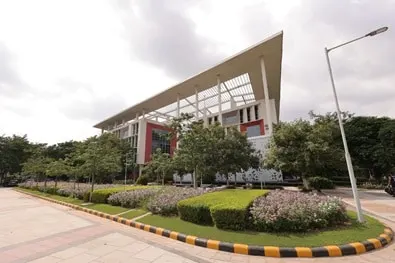
Founded by the Hero Group, BML Munjal University (BMU) is an eminent private university located in the heart of Gurgaon, India. It is recognised for its dedication to providing high-quality education and fostering advancements. The university offers all three levels across numerous domains, including engineering.
The sole aim of the university is to develop technically sound engineers who will emerge as thought leaders as well as entrepreneurs capable of tackling intricate issues with apt solutions. Here are the three major undergraduate courses the university offers-
- Bachelor of Technology (Mechanical Engineering)
- Bachelor of Technology (Electronics and Computer Engineering)
- Bachelor of Technology (Computer Science and Engineering)
Additionally, the university offers strong career support to help aspiring minds secure internships and job placements with industry giants. The university’s strong focus on research advancement and global exposure makes it a leading choice for students seeking a comprehensive and forward-thinking education.
To Consolidate
Selecting the right engineering course after the 12th is a high-stakes decision that can make or break your career. Every course mentioned above offers a distinct blend of knowledge, particular skills and opportunities in a rapidly evolving world.
Regardless of whether you are keenly intrigued by the digital world, ground-breaking research or infrastructure, engineering offers you a strong foundation for a rewarding and promising career. With strong career support and internships, BML Munjal University (BMU) is committed to helping you achieve your dreams. Apply today and take the first step toward a bright engineering career!
FAQs
After 12th Science, you can choose engineering, medical, pharmacy, biotechnology, BSc programmes, IT courses, design or management. Career paths depend on interest in technology, healthcare, research or applied sciences.
After 12th Commerce, you can pursue B.Com, BBA, CA, CS, CMA, Economics, Finance, Banking, Management or Law. These fields offer careers in business, accounting, taxation, banking and corporate sectors.
After 12th Arts, you can explore BA programs, Journalism, Psychology, Sociology, Fine Arts, Fashion Design, Law, Hotel Management or Social Work. These fields open creative, communication and public service career opportunities.
The “best” course after 12th depends totally on your interest and career goals. Popular choices include Engineering, MBBS, BBA, B.Com, BSc, BA, Design, Nursing, Law and Computer Science.
All degrees suit girls equally; career choices should depend on interest, not gender. However, many girls commonly choose BBA, B.Tech, MBBS, Nursing, BSc, Psychology, Fashion Design, BCA or Law due to strong career growth.
Related Blogs

What Are the Best Commerce Courses After 12th? Top Options Explained
Finished your class 12th with the commerce stream? Confused about what to do next? Then you are not alone. Once you start searching for options, yo...

Which is the Best College for Engineering in India in 2026?
There’s usually a quiet pause before someone types it. Not dramatic. Just a moment of hesitation, often late at night, when a student or parent s...

Top 10 Engineering Courses to Secure a High-Paying Job
Most students pick an engineering branch the way they pick a cricket team, i.e., based on loyalty, peer pressure or what someone's cousin is doing. Ve...

Top 30 Artificial Intelligence Projects for Students
Artificial intelligence is no longer just a tech topic. It’s being discussed in parliament sessions, policy meetings and global summits. Conferences...

Startup Ideas for Students: 10+ Profitable & Low-Investment Options in 2026
What if the idea you start in your hostel room could become your full-time career tomorrow? This is no longer a possibility- it is already happenin...

Top 12 Most Demanding Courses in Future: A Detailed Career Guide
With the changing dynamics of industries due to technology, sustainability and globalisation, students are increasingly seeking courses that provide l...