
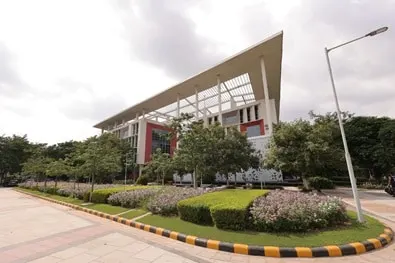
Inside BMU’s AI-Driven Classrooms: Experiential Learning in Management Education


"Tell me and I forget, teach me and I may remember, involve me and I learn.”
Benjamin Franklin
The world around us is changing faster than ever before. Artificial Intelligence is transforming industries, workplaces are becoming more dynamic and the skills required to succeed are evolving continuously. In such a rapidly changing environment, traditional classroom teaching alone is no longer enough. Education today is not simply about delivering information. It is about creating experiences that help students think critically, solve problems creatively and adapt confidently to uncertainty.
How BMU Is Responding to the Changing Needs of Education
At the School of Management, BML Munjal University (BMU), this transformation in education is already visible inside the classrooms. Learning is no longer confined to lectures, PowerPoint presentations or textbook-based discussions. Instead, classrooms are becoming spaces of experimentation, interaction, reflection and innovation where students actively participate in the learning journey.
As Alvin Toffler once said,
“The illiterate of the 21st century will not be those who cannot read and write, but those who cannot learn, unlearn and relearn.”
This philosophy strongly reflects the teaching culture at BMU, where active learning and experiential pedagogy are at the heart of management education.
One of the most engaging examples can be seen in the way Consumer Behaviour is taught. Instead of simply explaining theories through slides, students participate in live classroom experiments. In one such activity, students are invited to participate in a blind juice-tasting experiment conducted in multiple phases. Initially, students taste different juices without knowing the brands. Later, additional information such as “organic,” “international brand,” or premium pricing is introduced before finally revealing the actual brands.
Interestingly, student responses change significantly at every stage. The same product suddenly appears healthier, more premium or more appealing depending on the context presented. Through this simple but powerful activity, students experience firsthand how consumer perception, branding, heuristics, pricing and product positioning influence decision-making. Theories that might otherwise remain abstract become memorable and meaningful.
How AI Simulations Enhance Business Learning
Similarly, classrooms focusing on Sales and Distribution are being transformed through AI-enabled simulations. Rather than discussing supply chain challenges only theoretically, students engage with custom-built simulations that recreate real-world distribution dilemmas. They experiment with pricing strategies, channel decisions, distributor conflicts and market expansion choices while observing outcomes in real time.
These simulations create an immersive learning environment where students can analyse consequences, make decisions under uncertainty and understand practical business realities. The classroom effectively becomes a business laboratory where learning emerges through action and reflection.
The Role of AI in Teaching, Learning and Innovation
Another exciting dimension of BMU’s pedagogy is the integration of Artificial Intelligence into teaching and innovation. Instead of viewing AI as a challenge to education, faculty members are exploring how AI can become a tool for creativity, critical thinking and problem-solving.
Initiatives such as “AI For Marketing” encourage student teams to design AI-powered analytics tools and innovative business solutions. Students work on projects involving data analysis, consumer insights, predictive models and AI-assisted decision-making systems. Many of these projects are later presented at leading business schools and academic platforms across India, giving students exposure beyond the classroom and helping them develop confidence as innovators.
Transforming Leadership Through AI-Powered Storytelling
Perhaps one of the most unique and engaging learning experiences at BMU is the use of AI-enabled storytelling and role-play inspired by the Mahabharat. Generative AI tools are used to visually recreate characters, conflicts and leadership situations from the epic. Students then analyse ethical dilemmas, leadership styles, negotiation strategies and organisational behaviour through these narratives.
The discussions become deeply immersive because students are not just reading about management concepts but emotionally connecting with them through storytelling and reflection. Ancient wisdom and modern management principles come together in a highly engaging manner, helping students appreciate the human side of leadership and decision-making.
As Peter Drucker famously stated,
“The best way to predict the future is to create it.”
Reimagining Student Evaluation Through Project-Based Assessments
This spirit of innovation is also reflected in the university’s approach to assessment. In the age of AI, repetitive assignments and traditional closed-book examinations are no longer sufficient to measure real learning. If AI tools can generate textbook answers instantly, education must move toward assessments that test originality, creativity, application and critical thinking.
At BMU, project-based assessments therefore play a central role in student evaluation. Students work on industry-oriented projects, analytics dashboards, social media listening exercises, innovation prototypes and research-based assignments. These projects encourage collaboration, communication and practical problem-solving while preparing students for real-world managerial challenges.
Another defining feature of BMU’s learning ecosystem is the strong integration of research within teaching. Students actively collaborate with faculty members on research projects involving data collection, literature reviews, experimentation, analytics and innovation. This exposure helps students understand that research is not merely an academic exercise but a process of discovering solutions to meaningful societal and business problems.
Ultimately, the classrooms at BMU are evolving into spaces that nurture curiosity, creativity and confidence. Faculty members are increasingly taking on the role of mentors and facilitators rather than simply being providers of information.
At the School of Management, BML Munjal University, innovation in pedagogy is not viewed as a passing trend. It is a long-term commitment toward creating future-ready learners who can navigate complexity, embrace change and contribute meaningfully to society.
Because in the end, education is not just about preparing students for exams. It is about preparing them for life.