
5 Key Factors Shaping the Future of Engineering in India in 2026 & Beyond


Admissions Enquiry

India has always been known as a nation of problem-solvers. From building massive infrastructure projects to powering global IT systems, engineers have played a silent yet powerful role in shaping the country. However, as we step into 2026, engineering in India is no longer just about traditional degrees or routine jobs. It is about innovation, adaptability and solving real-world challenges at scale.
The future of engineering in India looks promising, technology-driven and deeply connected to global needs. Let’s explore how this transformation is unfolding.
The Future of Engineering in India
So, where is engineering headed in recent years? Has it reached saturation or is there still room for growth?
The answer is very simple, engineering in India is evolving, not declining. While the nature of engineering jobs is changing, demand for skilled engineers continues to rise across industries, technologies and borders. Below are the top 5 factors shaping the future of engineering in India in 2026 and beyond:
1. The Ever Growing Global Demand for Indian Engineers
Indian engineers continue to be in demand across developed economies such as the US, UK, Germany, France and Australia. Historically, India received over 50% of US H-1B visas, largely due to the strong presence of Indian software and technology professionals. However, by 2026, the narrative has shifted.
2. The Rise of Remote Work: Engineering Without Borders
One of the biggest changes shaping engineering careers in 2026 is remote global work.
Engineers today are:
- Working for international companies without relocating
- Collaborating with global teams from India
- Freelancing or consulting for overseas clients
This shift has reduced dependency on visas and opened new income streams, especially for software, AI, data, cybersecurity and design engineers. Thus, engineering careers are no longer limited by geography.
3. A Diverse Range of Firms Hiring Engineers
Within India, engineering remains the backbone of employment across both public and private sectors.
Traditional employers such as Indian Railways, Indian Army, India Post and PSUs like NTPC, ONGC, GAIL and SAIL continue to recruit engineers in large numbers.
At the same time, private-sector demand has expanded rapidly. IT and technology giants such as TCS, Infosys, Wipro, IBM and emerging SaaS firms hire engineers from all disciplines, training them in software development, cloud computing, AI systems and digital operations.
Beyond IT, industries such as-
- Semiconductors
- Electric vehicles (EVs)
- Space technology
- Robotics and automation
- are becoming major job creators for engineers in 2026.
4. Changing Engineering College Regulations
India now has nearly 9,000 engineering colleges and quality control has become more important than quantity.
Regulatory bodies have tightened norms around:
- Fee transparency
- Faculty qualifications
- Infrastructure standards
- Industry collaborations
With the implementation of NEP 2020, engineering education is becoming more flexible and multidisciplinary. Students can now combine engineering with management, design or entrepreneurship, making them more industry-ready, making engineering one of the most popular career choices after higher secondary education.
5. Parental Influence and Student Awareness
Parents indeed play a significant role in India in the process of decision-making for their children's careers. Since the 1990s, most parents dream of their children studying nothing but engineering.
Also, the number of students "wanting" to pursue an Engineering degree has significantly gone up. Students are now aware of the fact that "engineering" is a graduation degree and a decent-paying job is a possibility immediately after graduation.
While parental pressure was largely responsible for driving engineering admissions earlier, students in 2026 are far more informed. They understand that:
- An engineering degree offers a strong ROI
- Jobs are available immediately after pursuing engineering
- Education loans are accessible and repayable for an engineering degree
Given all these factors, more and more students are drawn to engineering degrees nowadays.
10 Emerging Engineering Branches in 2026
Engineering in 2026 is no longer confined to a few traditional disciplines. Rapid technological advancement, sustainability goals and digital transformation have given rise to new-age engineering branches that align closely with industry demand and future careers. These emerging fields focus on innovation, automation, data and real-world impact.
Here are the top 10 emerging engineering branches in 2026 that students should consider:
- Artificial Intelligence & Machine Learning Engineering
AI and ML have moved from being niche skills to core technologies across industries. Engineers in this field work on intelligent systems, automation, predictive analytics and decision-making models used in healthcare, finance, manufacturing and smart cities.
Career Scope: AI Engineer, ML Engineer, Automation Specialist
- Data Science & Big Data Engineering
With organisations relying heavily on data-driven decisions, data engineers are in high demand. This branch focuses on collecting, processing, analysing and securing massive datasets using advanced tools and algorithms.
Career Scope: Data Scientist, Data Engineer, Business Analytics Consultant
- Cybersecurity Engineering
As digital systems expand, protecting data and networks has become critical. Cybersecurity engineers design secure systems, prevent cyber threats and ensure compliance across industries such as banking, government and IT services.
Career Scope: Cybersecurity Analyst, Ethical Hacker, Security Architect
- Robotics & Automation Engineering
Robotics and automation are transforming manufacturing, healthcare, agriculture and logistics. Engineers in this domain design intelligent machines, control systems and automated processes that improve efficiency and precision.
Career Scope: Robotics Engineer, Automation Engineer, Control Systems Specialist
- Internet of Things (IoT) Engineering
IoT engineering connects systems that link devices, sensors and software to collect and exchange data. It plays a key role in smart homes, industrial automation, healthcare monitoring and urban infrastructure.
Career scope: IoT Engineer, Embedded Systems Developer, Smart Systems Architect
- Semiconductor & VLSI Engineering
With India pushing domestic chip manufacturing, semiconductor engineering has gained strong momentum. This branch focuses on chip design, fabrication, testing and integrated circuit systems.
Career Scope: VLSI Design Engineer, Chip Architect, Semiconductor Process Engineer
- Renewable Energy & Sustainable Engineering
Driven by climate goals, this branch focuses on solar, wind, EV infrastructure, green buildings and sustainable materials. Engineers contribute to energy efficiency and environmental protection.
Career Scope: Renewable Energy Engineer, Sustainability Consultant, EV Systems Engineer
- Aerospace & Space Technology Engineering
India’s growing space sector and private space-tech startups have expanded opportunities in aerospace engineering. Engineers work on aircraft design, satellites, propulsion systems and space exploration technologies.
Career Scope: Aerospace Engineer, Satellite Systems Engineer, Space Research Analyst
- Biomedical & Biotechnology Engineering
This field combines engineering with medical science to develop healthcare devices, diagnostics and pharmaceutical solutions. It is especially relevant in post-pandemic healthcare innovation.
Career Scope: Biomedical Engineer, Biotech Research Engineer, Clinical Technology Specialist
- Nano Technology & Advanced Materials Engineering
Nanotechnology focuses on manipulating materials at atomic and molecular levels to create stronger, lighter and smarter products used in electronics, medicine, energy and manufacturing.
Career Scope: Nanotech Engineer, Materials Scientist, Research Engineer
Final Thoughts: So, Where is Engineering Headed?
Science and technology have always been unpredictable and that is exactly why engineers will never become irrelevant.
Engineering in India has not reached saturation. It is simply transforming. The future belongs to engineers who:
- Learn continuously
- Adapt across disciplines
- Think globally
- Build solutions with purpose
The next generation of Indian engineers will not just follow instructions; they will design the future.
FAQs
The future of engineering in India is technology-driven, skill-focused and globally connected, with strong demand in AI, sustainability, infrastructure, semiconductors and digital innovation sectors.
Engineers skilled in artificial intelligence, data science, cybersecurity, renewable energy and semiconductor technology have the strongest future due to high demand across industries.
By 2030, engineering fields like artificial intelligence, robotics, renewable energy, electric vehicles, data science and semiconductor engineering will offer maximum growth and career stability.
NEP 2020 reforms engineering education by promoting multidisciplinary learning, flexible curricula, skill-based training, internships, industry collaboration and research-focused, student-centric academic structures.
Yes. Engineering is worth it in 2026 for students who continuously upskill, gain practical experience, adapt to emerging technologies and align their learning with industry needs.
For 2050, engineering branches like artificial intelligence, climate and sustainability engineering, biotechnology, robotics, space technology and advanced materials will remain highly relevant.
Related Blogs
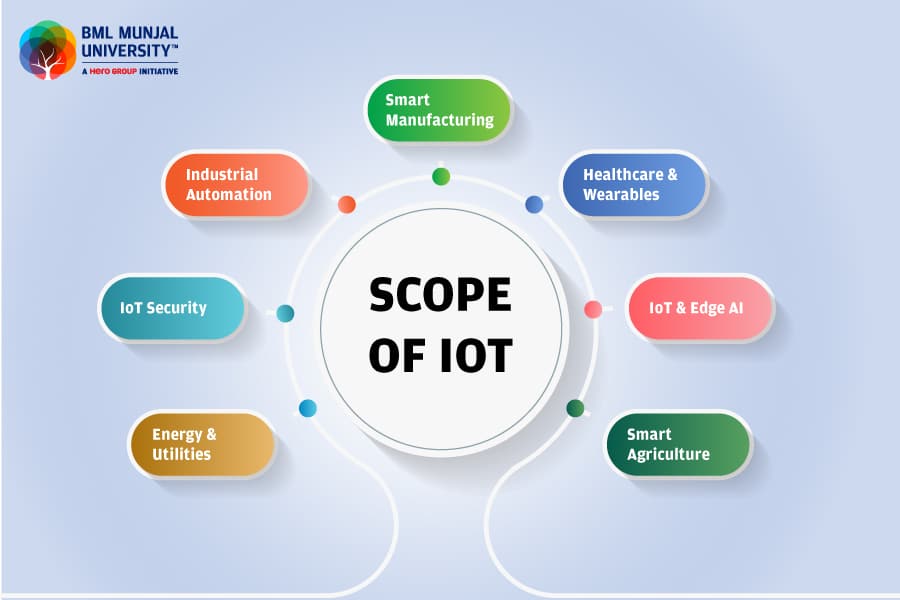
Scope of IoT in India: Careers, Skills and What Comes Next
Key Takeaways The scope of IoT is wide: about 21.1 billion connected devices in 2025, heading to 39 billion by 2030. The IoT future scope in I...

Top B.Tech. Mechanical Engineering Specialisations in India for Working Professionals
If you are working in manufacturing, automotive, energy or any mechanical domain and your career has hit a ceiling, the missing piece is usually your ...
Automobile Engineering vs Mechanical Engineering – Which One Should You Choose After 12th?
The 12th class results are barely a memory and there's already a form to fill, a stream to lock in and a deadline closing in. For a lot of science stu...
10+ Best Engineering Colleges in India 2026: Top Government & Private Options with Rankings & Placements
Key Takeaways- Top government engineering colleges: IIT Madras, IIT Delhi, IIT Bombay, IIT Kanpur and IIT Kharagpur. Top private engineering c...

Top 10 Engineering Courses to Secure a High-Paying Job
Most students pick an engineering branch the way they pick a cricket team, i.e., based on loyalty, peer pressure or what someone's cousin is doing. Ve...

Top 10 Software Engineering Courses after 12th
Choosing the right software engineering course after 12th is the first and most important step toward a successful tech career. With software becoming...