
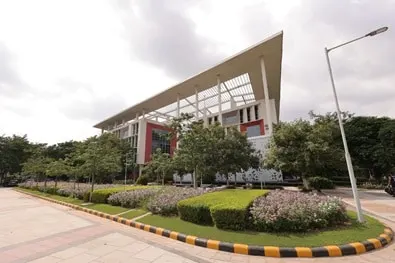
BBA Admission 2026: Take the First Step Towards Your Corporate Journey


Admissions Enquiry
Summary: A BBA (Bachelor of Business Administration) is a 3- to 4-year undergraduate programme that teaches you how businesses work, from marketing and finance to HR and operations. BBA admission 2026 is now open at most private universities in India. To be eligible, you need to have passed Class 12th from a recognised board with a minimum of 60% aggregate marks. Entrance exams like CUET or UGAT are optional at many colleges, including BMU, where admission is based on academic performance and a personal interview.

You just got your Class 12th results and now you are staring at a wall of options. Thinking which one to choose- BBA, B.Com, BCA or Integrated MBA. Everyone has an opinion, but what you need are facts.
This guide covers everything about BBA admission 2026 in one place- who can apply, what it costs, which entrance exams matter, which specialisation makes sense for you and what your career looks like on the other side. By the end, you will know exactly whether BBA is the right call.
What Is a BBA Course and Is It Worth It in 2026?
BBA stands for Bachelor of Business Administration. It is a 3 to 4-year undergraduate programme that gives you a working knowledge of how businesses operate, marketing, finance, human resources, operations, data and strategy.
Unlike a B.Com (which leans heavily towards theory) or a BCA (which is tech-focused), a BBA is built around practical business skills. You work on live projects, real case studies and industry internships from semester one. The goal is simple: by the time you graduate, you should be able to walk into a corporate role and contribute from day one.
Is it worth it in 2026? Here is what the numbers say-
- The BLS projects 7% employment growth in market research and business analytics roles between 2024 and 2034, faster than most other sectors.
- Sectors hiring BBA graduates in 2026: digital marketing, data analytics, FMCG, banking, consulting, e-commerce and logistics.
- BBA also works as a launchpad for an MBA, which takes your earning potential from Rs 4-5 LPA (entry-level) to Rs 10-20 LPA.
If you want to build a career in business, corporate or a startup, BBA is the most direct route after 12th.
Who Can Apply for BBA Admission 2026? Eligibility Criteria Explained
PCM, PCB, or Commerce? Here's what you need for BBA 2026
Students often worry about whether their stream blocks them from BBA admission. It does not. Here is a simple breakdown-
- Commerce students: Strongest match as business studies and economics are direct BBA preparation.
- Science students: Fully eligible. A strong analytical foundation is an advantage in Finance and Analytics specialisations.
- Arts students: Strong communication skills work well for HR, Marketing and Entrepreneurship tracks.
What matters is your Class 12th aggregate and your performance in the personal interview. Before you fill out any application, check whether you meet the basic BBA eligibility criteria. Here is what most universities in India require-
| Criteria | Requirement |
| Education | Class 12th pass from a recognised board (CBSE, ICSE, state boards) |
| Stream | Any stream- Commerce, Science or Arts |
| Minimum Marks (General) | 50-60% aggregate (varies by college) |
| Age | Minimum 17 years at the time of admission |
| IB Diploma (International) | 24 points with 3 HL and 3 SL subjects (IBO Geneva) |
| Cambridge/IGCSE | 3 subjects at A Level + English at O Level |
| NRI / OCI / PIO / Foreign Nationals | Qualifying exam recognised by AIU with 60% aggregate |
| Entrance Exam | CUET/UGAT/SAT scores can strengthen your application, but are not mandatory. |
What Are the BBA Entrance Exams in 2026?
Many students assume BBA admission works the same way as engineering or medicine, by cracking a single national exam and you are in. It does not work like that. Most private universities do not make entrance exams mandatory. Here is a breakdown of the exams that exist and what they actually mean for your application-
| Exam | Conducting Body | Sections | Useful For |
| CUET | NTA | English, General Test, Domain subjects | Central and many private universities |
| UGAT | AIMA | English, Maths, GK, Reasoning | Wide private university network |
| IPMAT (Indore) | IIM Indore | Quant, Verbal | IIM Indore IPM (5-yr BBA+MBA) |
| IPMAT (Rohtak) | IIM Rohtak | Quant, Verbal, Logical | IIM Rohtak IPM (5-yr BBA+MBA) |
| JIPMAT | NTA | Quant, DI, Verbal | IIM Jammu and IIM Bodhgaya |
| SAT | College Board | Reading, Writing, Maths | International |
At BMU, you do not need to sit any of these exams to apply. However, if you have a CUET, UGAT or SAT score, it can give you an edge during evaluation. The admission decision is based on your Class 12th marks and how you perform in the personal interview.
How Much Does a BBA Course Cost in 2026? Fees Explained
BBA fees in India vary significantly depending on the type of institution. Here is an honest breakdown-
| College Type | Annual Fee Range | What You Get |
| Government / Central universities | Rs 10,000 - Rs 50,000 | Low cost; limited industry exposure |
| Private colleges (mid-tier) | Rs 70,000 - Rs 1,50,000 | Standard curriculum, some placements |
| Private universities (top-tier) | Rs 2,00,000 - Rs 3,50,000 | Industry partnerships, global curriculum, strong placements |
| BMU (BBA / BBA Hons) | Rs 3,35,000 per year | Imperial College London co-designed curriculum, partnerships and up to 100% scholarship |
If fee is a concern, BMU offers merit-based scholarships that can reduce your annual cost significantly. Students with strong Class 12th scores and interview performance are evaluated for scholarship awards at the time of admission.
What Is the BBA Admission Process Step by Step?
Here is exactly how BBA admission 2026 works at most private universities-
- Check eligibility: Confirm you have 60% aggregate in Class 12th (or are awaiting results).
- Register and apply: Fill the online application form, upload documents (mark sheets, ID proof) and pay the application fee.
- Entrance exam (if applicable): Sit for CUET, UGAT or the university's own test if required. This step is optional at some universities.
- Personal interview (PI): Shortlisted candidates are called for a PI. You are evaluated on analytical thinking, communication skills, creativity and fit for the programme.
- Provisional offer: BMU extends provisional offers even to students awaiting Class 12th results. Final confirmation happens after result submission.
- Fee payment and seat confirmation: Pay the semester fee to lock in your seat.
BBA vs B.Com: Which Pays Better?
This is the comparison most students are actually looking for. Here is an honest breakdown-
| Course | BBA | B.Com |
| Focus | Business management & leadership | Accounting, taxation, commerce theory |
| Best for | Corporate career, MBA prep, entrepreneurship | CA/CS, government exams, accountancy roles |
| Practical exposure | High- live projects, internships, industry visits | Low to medium |
| MBA after | Natural next step | Possible but requires adjustment |
| Earnings potential | Rs 4-5 LPA (entry), Rs 10-30 LPA (post-MBA) | Rs 3-5 LPA (entry) |
If you are undecided between management and a specific technical field, BBA gives you the broadest career base. You can still move into finance, tech strategy, analytics or even start something of your own.
What Are the Best BBA Specialisations in 2026?
Specialisations in 2026 are not optional. Companies hire for domain expertise, not just a general management degree. Here are the top BBA specialisations and what each one leads to-
| Specialisation | Career Roles | Why It Is Growing |
| Business Analytics | Data analyst, business analyst, market research | Every company needs people who can read data and make decisions |
| Digital Marketing | SEO specialist, performance marketer, brand manager | Digital ad spend in India crossed Rs 40,000 crore in 2024 |
| Finance | Investment analyst, financial planner, banking | BFSI is the largest white-collar employer in India |
| Marketing | Brand manager, sales lead, product marketing | Every product and service needs a go-to-market strategy |
| Human Resources | HR executive, talent acquisition, L&D | People management is a C-suite priority post-pandemic |
| Entrepreneurship | Founder, startup consultant, product manager | India added 100+ unicorns since 2020; startup ecosystem is hiring |
| International Business | Import-export manager, global supply chain | India's merchandise trade crossed $1.2 trillion in FY24 |
Choose your specialisation based on what you actually enjoy, not just what sounds safe. A student passionate about data will outperform a reluctant finance major every time.
What Is the BBA Syllabus? Semester-Wise Breakdown
The BBA syllabus is structured to build from fundamentals to application. Here is a typical semester-wise breakdown (specific subjects vary by university)-
| Semester | Core Subjects |
| 1 | Principles of Management, Business Communication, Financial Accounting, Microeconomics, Business Mathematics |
| 2 | Macroeconomics, Organisational Behaviour, Marketing Management, Business Law, Business Statistics |
| 3 | Human Resource Management, Financial Management, Operations Management, Research Methodology, Entrepreneurship |
| 4 | Strategic Management, Consumer Behaviour, Cost Accounting, Business Ethics, Elective I |
| 5 | International Business, Digital Marketing, Supply Chain Management, Elective II, Summer Internship Project |
| 6 | Project Management, Corporate Governance, Elective III, Industry Research Project, Placement Preparation |
| 7 (Hons) | Advanced Specialisation Courses, Capstone Project, Leadership Development |
| 8 (Hons) | Dissertation / Research Project, Global Immersion Module, Industry Mentorship |
At BMU, 45% of the learning is experiential, with live projects, client briefs, workshops, and industry visits built into every semester, not treated as add-ons.
What Career Can You Build After BBA?
BBA graduates in 2026 have more options than any previous batch, largely because business roles now span industries that did not exist a decade ago.
| Job Role | Starting Salary | Hiring Sectors |
| Business Development Executive | Rs 3.5 - 5 LPA | Startups, FMCG, SaaS |
| Digital Marketing Executive | Rs 3 - 5 LPA | E-commerce, agencies, media |
| HR Executive | Rs 3 - 4.5 LPA | IT, consulting, retail |
| Financial Analyst | Rs 4 - 6 LPA | Banking, NBFC, consulting |
| Sales Executive | Rs 3 - 4 LPA + incentives | Insurance, real estate, FMCG |
| Business Analyst | Rs 4.5 - 7 LPA | IT, logistics, consulting |
| Operations Manager (post MBA) | Rs 10 - 18 LPA | Supply chain, manufacturing, retail |
If you want to maximise earnings after BBA, pair it with an MBA. The jump from Rs 4-5 LPA (BBA entry level) to Rs 10-30 LPA (post-MBA senior roles) is well-documented and consistent across sectors.
What are the Higher Studies Options After BBA?
BBA is a strong foundation, not a ceiling. Here is where most graduates go after completing the degree-
- MBA (2 years): The most common route. Adds specialisation depth, opens senior management roles and significantly raises earning potential. MBA entrance exams: CAT, XAT, MAT, GMAT, GRE.
- Integrated MBA (if starting fresh): If you have not started your BBA yet, consider the 5-year BBA+MBA integrated route, you save a year and avoid MBA entrance exam pressure.
- PGDM: Postgraduate Diploma in Management is similar to MBA. It is offered by autonomous B-schools like XLRI, SP Jain, MDI.
- Specialised masters abroad: MSc in Finance, MSc in Marketing, MSc in Business Analytics from universities in the UK, USA, Canada or Australia.
- CA / CPA: If your BBA specialisation was Finance, a Chartered Accountancy is a high-earning parallel path.
- Government exams: UPSC, SSC, banking PO exams- a BBA degree provides a strong base for these.
What Makes BML Munjal University the Perfect Fit for Your BBA in 2026?
BML Munjal University, founded by the Hero Group, is consistently ranked among the top private universities for BBA in Delhi NCR. BMU's BBA programme is built with Imperial College London, one of the world's top 10 universities. The curriculum is designed to match global business standards, not just Indian classroom conventions. You learn frameworks that companies like McKinsey, Deloitte and Google actually use.
Here is what makes the BBA programme at BMU different from what most colleges offer-
No Mandatory Entrance Exam
Admission is based on your Class 12th marks and a personal interview. This means your four years of hard work in school, not a single exam day, determine your entry. Standardised test scores (CUET/UGAT/SAT) can strengthen your application, but are not required.
3-Year Professional Portfolio
Every year, you add internships, live projects and capstone work to a portfolio you actually graduate with. By the time you finish, you're walking into interviews with proof of work, not just a transcript.
Industry Mentorship from Day 1
You're paired with corporate mentors from semester one through CATALYST, BMU's Industry Connect Spine. The curriculum is co-designed and co-taught by industry practitioners, so mentorship isn't an add-on, but is built into how you're taught.
200+ Corporate Partners
BMU's industry network spans 200+ companies, including Zomato, JLL, IPAC and OneBanc, for internships, live projects and placements. This is the pipeline that turns classroom learning into real job offers.
Scholarship Opportunities
Up to 100% merit scholarship available for eligible students. With a strong Class 12th score and PI performance, you may qualify for a fee waiver that makes BMU significantly more affordable than it appears at listed fees.
Other Key Differentiators
- 45% experiential learning with live projects, internships and client briefs from semester one
- Faculty from MIT, Stanford, Imperial College, IITs and IIMs
- Propel Incubator for students who want to build their own ventures during the programme
- Partnerships with Zomato, JLL, OneBanc and upGrad for guest lectures, internships and live projects
Conclusion: Is BBA the Right Step for You in 2026?
Here is a simple way to decide. BBA is right for you if-
- You want a career in business, management, marketing, finance, analytics or entrepreneurship.
- You are planning an MBA later and want the strongest possible undergraduate foundation.
- You want a degree that teaches you how businesses actually work, not just theory.
- You want to start a career by 21-22 without a long detour through highly specialised technical education.
BBA admission 2026 windows are open now. Private universities like BMU fill seats fast, especially for scholarship slots. If you have your Class 12th results and meet the 60% eligibility mark, there is no reason to wait. Apply now for BBA Admission 2026 at BML Munjal University.
FAQs
You need to have passed Class 12th from a recognised board. Most colleges require 50-60% aggregate. At BMU, the minimum is 60%. All streams are accepted (Commerce, Science and Arts). There is no upper age limit, but you must be at least 17 years old at the time of admission.
No, not at most private universities. At BMU, admission is based on Class 12th marks and a personal interview. Entrance exam scores (CUET, UGAT, SAT) are optional but can strengthen your application. Central universities typically require CUET.
Yes. BBA is open to students from all streams (Science, Arts and Commerce). Your 12th stream does not restrict you. What matters is your aggregate marks and your performance in the personal interview.
The BBA and BBA (Hons) fee at BML Munjal University is Rs 3,35,000 per year. However, BMU offers merit-based scholarships of up to 100%, which can significantly reduce this amount depending on your Class 12th performance and interview outcome.
BBA is a 3-year degree. BBA (Hons) is a 4-year programme with greater specialisation depth, more research exposure and a stronger academic profile for students planning postgraduate studies. At BMU, the 4th year includes a dissertation or global immersion module.
Entry-level BBA graduates earn between Rs 3.5 and Rs 5 LPA in roles like business development, digital marketing, HR, sales and financial analysis.
BBA is arguably the best preparation for an MBA. The curriculum directly overlaps, giving you a significant advantage when you enter an MBA programme. At BMU, the Integrated BBA+MBA option lets you combine both into a single 5-year programme.
Yes. Most universities, including BMU, accept applications from students who are awaiting their results. BMU issues provisional offer letters at this stage. Final admission is confirmed once you submit your Class 12th marksheet and meet the 60% minimum eligibility.
Business Analytics and Finance consistently command the highest starting salaries. Analytics roles can start at Rs 5-7 LPA given the demand-supply gap for data-literate business professionals. Digital Marketing and International Business are also growing fast in terms of compensation.
B.Com is primarily theoretical and is the standard route for students targeting CA or CS. BBA is more practical and management-oriented, designed for careers in corporate roles, business functions and entrepreneurship. If your goal is an MBA or a corporate career, BBA is the stronger choice.
Related Blogs
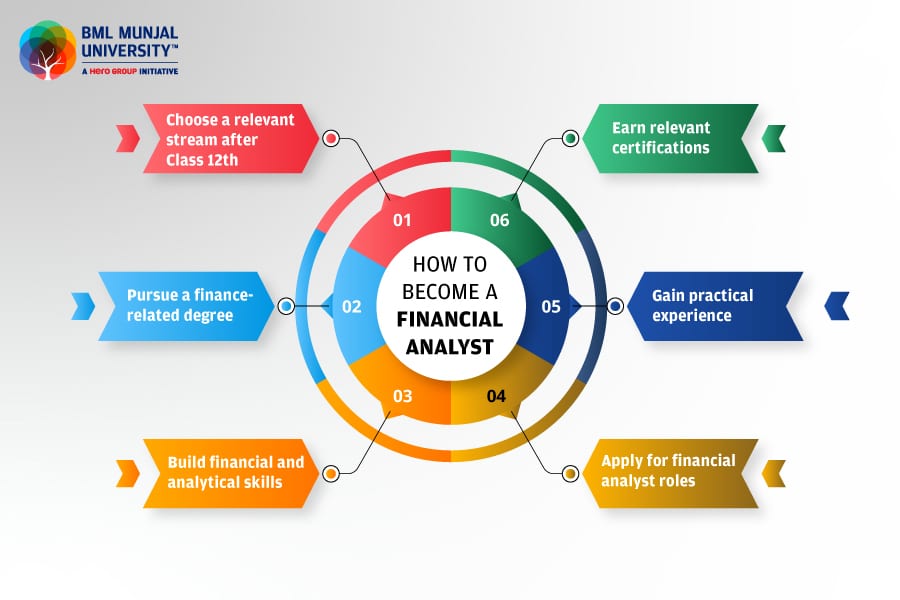
How to Become a Financial Analyst in India: Degree, Skills & Career Roadmap (2026)
A relevant degree in finance, commerce, economics or business can provide a strong foundation for a financial analyst career. Build core skills...
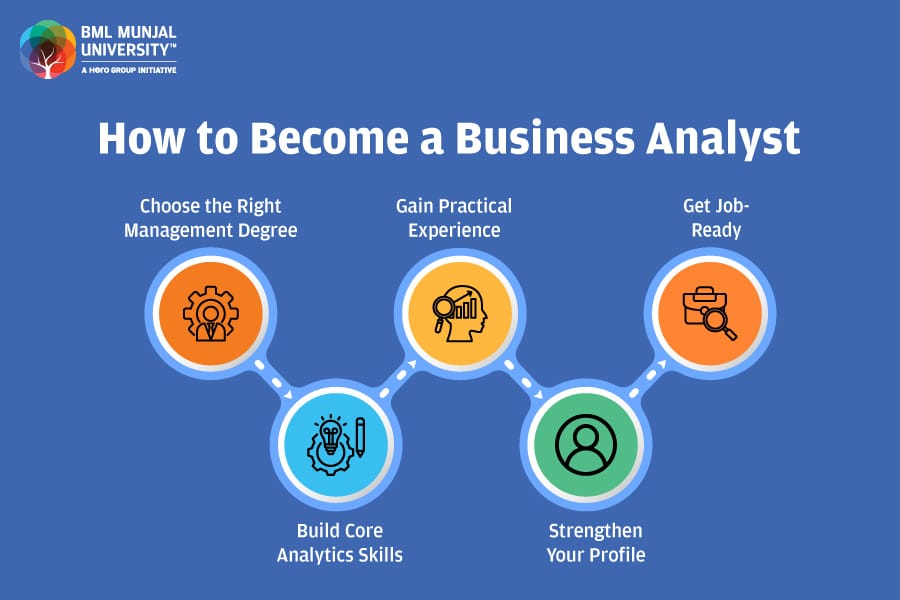
How to Become a Business Analyst: A Complete Career Guide
Key Takeaways A bachelor's degree in business, IT or a related field is the usual starting point; no state licence is required. Students after...
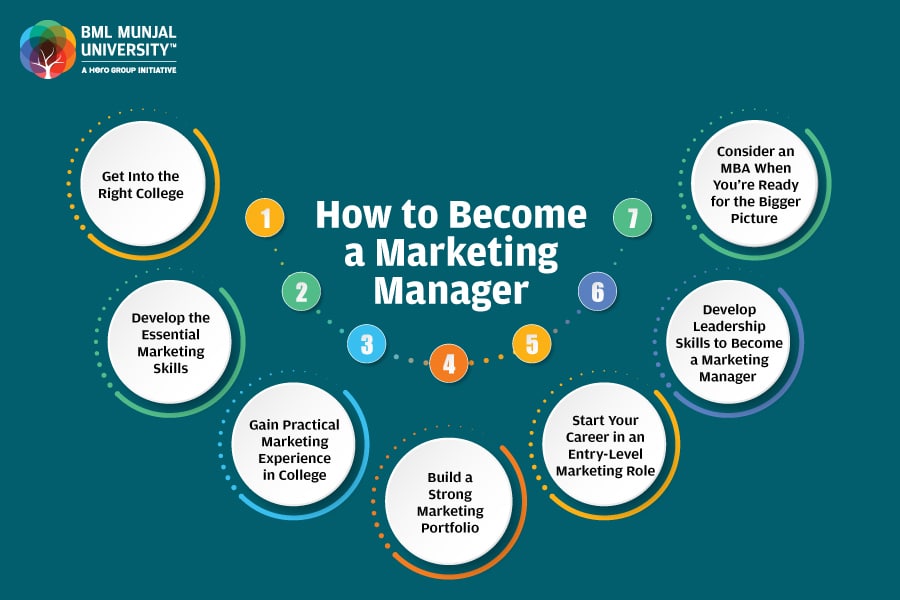
How to Become a Marketing Manager: Complete Step-by-Step Guide
Key Takeaways Becoming a marketing manager is a progression from execution to ownership and leadership. A relevant degree provides the foundat...

How to Become a Policy Analyst: The Career Path No One Explains Properly
Key Takeaways A bachelor's degree in Economics, Political Science, Public Policy, Sociology, International Relations or Law is the minimum qualif...
Business Analyst Salary in India 2026: How Much Can You Really Earn?
Key Takeaways The average business analyst salary in India is ₹7-10 LPA. Freshers in 2026 can earn ₹7-10 LPA, depending on skills and coll...

The Benefits of an Integrated BBA MBA: Career Growth & How It Compares to Traditional MBA
Integrated BBA MBA programmes are becoming increasingly popular among students who want to start building management careers right after Class 12. Wha...