
Understanding Diseases Through the Lens of Human Behaviour and Mathematics


Admissions Enquiry
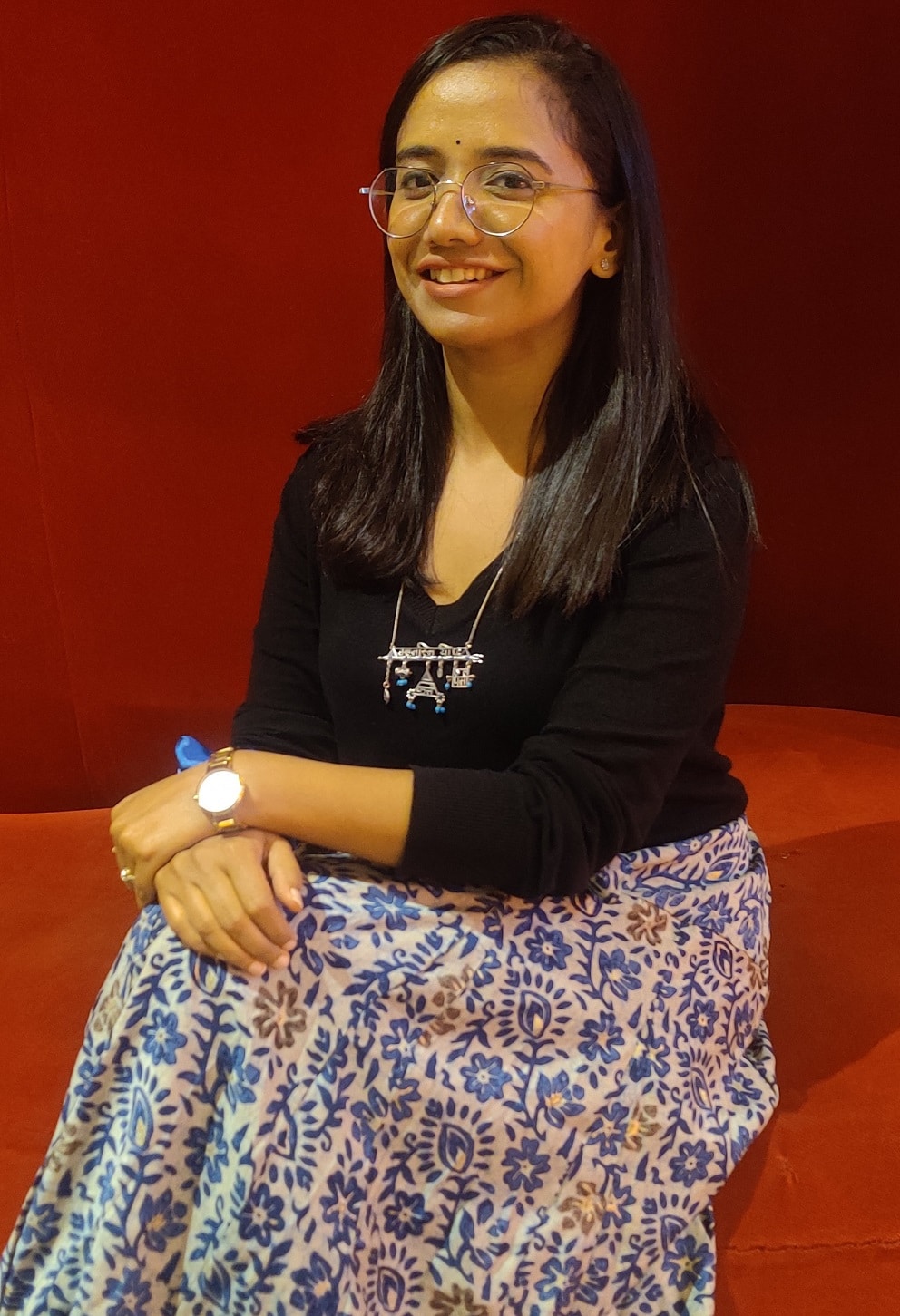
In the world of infectious diseases, pathogens do not act alone. Their spread is deeply intertwined with how individuals behave, how societies respond and how economic realities shape decisions. As a researcher in mathematical modelling of infectious diseases, my work focuses on understanding this complex interplay - where biology meets behaviour and equations meet policy.
From Disease Spread to Decision Dynamics
Traditional epidemiological models, such as the well-known SIR framework, help us understand how diseases spread across populations. However, real-world outbreaks rarely follow purely biological rules.
People make decisions:
- Should I seek treatment now or later?
- Can I afford to isolate myself?
- Is preventive care worth the cost?
These choices are not random - they are shaped by economic constraints, awareness and perceived risks.
My research integrates:
- Compartmental models (SIR/SEIR-type systems)
- Socio-economic factors (income, cost, access to care)
- Game theory (strategic human decision-making)
to develop models that better reflect real-world disease dynamics.
When Disease Meets Game Theory
At the heart of my work lies a key idea:
Disease dynamics and human behaviour evolve together.
Using game-theoretic frameworks, I study how individuals make strategic decisions under competing incentives. For example:
- Delaying treatment may reduce immediate financial burden
- But increases disease transmission and long-term societal cost
Such scenarios can be framed as:
- Prisoner’s dilemma-type problems
- Evolutionary game dynamics
This allows us to capture feedback loops:
- Rising infections → behaviour changes
- Behaviour changes → infection rates shift
This coupled system provides deeper insights than traditional models.
Research in Tuberculosis: Beyond Biology
A significant focus of my research has been tuberculosis (TB) - a disease where socio-economic factors play a critical role.
I have worked on:
- Treatment-seeking behaviour
- Impact of awareness and affordability
- Drug-resistant TB dynamics
- Cost-effectiveness of interventions
My work has also contributed to national and global collaborations, including modelling efforts connected to the WHO TB Global Report .
Bridging Research and Policy: Work with IIPH Delhi
One of the most meaningful aspects of my work has been applying mathematical modelling to real policy questions.
I worked on a consultancy project with the Public Health Foundation of India (PHFI), Delhi / IIPH Delhi, focusing on:
Evaluating the impact of the Ni-kshay Poshan Yojana on tuberculosis outcomes The Nikshay Poshan Yojana is a government initiative that provides nutritional support to TB patients in India.
Through this work, we aimed to understand:
- Does financial/nutritional support improve treatment adherence?
- How does it affect recovery and transmission dynamics?
- Is the programme cost-effective from a public health perspective?
This project highlighted a crucial insight:
Public health interventions are not just medical, they are behavioural and economic. Mathematical models help quantify these effects, making them powerful tools for evidence-based policymaking.
Teaching, Research and Interdisciplinary Learning
As an Assistant Professor at BML Munjal University, I actively engage in:
- Teaching courses such as:
- Probability & Statistics
- Discrete Mathematics
- Numerical Methods
- Designing interdisciplinary courses like:
- Applied Machine Learning in Healthcare
I strongly believe in integrating:
- Mathematics
- Data science
- Public health applications
to equip students with tools that are both theoretically sound and practically impactful .
The Bigger Picture: Why This Work Matters
Infectious diseases are not just biological events-they are social phenomena shaped by inequality, access and behaviour.
Mathematical modelling allows us to:
- Predict disease trajectories
- Evaluate intervention strategies
- Quantify economic and behavioural trade-offs
- Inform policy decisions with clarity
In a world increasingly driven by data, such models can bridge the gap between:
- Theory and practice
- Research and policy
- Science and society
Looking Ahead
The future of infectious disease modelling lies in deeper integration:
- Behavioural science
- Economics
- Data-driven methods
- Policy design
My ongoing work continues to explore these intersections, with the goal of developing models that are not only mathematically rigorous, but also socially relevant and actionable.
Closing Thought
If we can understand how people make decisions during an outbreak, we can design better interventions, not just to control diseases, but to support the communities affected by them.