
BMU in
News

Admissions Enquiry
Launch of MA in Public Policy Programme with Policy-Insights Lecture featuring Prof. Jayati Ghosh
BML Munjal University has launched a new MA in Public Policy programme under its School of Liberal Studies, aimed at preparing future policy professionals to navigate increasingly complex governance challenges in India and globally.
Designed as a two-year, four-semester programme, the curriculum integrates interdisciplinary learning with applied policy practice across areas such as governance, technology, climate, and social development. Students engage with real-world policy problems, undertake independent research, and develop practical solutions—building both analytical depth and a grounded understanding of diverse societal contexts.
Announcing the programme, Dr. Arindam Banerjee, Dean, School of Liberal Studies, said, “The MA in Public Policy programme has been designed with a focus on interdisciplinary learning and real-world engagement.” He further noted that as multiple global transitions reshape policymaking, the programme seeks to equip students with approaches that are grounded, inclusive, and responsive to diverse community needs.
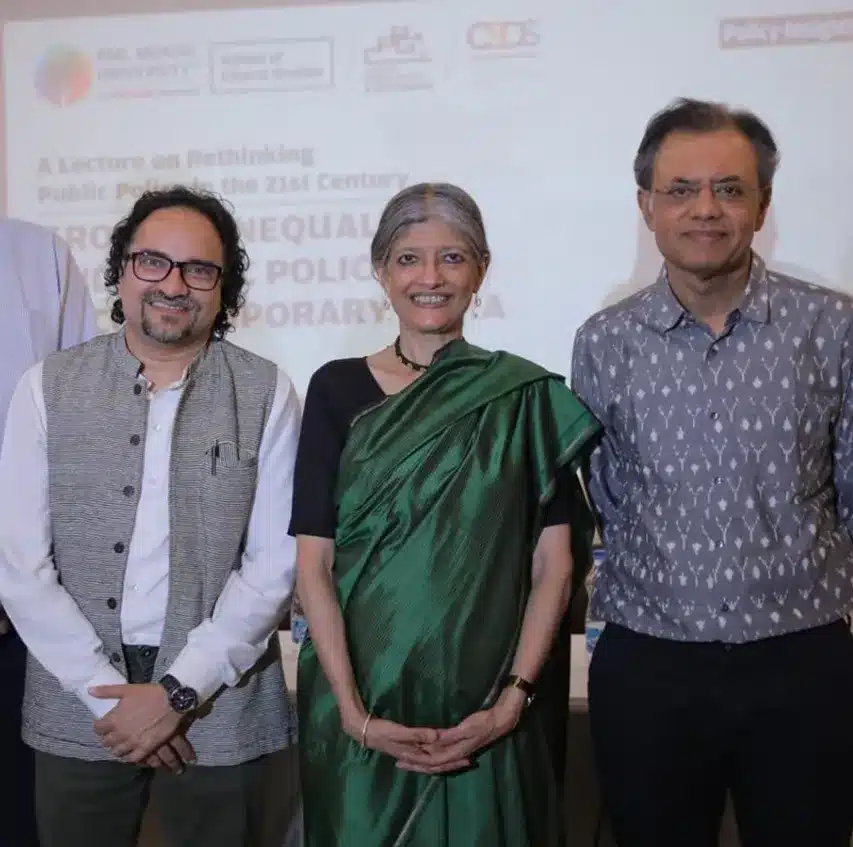
To mark the launch, the university, in collaboration with the Centre for the Study of Developing Societies (CSDS), hosted a Policy Insights Lecture on “Growth, Inequality and Public Policy in Contemporary India.” The session featured leading experts including Jayati Ghosh, Professor of Economics at the University of Massachusetts Amherst, along with Professors Awadhendra Sharan and Ravi Sundaram of CSDS.
Speaking at the event, Jayati Ghosh emphasised the interconnected nature of economic growth and inequality, stating, “We are living in a time when economic growth and inequality must be understood together, and public policy has a critical role in shaping more inclusive and sustainable outcomes.” She also highlighted the need for policy frameworks to build resilience and respond effectively to a rapidly changing global order.
The launch reflects BMU’s continued effort to create academic programmes that combine intellectual rigour with practical relevance, enabling students to engage with pressing public challenges and contribute to more equitable policy ecosystems.