
Blogs


Top 10 B.Tech. Courses after 12th to Pursue a Career in Engineering
January 20, 2026 | By BMU
Engineering continues to be one of the most sought-after career choices among students after Class 12. With rapid advancements in technology, innovation and digital transformation, B.Tech. courses after 12th offer diverse specialisations that align with emerging industry needs. However, choosing the right B.Tech. branch can feel overwhelming due to the wide range of options available.
Whether it is a core engineering discipline or a new-age tech-driven specialisation, getting familiar with the course structure, subjects, eligibility and career outcomes is essential. This blog provides a comprehensive overview of top B.Tech. courses to help you confidently select the right engineering path after 12th.
List of Top 10 B.Tech. Courses
If you want to pursue a career in engineering, several courses are available, including B.E. / B.Tech., diploma courses and embedded engineering courses. Candidates interested in pursuing a career in engineering have a variety of B.Tech. courses after 12th:
- B.Tech. Aeronautical Engineering
This course focuses on aircraft and spacecraft design, development, testing and maintenance, covering aerodynamics, propulsion, structures, avionics and safety, preparing graduates for careers in aviation, defence, research and aerospace industries worldwide.
- B.Tech. Automobile Engineering
It deals with design, manufacturing, testing and maintenance of vehicles, engines and systems, emphasising automotive technology, safety, emissions and mobility solutions for careers in automobile, transport and manufacturing sectors.
- B.Tech. Biotechnology
This course integrates biology and technology to develop products in healthcare, agriculture and the environment, involving genetics, molecular biology, bioinformatics and bioprocessing, leading to careers in research, pharmaceuticals, diagnostics and bio-industries worldwide.
- B.Tech. Civil Engineering
It focuses on planning, design, construction and maintenance of infrastructure like buildings, roads, bridges and water systems, emphasising structural safety, sustainability and project management for private development projects nationwide.
- B.Tech. Computer Science and Engineering
B.Tech. CSE covers computing fundamentals, programming, algorithms, software development and hardware concepts, enabling careers in software engineering, artificial intelligence, data science, cybersecurity, cloud computing and IT services globally.
- B.Tech. Electrical and Electronics Engineering
This programme focuses on power systems, electronics, control systems and communication technologies, preparing graduates for careers in energy, automation, electronics manufacturing, telecommunications, robotics and emerging electrical industries worldwide.
It involves design, analysis, manufacturing and maintenance of mechanical systems, covering thermodynamics, materials and machines, leading to careers in manufacturing, automotive, energy, robotics, aerospace and industrial engineering sectors globally.
This course combines electronics with computing, focusing on embedded systems, hardware-software integration, IoT and communication technologies, enabling careers in electronics design, computing, automation, smart systems and technology industries.
- B.Tech. Information Technology
It focuses on software applications, databases, networking and information systems management, preparing graduates for careers in software development, IT services, system administration, cloud computing and enterprise solutions.
- B.Tech. Artificial Intelligence & Data Science
This course focuses on machine learning, big data analytics, neural networks and intelligent systems, enabling careers in AI development, data analytics, automation, predictive modelling and advanced technology-driven industries.
Why Choose B.Tech. Courses After 12th?
Are you curious to know what makes B.Tech. courses a preferred choice among many students? Here are some reasons why students prefer B.Tech. courses after 12th:
- B.Tech. courses are one of the consistently growing areas of employer demand.
- They help improve your decision-making abilities.
- Employers nowadays seek technologically savvy candidates. Therefore, the engineering programmes emphasise new inventions, analytical work and research.
- There are numerous career options when landing your dream job.
- You will not only learn theory in B.Tech., but you will also get the opportunity to do practicals.
- B.Tech. courses after 12th teach you about the outside world and how to have a realistic approach to various problems.
B.Tech. Courses After 12th: Eligibility Criteria
The course is open primarily to students who have completed Class 12 with Physics, Chemistry and Mathematics (PCM) from a recognised board. Here are the basic eligibility requirements:
- Completion of 10+2 with PCM as core subjects
- Minimum aggregate marks (varies by university/college)
- Qualification in entrance exams such as JEE Main, state-level or university-level exams
Career Opportunities After B.Tech.
- Campus placements in IT, core engineering, manufacturing and consulting roles
- Higher studies like M.Tech, MS, MBA or specialised postgraduate programmes
- Government jobs through GATE, ESE, UPSC, SSC and PSU recruitment
- Entrepreneurship and startup opportunities in technology-driven sectors
- Research and Development (R&D) roles in private labs and organisations
- Freelancing and consulting in software, design, analytics and engineering services
- Teaching and academic careers after pursuing higher qualifications
Job Roles After B.Tech. Courses
- Software Engineer / Developer
- Data Analyst / Data Scientist
- Mechanical Design Engineer
- Civil Site Engineer / Structural Engineer
- Electrical Engineer / Power Systems Engineer
- Electronics & Embedded Systems Engineer
- Network Engineer / Cybersecurity Analyst
- Quality Assurance / Testing Engineer
- Project Engineer / Operations Engineer
- Research & Development (R&D) Engineer
These job roles vary by specialisation and industry, offering strong growth, learning opportunities and long-term career stability for B.Tech graduates.
Now you might wonder if enrolling at any college or university will help you have a clear and focused career path. Well, the answer is no. If you just want a degree in hand, you can enrol at any college; however, if you wish to have a highly successful career, you need to get admission to a college or university that gives you the best education.
So, choose a university/college where the faculty care and educate their students, knowing they are the actual future. One such university is BML Munjal University. Let’s look at why BMU is the best among the rest!
BML Munjal University - Offering New-age B.Tech. Courses After 12th
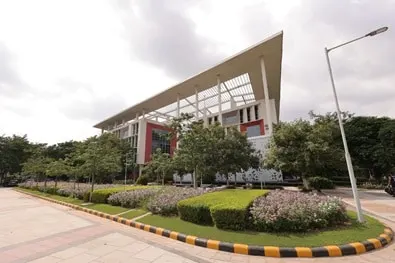
BML Munjal University (BMU) strives to develop strong leaders who are skilled, knowledgeable and have the life skills necessary to lead their organisations to success. It aims to develop and propagate practical knowledge benchmarked against the highest global standards.
A few things that differentiate BMU from other institutions offering similar B.Tech. courses after 12th are:
- World-class infrastructure
- Practical classes
- Semester-based learning
- 45% time spent on hands-on learning
- Mentored by Imperial College London
- Continuous internal evaluation
If you wish to know about B.Tech. courses offered by BMU, visit this page: https://www.bmu.edu.in/courses/b-tech/.
Conclusion
Choosing the right B.Tech. course after 12th is a crucial step towards building a successful and future-ready career. With multiple branches, evolving subjects and wide-ranging career opportunities, engineering continues to be a preferred choice for students. However, success in engineering depends not only on the course you choose but also on the institution that shapes your skills and mindset. So, pick wisely!
FAQs
The best B.Tech. course depends on interests and demand, with Computer Science, AI, Data Science, Mechanical and Civil Engineering being popular choices.
B.Tech. graduates can work as engineers, developers, analysts, consultants, researchers or pursue higher studies, government jobs and entrepreneurship opportunities.
B.Tech fees vary by institution, generally ranging from ₹1.5 to ₹4 lakhs per year in private universities in India.
Yes. B.Tech. is possible without JEE through state-level exams, university entrance tests or direct admissions based on merit.
Related Blogs

Top 30 Artificial Intelligence Projects for Students
Artificial intelligence is no longer just a tech topic. It’s being discussed in parliament sessions, policy meetings and global summits. Conferences...

Startup Ideas for Students: 10+ Profitable & Low-Investment Options in 2026
What if the idea you start in your hostel room could become your full-time career tomorrow? This is no longer a possibility- it is already happenin...

Top 12 Most Demanding Courses in Future: A Detailed Career Guide
With the changing dynamics of industries due to technology, sustainability and globalisation, students are increasingly seeking courses that provide l...
Electronics and Computer Engineering: Courses, Scope & Career Options
Today, technology doesn’t work in silos. Every modern device and system we rely on every day relies on the balance of electronics and computing...

Realise Your Engineering Dreams: The Complete B.Tech. Scholarship Guide 2026
Are you worried about financing your engineering education? A number of talented students in India feel worried about pursuing B.Tech. degrees because...

Career Options after B.Tech.: What Can You Do Next?
Completing a B.Tech. degree feels like a huge milestone. After four years of sleepless nights, exams, projects and internships, one question pops up i...