
Is BBA Worth It in 2026? Scope, Salary & Career Opportunities Explained


Admissions Enquiry

If you've just finished Class 12 and are weighing your options, the question "Is BBA worth it in 2026?" is a fair one to ask.
The business landscape in India looks very different from what it was five years ago. Startups are multiplying, digital commerce is booming and companies are hunting for graduates who can think analytically and act commercially.
In that context, a Bachelor of Business Administration remains one of the most versatile and career-ready undergraduate degrees available to Indian students. But "worth it" is a personal calculation.
This blog breaks down the facts, scope, salary, demand and fit, so you can decide for yourself.
What Makes BBA Relevant in 2026?
The short answer to that is India’s economy needs more business professionals than it’s currently producing.
Recently, in December 2025, India crossed 2 lakh DPIIT-recognised startups and these ventures generated over 2.1 million direct jobs. Every new company, from a Series A-funded fintech to a bootstrapped D2C brand, needs people who understand operations, marketing, finance and people management. That's exactly what a well-structured BBA programme develops.
Not only startups, but also established corporations across banking, consulting, FMCG, logistics and e-commerce continue to run management trainee and business analyst hiring tracks specifically for undergraduate business graduates.
One shift which is worth noting is that companies in 2026 are increasingly looking for BBA graduates having exposure in business analytics, digital marketing and data-driven decision-making alongside traditional management skills. Programmes that integrate these alongside core business fundamentals are producing graduates who are immediately employable.
BBA Scope in India and Globally
The BBA scope in India spans an unusually wide range of sectors. Graduates step into roles across IT services, banking and financial services, consulting, retail, logistics, human resources and digital marketing.
For students with entrepreneurial ambitions, BBA also provides the foundational vocabulary, financial planning, market research and operations that make launching a venture more structured and less risky.
Some of the most accessible and high-growth career tracks for BBA graduates in 2026, based on current hiring data from platforms like Naukri.com and AmbitionBox, include:
| Role | Key Sectors | Average Salary (LPA) |
| Business Analyst | IT, consulting, e-commerce | ₹6-10 |
| Digital Marketing Specialist | E-commerce, agencies, D2C brands | ₹4-8 |
| HR Executive/Manager | Corporate firms, IT services, manufacturing | ₹4-8 |
| Financial Analyst | Banks, NBFCs, fintech firms | ₹6-12 |
| Operations/Supply Chain Executive | FMCG, retail, logistics | ₹5-9 |
Globally, the BBA scope extends to postgraduate programmes at universities in the UK, Canada and Europe, many of which accept graduates for MBA and specialised master's programmes. An international orientation during undergraduate study, including exposure to global business practices, considerably strengthens these pathways.
Salary After BBA – What Can You Expect?
Salary after BBA in India is one of the most researched and most misunderstood metrics. The honest picture involves a range, not a single number.
Fresh BBA graduates in India typically start in the range of ₹3-6 LPA, depending on their specialisation, institution, city and the sector they join.
Graduates placed at top-tier companies in metro cities or through campus placements at strong institutions can see starting packages of ₹5-8 LPA. Specialisations such as Business Analytics, Finance and Digital Marketing are currently attracting better entry-level offers due to higher market demand for these skills.
With 4-6 years of solid experience and relevant skills, BBA graduates frequently move into associate and assistant manager roles, where salaries typically range from ₹8-18 LPA.
And those who pursue an MBA after BBA, particularly from reputed institutes, can see salaries jump significantly, with top MBA graduates earning ₹10-30 LPA depending on specialisation and institute.
The salary trajectory after BBA is less about the degree itself and more about what you do with it: the specialisation you choose, the skills you build alongside formal coursework and how effectively you use internship and placement opportunities.
Who Should Choose BBA in 2026?
BBA is a strong fit if you:
- Are interested in business, management, marketing, finance or entrepreneurship as a long-term direction.
- Want to enter the workforce with practical, commercially relevant skills after three years.
- Plan to pursue an MBA or a specialised postgraduate degree and want a structured business foundation first.
- Come from any stream, science, commerce or arts, since BBA has no stream-specific eligibility at most universities.
- Are drawn to sectors like consulting, FMCG, banking, startups or digital businesses.
It is worth thinking carefully if your primary interest is highly technical or research-oriented (engineering, medicine, pure sciences) in those cases, BBA may not align with your goals. But if you have a commercial mindset and a long-term interest in leadership roles, the degree remains a logical and well-supported starting point.
Build Your Business Acumen with Industry-centric BBA at BML Munjal University
To maximise the value of a business degree, selecting an institution that prioritises real-world integration over rote learning is vital. BML Munjal University (BMU), a Hero Group initiative, offers a comprehensive BBA / BBA (Hons) programme structured precisely around the demands of today's changing corporate landscape.
Key Highlights of the Programme:
- CATALYST (BMU’s Industry Connected Spine)- The university’s curriculum is designed by industry, delivered with industry practitioners and supported by corporate mentors, live projects and structured internship pipelines across all three years.
- Experiential Learning Framework- Moving completely away from isolated theoretical education, the University integrates a substantial 45% experiential learning component directly into its curriculum through live corporate projects, lab modules and structured internships.
- Modern High-Demand Specialisations- Students can align their career paths with contemporary industry tracks, selecting from specialised majors including:
- Finance
- Business Analytics
- Marketing
- Strategy
- Human Resources
- International Business & Global Trade
- Family Business & Entrepreneurship
- AI Applications in Business
BMU provides students with international immersion opportunities in partnership with world-renowned global bodies like the London School of Economics and Political Science (LSE), University of Leeds and University of Warwick, preparing them to succeed in cross-border professional environments.
Conclusion
So, is BBA worth it in 2026? For the right student, someone drawn to business, management or entrepreneurship and willing to actively use the opportunities a structured programme provides, the answer is yes.
The BBA scope continues to expand across sectors, salaries after BBA have clear and meaningful upward trajectories and demand for business graduates from India's rapidly growing corporate and startup ecosystem shows no signs of plateauing.
The degree isn't a guarantee, but it is a strong launchpad. Students who get the most out of it are those who choose institutions with real industry exposure, specialise thoughtfully and treat internships as seriously as coursework.
FAQs
Yes, BBA graduates are hired across sectors, including banking, consulting, marketing, FMCG, e-commerce and IT services.
Fresh BBA graduates in India typically earn between ₹3-6 LPA, with higher starting packages available through strong campus placements.
BBA is an excellent foundation for an MBA, which remains one of the highest ROI postgraduate qualifications in India. analytics or pursue international master’s degrees.
Yes. Most BBA programmes in India are open to students from any stream, like science, commerce or arts, who have completed Class 12 with the minimum required aggregate.
Related Blogs
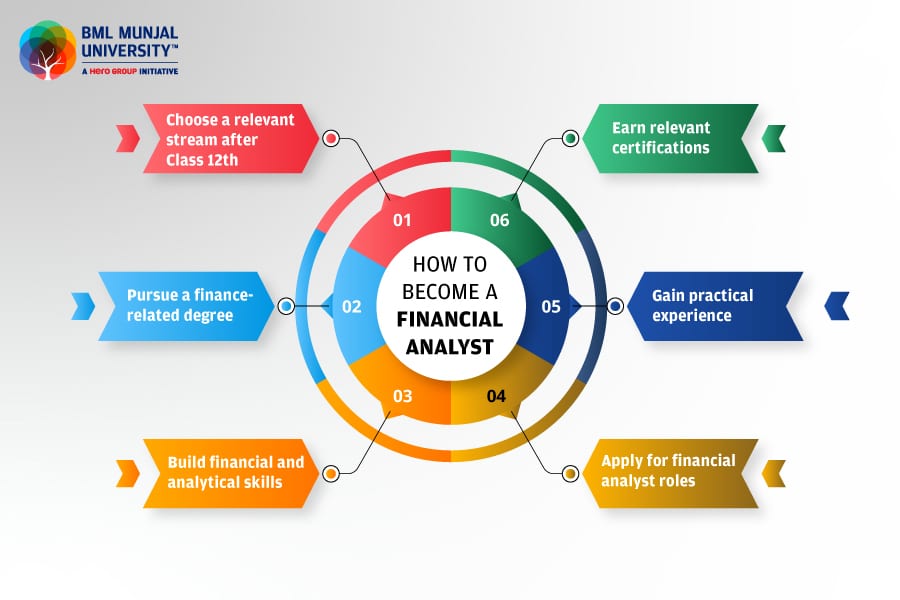
How to Become a Financial Analyst in India: Degree, Skills & Career Roadmap (2026)
A relevant degree in finance, commerce, economics or business can provide a strong foundation for a financial analyst career. Build core skills...
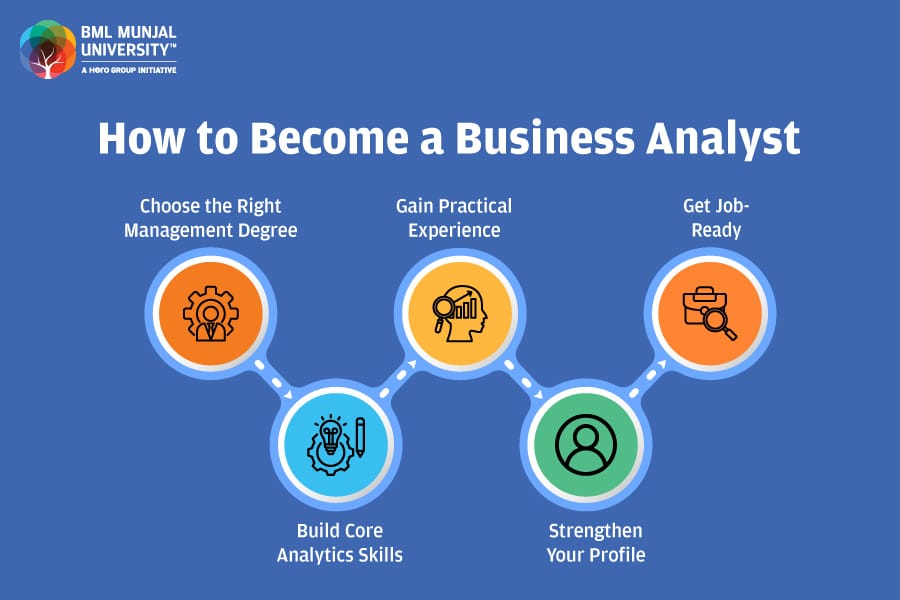
How to Become a Business Analyst: A Complete Career Guide
Key Takeaways A bachelor's degree in business, IT or a related field is the usual starting point; no state licence is required. Students after...

How to Become a Marketing Manager: Complete Step-by-Step Guide
Key Takeaways Becoming a marketing manager is a progression from execution to ownership and leadership. A relevant degree provides the foundat...

How to Become a Policy Analyst: The Career Path No One Explains Properly
Key Takeaways A bachelor's degree in Economics, Political Science, Public Policy, Sociology, International Relations or Law is the minimum qualif...

Business Analyst Salary in India 2026: How Much Can You Really Earn?
Key Takeaways The average business analyst salary in India is ₹7-10 LPA. Freshers in 2026 can earn ₹7-10 LPA, depending on skills and coll...

The Benefits of an Integrated BBA MBA: Career Growth & How It Compares to Traditional MBA
Integrated BBA MBA programmes are becoming increasingly popular among students who want to start building management careers right after Class 12. Wha...