
Blogs

Liberal Arts: The Degree That Prepares You for Jobs That Don’t Exist Yet
December 17, 2025 | By BMU
Have you ever felt like the degrees that colleges offer are lacking some or the other thing for you? Have you felt like “yes, biotechnology is important, but if I had historic and sociological knowledge about health and wellness, I would have been able to combine the two and progress faster in my field”? Then you have come one step closer to understanding today’s reality; the educational intricacies of the modern world.
We live in a world where data is not enough. Unless the data has tangible and emotional roots in reality, it isn't practical. The rapid speed of technological and sociological developments has opened new possibilities for the world. Today, the world is faster, smaller and demands an intricate understanding of a variety of fields. The human mind has to not only catch up with others, but also cater to Artificial Intelligence (AI), new fields of employment, and new areas of competition.
An economic survey done by the Indian government states that only 51% of Indian graduates are employable, demonstrating a clear gap between skill building and the job market. Traditional degrees are not equipped to tackle such predicaments. A more forward thinking solution is needed for this. This is where Liberal Arts comes into play.
What is a Liberal Arts Degree?
Liberal Arts is a multidisciplinary approach to the field of education. It combines subjects from humanities, sciences, and social sciences. This means that a student studying Liberal Arts is free to choose their approach towards their worldly contribution.
For instance, if you wanted to, you could:
- Take sociology with organic chemistry.
- Take mathematics and philosophy.
- Take history and geology.
This also means that you can take time to research and finalise your major, but also if you choose to, you can change your major to see if something else suits your worldly calling. A study found that almost 80% of people switch their major at least once. The fact that it is not only common but also encouraged just highlights how adaptable the course is designed to be.
The approach you want to use is solely your choice. Not only does this make you an interdisciplinary and important work asset, but also help you gain multiple perspectives, hence letting you solve a problem with multiple solutions.
Liberal Arts emphasises on the breadth of the scope of education, which is the opposite of other courses (where the scope of education is narrowed down). It also helps develop important skills like critical thinking, problem-solving, adaptability, communication, creativity, etc.
Not only are these skills important for the new emerging world, but they are also highly transferable and applicable across most industries.
Why Traditional Degrees are not Enough?
With the advent of AI, automation, and globalisation, career landscapes have shifted dramatically. Jobs and fields that didn't exist a decade or so ago have not only become a reality, but also a necessity. Thus, the only way forward is adapting to these changes at a foundational level of education and skill development.
Sure, highly specialised educational fields drive an individual to be extremely proficient in their respective fields. However, with the intense interconnectivity of various fields today requires a multi-pronged approach, usually relying on a poly-proficient skillset, that unfortunately is something that traditional courses cannot accommodate for.
Liberal Arts, on the other hand, offers a flexible approach, led by curiosity, creativity and is subjective to the wishes of the student. Unlike traditional specialisations, it does not limit students with the curriculum, offering a holistic approach to their version of problem solving.
Non-Conventional Skills that Liberal Arts Focuses on
Just like other fields, Liberal Arts aims to embed important skills that have been a part of its predecessors from time immemorial. However, apart from its multidisciplinary approach, it also focuses on new and emerging non-conventional skills. Some of these skills are:
- Analytical Thinking
- Problem Solving
- Creativity
- Innovation
- Communication
- Storytelling
- Cultural Literacy
- Empathy
- Adaptability
- Lifelong Learning
These skills blend seamlessly with newer fields like AI, Sustainability, Design Thinking, Urban Innovation, Digital Transformation, and more.
Liberal Arts and Emerging Careers
Liberal Arts does not teach you what to think; it teaches you how to think. Since it is a degree that prepares you for tomorrow, let us look at some emerging careers that open doors for you after acquiring your new proficiencies.
AI Ethics
Sure, using AI is not hard. Who doesn't want an assistant who needs no sleep, no food, is available 24/7, does not take any salary nor does it say no to your tasks. However, what AI can’t do itself is think with a human perspective; this isn’t Detroit: Become Human. AI lacks human morals, understandings, feelings, and emotions. It can never have that.
This means that AI is not a thing that will replace humans in jobs. The ones who will persevere are people who will use AI like an efficient tool; an extension of their own skillset.
This will open up the job market with new designations; AI Ethics Coordinator, Moral Management, Social Coordination Executive, Humanizer Liaison, and more.
Climate & Sustainability
Today, it is a sad reality that the climate is changing. The only way to mitigate such events is through sustainable approaches. In recent years, sustainability has transformed from a guiding principle into a norm; a mandatory set of declarations and compliances that every entity has to be governed by, no exceptions.
Such global changes have opened doors to many new avenues and will continue to do so for a long time to come, opening the world up to new jobs like ESG Consultant, Green Finance Coordinator, Green Compliance Executive, Sustainability Officer and more.
Content and Entertainment
Stop and think about content for a second. Think about how fast the world went from long form content to short form content; think about how swiftly everyone abandoned landscape videos and adapted to portrait format.
It is no secret that the advent of short form content has impacted crucial building blocks of the world, like:
- The Brain Chemistry of a user and how they process information
- The format of sharing information
- The advertising industry
- The entertainment industry
Obviously, there are other avenues affected by the same, but these main elements have been forever changed, thanks to short form content.
Hence, a new opportunity arrives in this world now; understanding the online user/consumer and engaging with them. Whether you want to just spread a social message, find the right audience for your content or just sell a product, it is important to understand when, where and how new users react to your content. This opens up multiple career opportunities like:
- Content Manager (social media).
- Sports Entertainment Coordinator.
- Influencer Consultant.
- Media Strategy & Ideation.
- Music Creative Liaison (or whatever synonymous designation Rick Rubin calls himself).
BML Munjal University: Taking a Future-forward Approach to Liberal Arts
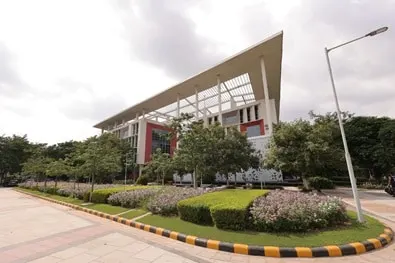
Launched in 2014 with a goal to revolutionise Indian higher education by the Hero Group and named after its co-founder and Chairman, Dr. Brijmohan Lall Munjal, BML Munjal University (BMU) has been a frontrunner in empowering the next-gen professionals across various domains and is committed to creating, preserving and imparting internationally benchmarked knowledge and skills to a diverse community of students worldwide.
The BML Munjal University’s School of Liberal Studies (SoLS) offers a four-year BA (Hons) degree with an exit option in the third year. The aim of this degree is to empower students to create their educational trajectories through informed choices. Here, students, along with their faculty mentors are expected to curate their academic path in consultation with their faculty mentors to choose a major that makes sense for their professional, personal and civic goals; educational flexibility is key. Students will work with the required foundational courses during their first three semesters while exploring their intellectual interests through electives. The second and third years will be devoted to major and minor coursework, while the fourth and final years will focus on individual research and internships.
Conclusion
In a world where technology, society and industries are evolving at unprecedented speed, a traditional, narrow-focused degree is no longer enough. Liberal Arts offers a solution by combining disciplines from humanities, sciences and social sciences, while cultivating critical, analytical and creative skills that are highly transferable across emerging fields. From AI ethics and sustainability to content creation and digital innovation, the degree equips students to think, adapt and innovate in careers that don’t yet exist.
Programmes like the BA (Hons) Liberal Arts at BML Munjal University exemplifies this approach, giving students the flexibility to chart their own academic paths, explore multiple interests and build the interdisciplinary foundation necessary to thrive in tomorrow’s workforce.
FAQs
It is an interdisciplinary programme that combines humanities, sciences and arts, focusing on critical thinking and adaptability.
Liberal Arts teaches transferable skills, like problem solving, creativity and communication, that apply in any emerging field.
You will gain skills like Critical Thinking, Creativity, Cultural Awareness and Adaptability.
Some fields that graduates with Liberal Arts degrees can pursue are AI Ethics, Sustainability, Digital Media, Design, Entrepreneurship and other evolving fields.
Related Blogs

When You Can’t Be Replaced by AI, It’s Probably Because You Studied Liberal Studies
As we are seeing AI evolving day by day, some fearful headlines are also getting space in the social media posts, news articles and discussions over c...
How a BA in Liberal Arts Degree Prepares You to Lead in the Age of AI
Every sector — from public policy to media houses, multinational corporations to tech start-ups — now values professionals who can connect ideas a...
Selecting the Right Major and Minor for BA Liberal Arts: An Ultimate Guide
The world is more connected now than ever. Social movements, global conflicts, technological advancements, and environmental challenges have opened up...

Broadening Horizons: Exploring Liberal Arts Subjects
The world of education stretches as an active domain that has developed to fulfil societal requirements and workforce demands worldwide. Due to its lo...

B.A. Course Details: Full Form, Specializations, Duration, Scope
B.A. course stands for Bachelor of Arts. The duration of a bachelor’s degree in arts is around three to four years. After completing class 12, you c...
What is a Liberal Arts Degree? Meaning and Scope
In classical antiquity, liberal arts served as vital education for individuals engaged in civic life. This covered active participation in public disc...