
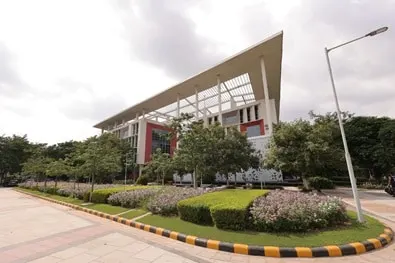
Why a B.Tech. for Working Professionals Could Be Your Smartest Career Move


Admissions Enquiry

The professional landscape is changing extremely quickly and it's common for diploma and technician holders working in industry to encounter an invisible 'glass ceiling' which requires a formal degree to break through. But a traditional, full-time degree may involve an individual quitting a stable job, leading to financial and career instability.
This is where a B.Tech. programme for working professionals comes into the picture. Developed specifically for those who wish to gain an advanced engineering qualification without sacrificing their current jobs, it allows for high-value engineering degrees without the need to pause working life. In this blog, let's dive into the world of studying a B.Tech. while you work.
What is B.Tech. for Working Professionals?
A B.Tech. for working professionals is a specialised undergraduate engineering programme tailored for individuals currently employed in the industry. Unlike traditional four-year degrees, these programmes leverage the learner's existing professional experience. They are typically offered through flexible shift timings, ensuring that academic requirements do not clash with office hours.
These courses are not "correspondence" degrees; they are rigorous, hands-on programmes that focus on Industry 4.0 technologies. They allow students to apply classroom theories directly to their daily workplace tasks, creating a unique synergy between education and employment.
Benefits of Pursuing B.Tech. While Working
Choosing an engineering degree for working professionals offers several strategic advantages:
- Financial Stability- You continue to earn your monthly salary while investing in your future. This eliminates the "opportunity cost" of lost wages associated with traditional education.
- Immediate Application- Concepts learned in a Saturday lab session on Robotics or Mechatronics can be observed or applied at your manufacturing unit on Monday morning.
- Faster Career Progression- Many organisations prioritise internal candidates for managerial roles if they possess the requisite degree.
- Networking- You study alongside peers from diverse industrial backgrounds—automotive, tech and manufacturing - expanding your professional network.
Eligibility Criteria and Admission Process
While specific requirements vary by institution, the general framework for a part-time B.Tech. for professionals includes:
- Educational Background- Most programmes require a Diploma in Engineering, a B.Sc., or a B.Voc. degree from a recognised institution.
- Minimum Marks- An aggregate score of at least 45% to 50% in your previous qualification is standard.
- Work Experience- Applicants must be currently employed. Some universities require a minimum of one to two years of professional experience.
- Selection Process- Admission is rarely based on marks alone. Many top-tier universities conduct a proficiency test followed by a personal interview to assess the candidate's technical foundation and commitment.
Career Opportunities after Completing the Programme
Completing a working professional engineering course opens doors that were previously locked. According to industry reports, the demand for "T-shaped" professionals—those with deep technical expertise and broad managerial understanding, is at an all-time high.
Graduates can transition into roles such as:
- Senior Design Engineer
- Project Manager
- Automation Specialist
- Operations Lead
- Technical Consultant
With the rise of Smart Manufacturing and the "Make in India" initiative, engineers who understand both the legacy hardware and modern software integrations are highly sought after by MNCs and domestic giants alike.
Skills Professionals Gain through the Programme
Beyond the degree certificate, students develop a robust toolkit of modern competencies:
- Advanced Manufacturing- Mastery over 3D printing and CNC machining.
- Automation & Robotics- Understanding the logic behind industrial robots and automated assembly lines.
- Digital Literacy- Proficiency in simulation software and data-driven decision-making.
- Soft Skills- Enhanced time management, leadership and technical communication.
Possible Challenges and How to Manage Them
Balancing a full-time job with an engineering curriculum is no small feat. The primary challenge is time management. To succeed, professionals must:
- Create a Fixed Schedule- Dedicate specific hours in the evenings or on weekends for self-study.
- Leverage Digital Resources- Use recorded lectures and online forums to keep up with coursework.
- Communicate with Employers- Inform your manager about your studies; many companies support upskilling and may offer flexible hours during exam weeks.
Upgrade Your Career with a B.Tech. for Working Professionals at BML Munjal University
If you are looking for a work-integrated B.Tech. programme that blends academic excellence with industrial heritage, BML Munjal University (BMU) stands out as a premier choice. The university offers a flexible B.Tech. in Mechanical Engineering specifically designed for working professionals.
Here is what makes the BMU programme unique:
- Specialised Tracks- Students can choose from cutting-edge specialisations including Automobile, Robotics and Core Mechanical.
- Future-Ready Curriculum- The syllabus is deeply integrated with Robotics, Automation, Mechatronics, 3D Printing and Smart Manufacturing.
- Programme Structure- The course spans six semesters, preceded by a 45-day refresher module to help you brush up on foundational concepts before diving into advanced engineering.
- Eligibility- BMU welcomes candidates with a Diploma, B.Sc., or B.Voc. (minimum 45% aggregate) who are currently employed.
- Experiential Learning- Backed by the Hero Group, BMU emphasises a collaboration-driven environment where hands-on experience is the priority.
The selection process involves a proficiency test and an interview, ensuring you are surrounded by a cohort of motivated, high-achieving professionals.
Conclusion
The decision to pursue a B.Tech. for Working Professionals is an investment in your long-term employability. As industries move toward automation and high-tech manufacturing, staying relevant is no longer optional. By choosing a programme that respects your professional commitments while challenging your intellectual boundaries, you position yourself for the next big leap in your career.
Ready to transform your professional trajectory? Explore the B.Tech. for Working Professionals at BML Munjal University today and take the first step toward becoming a leader in modern engineering.
FAQs
A. Yes, working professionals can pursue B.Tech. through flexible programmes like the one offered by BML
A. Yes, B.Tech. programmes for working professionals are valid if offered by a recognised and approved
A. No, these programmes are specifically designed with weekend or evening classes to ensure you can maintain your full-time employment status.
Related Blogs
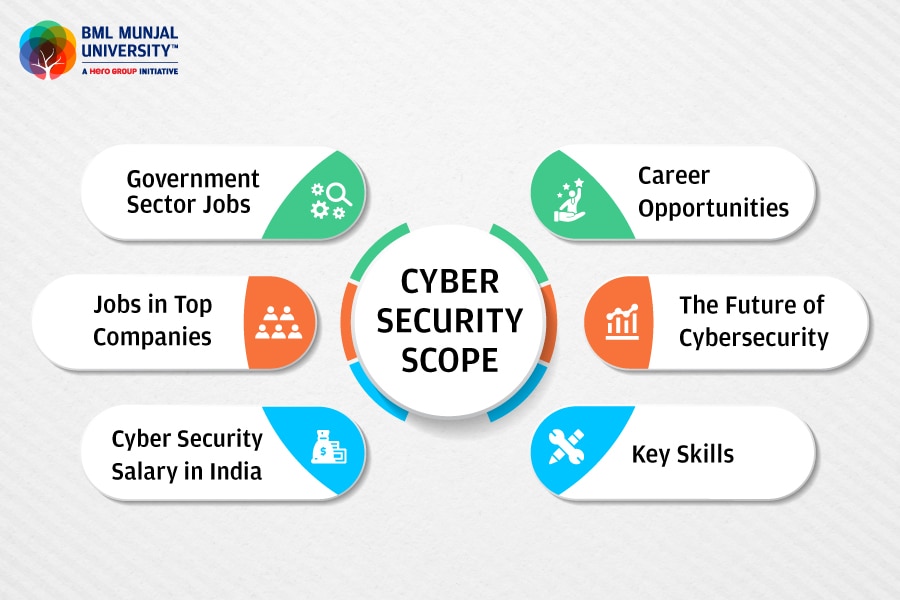
Cybersecurity Scope in India 2026: Jobs, Salaries, Career Scope & Emerging Trends
Key Takeaways Cybersecurity scope in India is expanding due to rising cyber threats and rapid digitalisation. Career opportunities span SOC, e...

Data Science vs Computer Science: Which Course Should You Choose After 12th?
Key Takeaways Computer Science builds software; Data Science turns data into AI-driven insights. Choose Computer Science if you enjoy coding a...
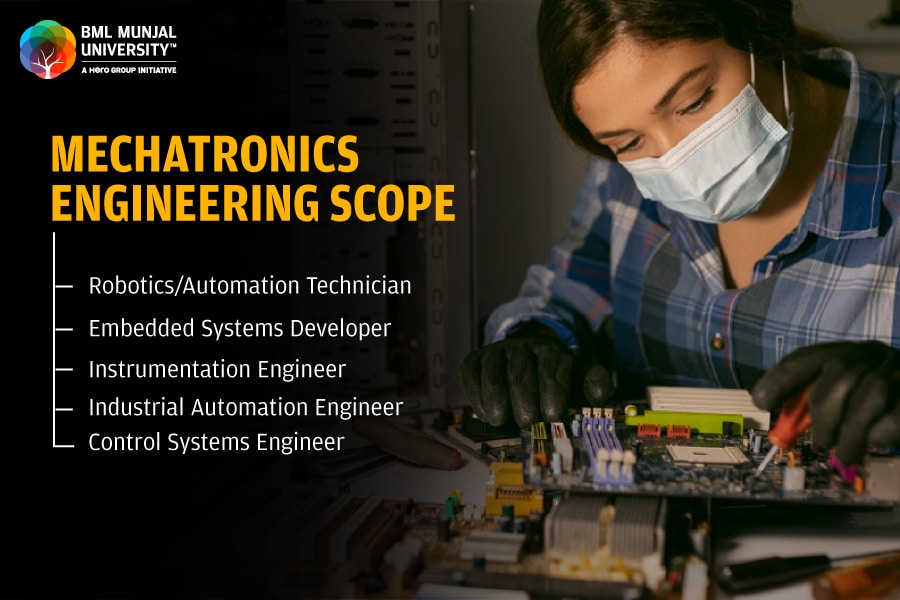
Mechatronics Engineering Scope in India: Is This the Right Career for You?
Key Takeaways Mechatronics engineering combines mechanics, electronics, software and control systems to create intelligent and automated machines...
VLSI Design Course: Scope, Salary Insights & Global Career Prospects
Key Takeaways: VLSI (Very Large Scale Integration) is the discipline behind every chip in your phone, EV and data centre server, packing millions...

Direct Admission in B.Tech. 2026: Process, Eligibility Criteria & Fee Structure
The Indian technical market continues to grow significantly and represents more than 7.4% of the Indian economy. With the landscape expanding into art...

B.Tech. for Working Professionals: The Complete Regulatory Compliance & ROI Guide 2026
A Diploma and years of hands-on Mechanical Engineering experience should open bigger career opportunities. But for many working professionals, growth ...