
Mechatronics Engineering Scope in India: Is This the Right Career for You?


In Summary: Mechatronics engineering combines mechanical engineering, electronics, software and control systems to develop intelligent machines. Its scope in India is growing across robotics, EVs, automation, defence and smart manufacturing. Graduates can pursue roles in automation, embedded systems and control engineering, with entry-level salaries ranging from ₹3.2 LPA to ₹8 LPA. Growth in AI, robotics and Industry 5.0 is further expanding career opportunities in India and abroad.
Key Takeaways
- Mechatronics engineering combines mechanics, electronics, software and control systems to create intelligent and automated machines.
- The scope of mechatronics engineering in India is growing across EVs, robotics, industrial automation, defence, aerospace, healthcare and smart manufacturing.
- Popular career options include Automation Engineer, Embedded Systems Developer, Instrumentation Engineer and Control Systems Engineer.
- Entry-level salaries can range from approximately ₹3.2 LPA to ₹8 LPA, depending on the job role, skills, location and employer.
- Skills in CAD/CAM, PLC programming, embedded systems, Python/C++, IoT, robotics and control systems can improve employability.
- Future opportunities will be shaped by Industry 5.0, collaborative robots, autonomous vehicles, AI-integrated robotics and sustainable technologies.
Graduates can also pursue higher studies in Mechatronics, Robotics, Automation, Embedded Systems, AI and Automotive Engineering in India or abroad.
A robot on a factory floor, an electric vehicle adjusting its systems in real time or a drone navigating its surroundings- what do they have in common? They all depend on the integration of mechanics, electronics, software and intelligent control. This growing convergence is expanding the mechatronics engineering scope and creating new career opportunities for future engineers.
The shift is already visible.
According to the International Federation of Robotics, 542,000 industrial robots were installed worldwide in 2024, with Asia accounting for 74% of new deployments. At the same time, India is expanding its capabilities in advanced manufacturing, EVs, electronics, robotics and automation.
So, is mechatronics engineering the right career for you? If the idea of building machines that can sense, process information and respond intelligently interests you, it could be worth exploring. This guide takes you through what mechatronics engineering is, its scope in India and abroad, career opportunities, salaries, essential skills and the trends shaping its future.
What Is Mechatronics Engineering?
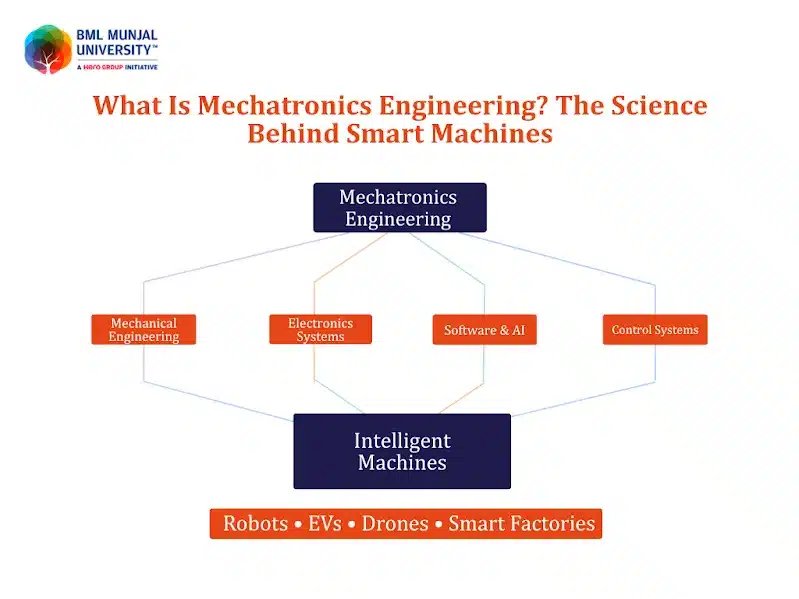
Mechatronics engineering is an interdisciplinary branch of engineering that integrates mechanical engineering, electronics, computer science and control systems to design and build intelligent, automated machines and products. It amalgamates physical mechanisms with sensors, actuators, embedded software and feedback control, so a system can sense its environment, process that information and respond in real time. Robots, drones, electric vehicles, CNC machines and smart home devices are all mechatronic systems in practice.
The term itself is a portmanteau of 'mechanical' and 'electronics', coined in Japan in the late 1960s. But the discipline has since expanded well beyond that original scope to absorb computing, AI/ML and IoT, because modern machines rarely function without software and connectivity layered on top of the hardware.
What Is the Future Scope of Mechatronics Engineering in India?
India's push toward 'Make in India', production-linked incentive (PLI) schemes for electronics and auto components and the India Semiconductor Mission have all accelerated demand for engineers who can work across mechanical and electronic systems at once.
Here is where that demand is concentrated-
| Sector | Why It Drives Demand for Mechatronics Engineers |
| Automotive & EVs | Battery management systems, motor control, ADAS sensors and drivetrain electronics all need mechatronics-trained engineers. |
| Industrial Automation & Smart Manufacturing | PLCs, robotic arms, machine vision and Industry 4.0 retrofits across auto, electronics and pharma plants. |
| Robotics & Drones | Agricultural drones, service robots and warehouse automation are among India's fastest-growing start-up categories. |
| Defence & Aerospace | UAVs, missile guidance and surveillance systems under India's self-reliance push in defence manufacturing. |
| Consumer Electronics & Home Automation | Smart appliances and IoT-enabled devices need engineers who can integrate hardware, firmware and connectivity. |
| Medical Devices & Healthcare Technology | Surgical robots, prosthetics and diagnostic/rehabilitation equipment depend on precise mechatronic integration. |
| Railways & Heavy Engineering | Modernisation of signalling, rolling stock and PSU manufacturing units is expanding institutional demand for automation-trained engineers. |
Careers in Mechatronics Engineering- Top Roles and Earning Potential
Mechatronics engineering provides a diverse range of careers to you with higher earning potential. Below is the detailed breakdown of what jobs you will get, what responsibilities are and average annual CTC-
| Job Role | What They Do | Indicative Annual CTC (0-3 yrs) |
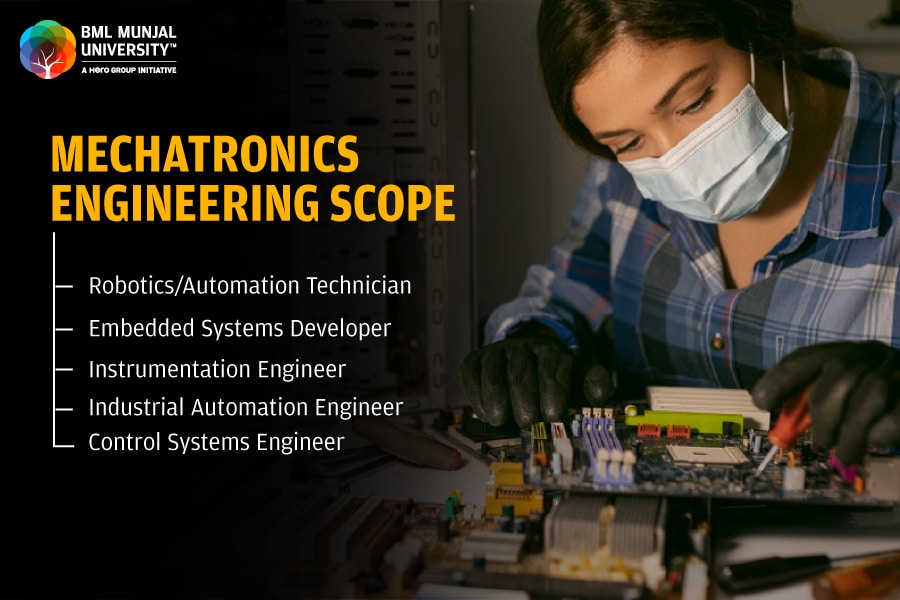
| Robotics/Automation Technician | Installs, tests and maintains robotic and automated production systems. | ₹4 - 7 LPA |
| Embedded Systems Developer | Designs and programs embedded hardware/software for smart, connected devices. | ₹4 - 8 LPA |
| Instrumentation Engineer | Designs and manages instruments that measure, monitor and control processes. | ₹4 - 8 LPA |
| Industrial Automation Engineer | Builds and implements automated systems to raise productivity in manufacturing. | ₹5 - 5.5 LPA |
| Control Systems Engineer | Designs and optimises the feedback/control logic that regulates machines and processes. | ₹9.8 - 10.8 LPA |
Note- Salary data has been sourced from Glassdoor and AmbitionBox.
Which Industries Hire Mechatronics Engineers?
Mechatronics engineers are hired across any industry that builds or runs automated machines- not just manufacturing. The top recruiting sectors in India include-
- Automotive & EVs- Battery management systems, motor control, ADAS
- Industrial Automation- PLCs, robotic arms, smart factory retrofits
- Robotics & Drones- Service robots, agri-drones, warehouse automation
- Defence & Aerospace- UAVs, guidance and surveillance systems
- Consumer Electronics- Smart appliances, IoT-enabled devices
- Medical Devices- Surgical robots, diagnostic and rehab equipment
- Railways & Heavy Engineering- Signalling and rolling-stock modernisation
Is Mechatronics Engineering in Demand Abroad?
Beyond India, mechatronics remains a globally in-demand hybrid discipline. Germany, the Netherlands and Sweden are established hubs for precision engineering, industrial automation and automotive R&D. The US and Canada offer roles across robotics, aerospace, defence and autonomous-vehicle research. Japan, South Korea, Singapore and China continue to invest heavily in robotics and smart manufacturing, while Gulf economies are building demand around smart-city and energy-automation projects.
What Are the Higher Studies Options After Mechatronics Engineering?
For Indian graduates, pursuing higher studies abroad is one of the most common routes into international mechatronics careers. Popular options include-
- MS/M.Tech. in Mechatronics Engineering
- MS/M.Tech. in Robotics and Automation
- MS/M.Tech. in Control Systems
- MS in Embedded Systems
- MS in Artificial Intelligence and Robotics
- MS in Automotive Engineering
- MS in Industrial Automation
International internships and a strong project portfolio can further improve career prospects, although visa requirements, local licensing norms and competition may vary by country.
Future of Mechatronics Engineering- Key Trends to Watch
- Industry 5.0 and Human-Robot Collaboration
Factories are moving from full automation toward collaborative robots (cobots) that work safely alongside humans, requiring engineers who can design for both efficiency and human-machine interaction.
- Autonomous Vehicles and EV Mobility
Self-driving systems, ADAS and EV drivetrains are among the fastest-growing applications of mechatronics globally and increasingly in India as EV adoption scales.
- AI-Integrated Robotics
Perception (computer vision), decision-making (AI/ML) and physical actuation are converging, so mechatronics curricula are increasingly folding in AI and data-driven control.
- Miniaturisation and Medical Mechatronics
MEMS (micro-electromechanical systems), surgical robots and wearable health devices represent a fast-growing niche within the broader field.
- Sustainable and Green Mechatronics
Energy-efficient actuators, smart grids and low-power sensor networks are becoming design priorities as sustainability targets tighten across manufacturing.
What Technical and Soft Skills Should I Learn to Improve Employability in Mechatronics?
You should build a mix of technical expertise, hands-on problem-solving abilities and workplace skills to improve employability in mechatronics engineering. Employers typically look for candidates who can work across mechanical, electronic and software systems while collaborating effectively with multidisciplinary teams.
Below are the skills that you should acquire to standout in the competitive job market-
- CAD/CAM and simulation tools (SOLIDWORKS, ANSYS, AutoCAD) for mechanical design and analysis.
- PLC programming and industrial control systems (ladder logic, SCADA).
- Embedded programming (C/C++, Python) and microcontroller/firmware development.
- Sensors, actuators and IoT integration for real-time data acquisition.
- Control theory and feedback systems- the mathematical backbone of automation.
- Robotics fundamentals- kinematics, dynamics and motion planning.
- Systems thinking- the ability to see how mechanical, electrical and software layers interact, which is the actual differentiator of this branch
Study Mechatronics as a Key Area of B.Tech. Mechanical Engineering at BML Munjal University
Mechatronics is not taught as an isolated add-on. At BML Munjal University (BMU), it's built into the 4-year B.Tech. in Mechanical Engineering as a core area of study, alongside Thermodynamics, Fluid Mechanics and Machine Design. Students graduate with strong mechanical fundamentals plus the electronics, automation and control-systems layer employers are actively hiring for.
What Makes BMU's Programme Industry-Ready
- Hands-on exposure to industry-standard tools like SOLIDWORKS and ANSYS for design and simulation.
- Specialisation tracks including Robotics & Automation and Automobile Engineering, in addition to the core Mechatronics coursework.
- A 'living curriculum' built around 8 focus pillars - from an AI spine across the curriculum to a startup-like prototyping culture and career simulations.
- Practice School- A structured internship model where students spend around 28 weeks (roughly 22% of total contact hours) working with industry partners, earning academic credit for the experience.
- Guaranteed placement support, with year-wise training that builds from communication and aptitude skills in Year 1 to coding, mock interviews and specialised placement preparation by the final year.
Placement Outcomes
BMU's Mechanical Engineering programme has recorded a highest CTC of ₹59.35 LPA, with the top 10% of the batch averaging ₹19.38 LPA and the top 25% averaging ₹14.09 LPA. Graduates have gone on to roles explicitly aligned with the mechatronics scope discussed in this guide, including Mechatronics & Robotics Engineer, Smart Manufacturing Engineer and EV & Battery Systems Engineer with recruiters spanning automotive, engineering and technology majors.
Conclusion
The mechatronics engineering scope is expanding as automation, robotics, EVs, AI and smart manufacturing reshape industries in India and worldwide. For students interested in working across mechanical systems, electronics and software, the field offers diverse career paths and opportunities for specialisation.
You should focus on building strong technical skills, gaining hands-on project experience and choosing an industry-focused engineering programme. As this will help you prepare for the intelligent systems shaping the future.
FAQs
Yes. With India’s manufacturing, automotive and defence sectors actively investing in automation and robotics, mechatronics-trained engineers are well-positioned across a wide range of industries rather than being limited to one sector.
Mechanical engineering focuses on the design and analysis of physical/mechanical systems. Mechatronics adds electronics, embedded software and control systems on top of that mechanical foundation, so the resulting system can sense, process and respond automatically.
Entry-level roles typically fall in the ₹3.5-5 LPA range, though this varies by employer, city and specialisation.
Yes. Students with PCM in Class 12 can apply directly to 4-year B.Tech. programmes that offer mechatronics as a specialisation or an integrated area of study within Mechanical Engineering.
Automotive manufacturers, industrial automation majors, defence and aerospace organisations, electronics companies and robotics/EV start-ups are among the most active recruiters for this skill set.
Neither is ‘better’ as they suit different interests. Mechatronics is the right fit for students who want to work on physical, moving systems with embedded intelligence, rather than purely software (CSE) or purely circuits/communications (ECE) problems.
Related Blogs
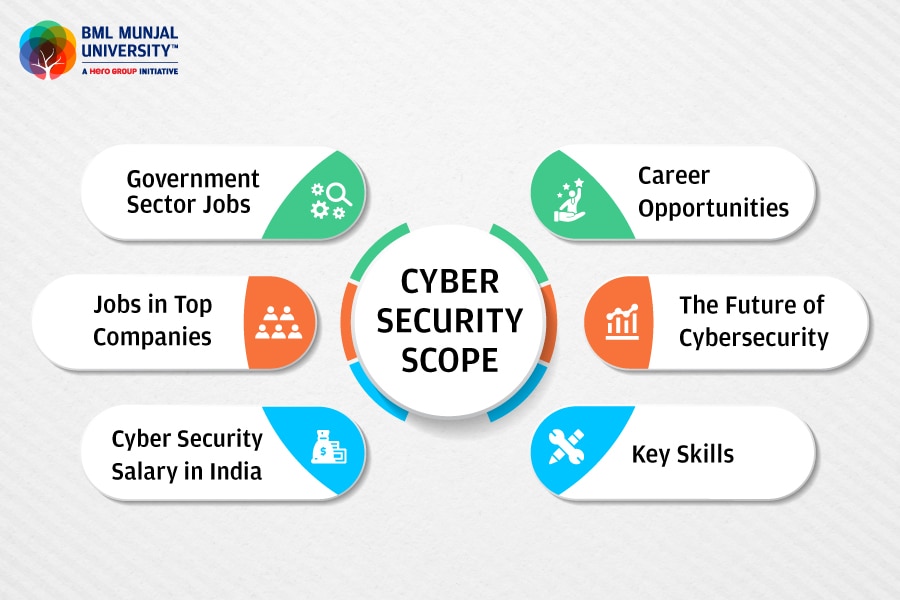
Cybersecurity Scope in India 2026: Jobs, Salaries, Career Scope & Emerging Trends
Key Takeaways Cybersecurity scope in India is expanding due to rising cyber threats and rapid digitalisation. Career opportunities span SOC, e...

Data Science vs Computer Science: Which Course Should You Choose After 12th?
Key Takeaways Computer Science builds software; Data Science turns data into AI-driven insights. Choose Computer Science if you enjoy coding a...
VLSI Design Course: Scope, Salary Insights & Global Career Prospects
Key Takeaways: VLSI (Very Large Scale Integration) is the discipline behind every chip in your phone, EV and data centre server, packing millions...

Direct Admission in B.Tech. 2026: Process, Eligibility Criteria & Fee Structure
The Indian technical market continues to grow significantly and represents more than 7.4% of the Indian economy. With the landscape expanding into art...

Why a B.Tech. for Working Professionals Could Be Your Smartest Career Move
The professional landscape is changing extremely quickly and it's common for diploma and technician holders working in industry to encounter an invisi...

B.Tech. for Working Professionals: The Complete Regulatory Compliance & ROI Guide 2026
A Diploma and years of hands-on Mechanical Engineering experience should open bigger career opportunities. But for many working professionals, growth ...