

Data Science vs Computer Science: Which Course Should You Choose After 12th?


Admissions Enquiry
Summary: Data Science vs Computer Science is not about which course is universally better- it’s about which one aligns with your interests and career goals. Choose Computer Science if you enjoy programming, software development and building technology. Select Data Science if you’re interested in AI, machine learning, statistics and turning data into insights. Both courses offer excellent career opportunities, competitive salaries and strong future demand, making either a smart choice after Class 12.
Key Takeaways
- Computer Science builds software; Data Science turns data into AI-driven insights.
- Choose Computer Science if you enjoy coding and software development.
- Choose Data Science if you enjoy maths, AI and data analysis.
- Both courses usually require PCM and entrance exams like JEE Main or CUET.
- Data Science may offer higher starting salaries; skills drive long-term growth.
- Computer Science leads to software roles; Data Science leads to AI and analytics careers.
- AI, cloud and machine learning certifications can boost salary and career growth.
- A Computer Science + Data Science & AI specialisation combines flexibility with future-ready skills.
- With 1.25 million AI professionals needed by 2027, both are strong career choices after 12th.
The next billion-dollar innovation won't just need coders- it will need data storytellers, AI innovators and problem-solvers. The real question is- which career path will prepare you to become one?
As artificial intelligence transforms everything from healthcare and finance to entertainment and e-commerce, technology careers are evolving at an unprecedented pace. In fact, NASSCOM estimates that India will need more than 1.25 million AI professionals by 2027, while the country's current AI talent pool is only around 600,000-650,000. This growing talent gap is creating exciting opportunities for students stepping into the world of technology.
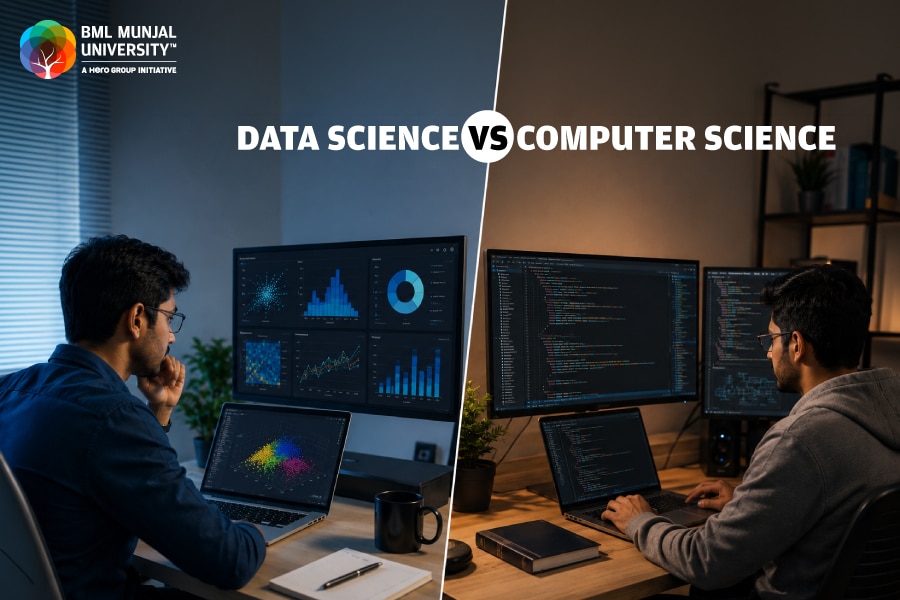
If you're completing Class 12, you've likely come across two of the most popular options- Data Science and Computer Science. Both open doors to high-growth careers, but they aren't the same. One focuses on building intelligent systems and software, while the other turns data into insights that drive smarter decisions.
So, which course is the better choice after 12th? In this guide, we'll compare Data Science vs Computer Science, which helps you choose the path that best matches your interests and career aspirations.
Data Science vs Computer Science- Key Differences at a Glance
If you're choosing after Class 12, Computer Science is ideal if you enjoy coding, software development and system design, while Data Science is a better fit if you're interested in mathematics, data analysis, AI and making data-driven decisions.
Below is a quick overview of the data science vs computer science comparison-
| Factor | Computer Science | Data Science |
| Best for | Students who enjoy coding and building software | Students who enjoy data, AI and analytics |
| Core focus | Software, systems and applications | Data analysis, AI and machine learning |
| Study emphasis | Programming, algorithms and system design | Statistics, machine learning and data modelling |
| Math level | Moderate to high | High (statistics & probability) |
| Key tools | Java, C++, Git, Cloud | Python, SQL, R, Tableau |
| Career scope | Software engineering, cybersecurity, cloud, AI | Data science, AI, analytics, business intelligence |
| Popular entry roles | Software Developer, Systems Engineer | Data Analyst, Junior Data Scientist |
| Long-term roles | Software Architect, Engineering Manager, CTO | Lead Data Scientist, AI Architect, Analytics Director |
| Course availability | Widely offered as B.Tech./BE | Available as B.Tech./B.Sc. or AI & Data Science specialisations |
| Who should choose it? | Those who want a broad tech career | Those who want to specialise in AI and data |
What is Computer Science?
Computer science is the study of computers, computation and the systems that make digital technology work. It covers programming, algorithms, data structures, operating systems, computer networks, databases, artificial intelligence and cybersecurity. Think of it as the engineering backbone of everything digital - the apps on your phone, the websites you browse, the systems that run banks and hospitals.
As a computer science student, you'll learn to design software, solve computational problems and build systems from the ground up. It's a degree available at every level - diploma, undergraduate (B.Tech./BE), postgraduate and PhD.
What is Data Science?
Data science is a multidisciplinary field that uses statistics, mathematics, programming and machine learning to extract insights and predictions from data. Instead of asking “how do I build this system,” a data scientist asks “what does this data tell us and what will happen next?”
Data science sits at the intersection of computer science, statistics and domain knowledge. It involves collecting data, cleaning it, analysing it, building predictive models and communicating findings - often through visualisation and storytelling- so businesses can make better decisions.
Similarities Between Data Science and Computer Science
Data Science and Computer Science share several core skills and concepts, including programming, algorithms, problem-solving and data handling. Both fields also use technologies such as Python, databases, cloud computing and artificial intelligence. The key similarities between Data Science and Computer Science include-
- Programming: Both require coding and programming skills.
- Problem-solving: Both focus on solving complex technical problems.
- Algorithms: Both use algorithms to build efficient solutions.
- Data: Both involve working with data and databases.
- AI and Technology: Both contribute to artificial intelligence and other emerging technologies.
While they share these foundations, Computer Science has a broader focus on computing and software, whereas Data Science focuses more on analysing data, statistics and machine learning.
What Skills Will You Learn in Data Science vs Computer Science?
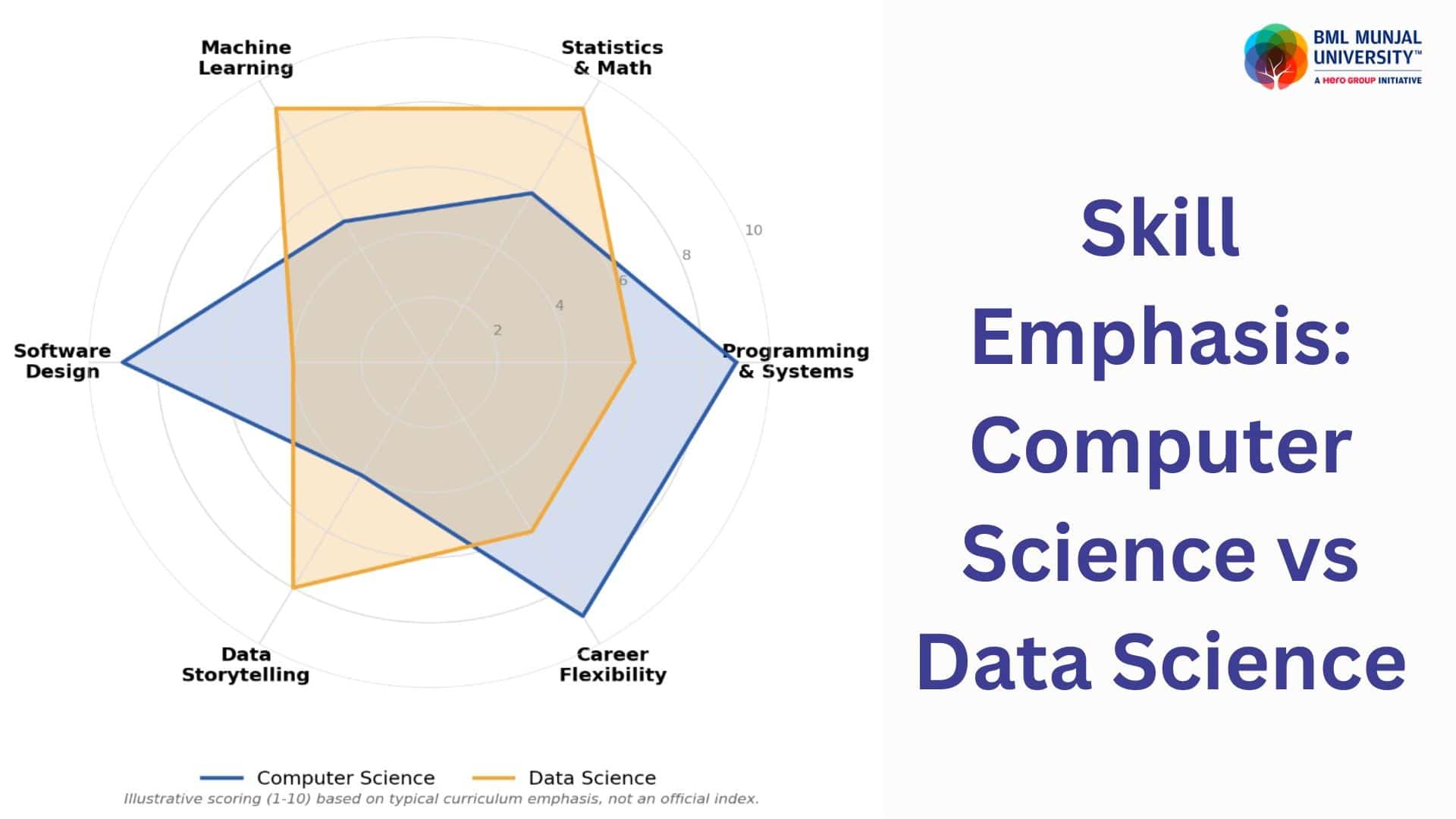
Both Data Science and Computer Science require strong programming skills, but they prepare you for different types of work. Computer Science focuses on software development, algorithms and system design, while Data Science emphasises statistics, machine learning, data analysis and predictive modelling. The illustration below highlights how the skill emphasis differs across the two disciplines.
How to Choose Between Computer Science and Data Science?
The best course depends on your interests and career goals. Choose Computer Science if you want a broad technology degree with flexibility to explore software development, AI, cybersecurity or cloud computing. On the other hand, if you're interested in statistics, machine learning, data analytics and solving business problems with data, you can go with data science.
Choose Computer Science after 12th if you-
- Enjoy building apps, websites, software or computer systems.
- Prefer programming, algorithms and problem-solving over statistical analysis.
- Want the flexibility to explore careers in software engineering, AI, cybersecurity or cloud computing.
- Are looking for a broad technology degree with diverse job opportunities.
Choose Data Science after 12th if you-
- Enjoy statistics, mathematics and analysing data.
- Want to build AI models and extract insights from large datasets.
- Are interested in solving business problems using machine learning and analytics.
- Prefer specialising in AI and data-driven technologies early in your degree.
Eligibility for Data Science vs Computer Science After 12th
To pursue either Computer Science or Data Science after Class 12, students typically need to complete 10+2 with Physics, Chemistry and Mathematics (PCM). Admission is generally based on national entrance exams like JEE Main, CUET or university-specific entrance tests. Data Science programmes may also place greater emphasis on strong mathematical and analytical skills.
| Admission Criteria | Computer Science | Data Science |
| Minimum Qualification | Class 12 (10+2) from a recognised board | |
| Required Subjects | Physics, Chemistry and Mathematics (PCM) | |
| Minimum Marks | Usually 60% or as specified by the university | |
| Entrance Exams | JEE Main, CUET, state-level or university entrance exams | |
| Mathematics Requirement | Essential | Essential; strong mathematical aptitude is highly preferred |
| Admission Mode | Entrance exam and/or merit-based (varies by institution) | |
Which Pays More- Data Scientist or Computer Scientist
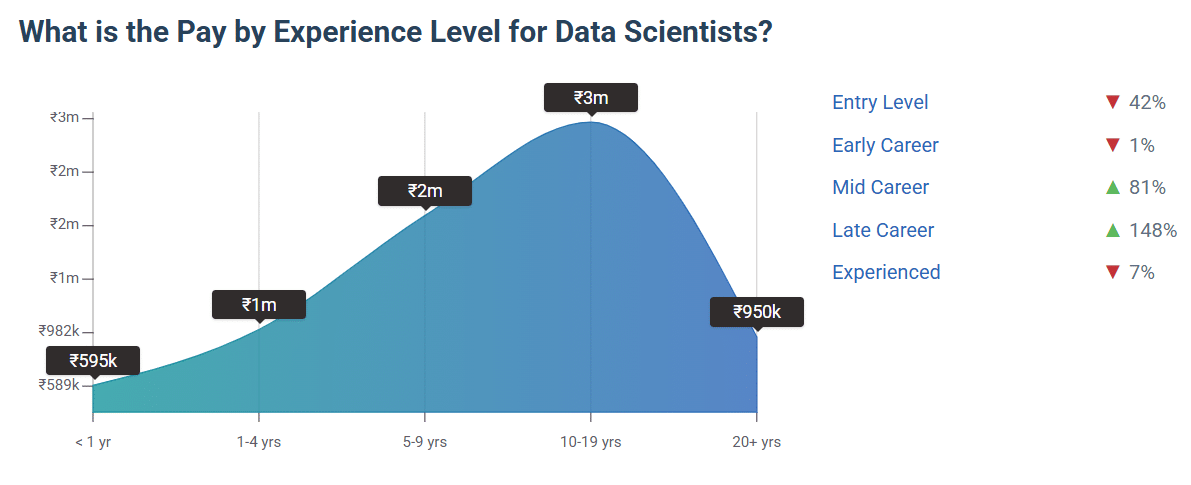
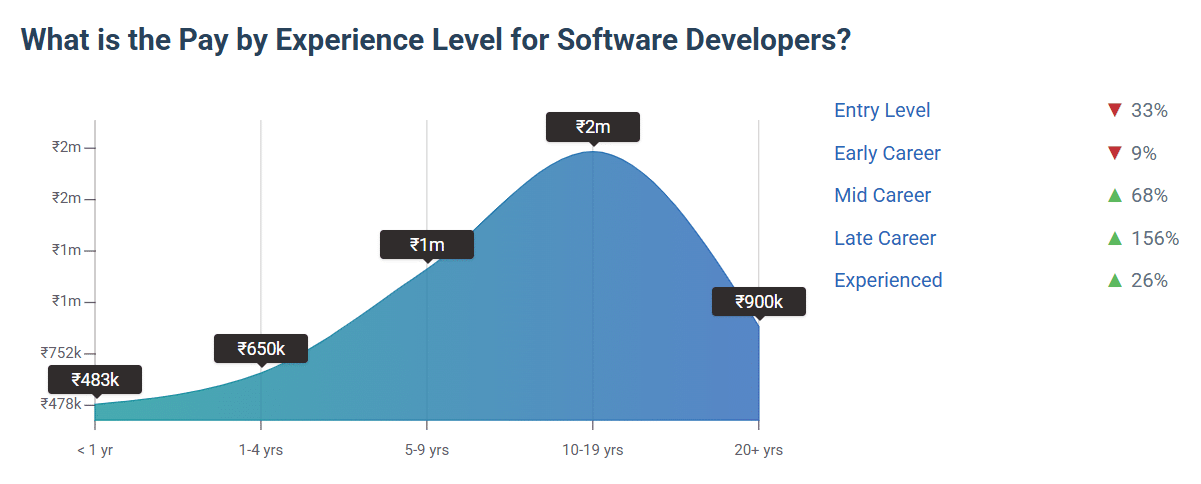
At the entry level, Data Science graduates often earn slightly higher salaries than Computer Science graduates because of their specialised skills in AI, machine learning and analytics. However, over the long term, both careers offer excellent earning potential. Your salary depends more on your skills, projects, college, location and employer than on the degree itself.
Pay by Experience Level for Data Scientists
Source: Payscale
Pay by Experience Level for Software Developers
Source: Payscale
| Career Factor | Computer Science | Data Science |
| Typical Entry Roles | Software Developer, Full-Stack Developer, Systems Engineer | Data Analyst, Junior Data Scientist, ML Engineer |
| Average Fresher Salary | ₹9.7-₹10.7 LPA | ₹15.1-₹16.7 LPA |
| Top Salary Drivers | Strong coding skills, internships, college reputation, product companies | AI/ML expertise, portfolio, domain knowledge, business impact |
What are the Career Growth Opportunities in Data Science vs Computer Science?
Both Data Science and Computer Science offer excellent long-term career growth, but the roles and advancement opportunities differ. Computer Science graduates typically progress into software engineering and technology leadership roles, while Data Science professionals advance into AI, analytics and data-driven decision-making positions.
The table below compares career growth at different stages-
| Career Stage | Computer Science | Data Science |
| Entry-Level Roles | Software Developer, Web Developer, QA Engineer, IT Support Engineer | Data Analyst, Junior Data Scientist, Business Intelligence Analyst, Data Engineer |
| Mid-Level Roles | Senior Software Engineer, Full-Stack Developer, DevOps Engineer, Systems Architect | Data Scientist, Machine Learning Engineer, Senior Data Analyst, Analytics Manager |
| Senior Leadership Roles | Software Architect, Engineering Manager, Chief Technology Officer (CTO), Technical Director | Principal Data Scientist, AI Architect, Data Science Director, Chief Data Officer (CDO) |
| Industries Hiring | IT, Software, FinTech, Gaming, Telecom, Healthcare | Banking, Healthcare, E-commerce, Consulting, FinTech, Manufacturing |
| Long-Term Growth | Engineering Leadership, Product Development, Technology Entrepreneurship | AI Leadership, Data Strategy, Analytics Leadership, AI Entrepreneurship |
Do Certifications or a Master's Degree Increase Pay More in Data Science or Computer Science?
Yes, advanced qualifications can increase earning potential in both fields, but the impact differs. In Data Science, specialised certifications in AI, machine learning and cloud platforms often lead to faster salary growth. In Computer Science, a master's degree or expertise in software engineering, cybersecurity or cloud computing can open doors to senior technical and leadership roles.
Computer Science Certifications-
- AWS Certified Solutions Architect
- Microsoft Certified- Azure Administrator Associate
- Google Professional Cloud Architect
- Cisco Certified Network Associate (CCNA)
- CompTIA Security+
- Certified Kubernetes Administrator (CKA)
- Red Hat Certified System Administrator (RHCSA)
- Oracle Certified Professional (Java)
Data Science Certifications-
- Microsoft Certified- Azure Data Scientist Associate
- Google Professional Data Engineer
- IBM Data Science Professional Certificate
- TensorFlow Developer Certificate
- SAS Certified Data Scientist
- Databricks Certified Data Engineer Associate
- AWS Certified Machine Learning - Speciality
- Tableau Certified Data Analyst
What Are the Latest Trends in Data Science and Computer Science?
Artificial intelligence is reshaping both Data Science and Computer Science, creating new career opportunities and changing the skills employers expect. According to the World Economic Forum's Future of Jobs Report 2025, AI and Big Data are the fastest-growing skills globally, followed by networks and cybersecurity and technological literacy. The report also projects that 170 million new jobs will be created globally by 2030, with roles such as AI specialists, Big Data specialists and software developers among the fastest-growing occupations.
At the same time, NASSCOM estimates that India's AI talent pool will grow from around 600,000–650,000 professionals to more than 1.25 million by 2027, driven by rapid adoption of generative AI and increasing demand for AI, machine learning and data engineering skills across industries.
Key Trends in Data Science-
- Generative AI and Large Language Models (LLMs)
- Machine Learning and Deep Learning
- Data Engineering and MLOps
- Real-time Analytics and Business Intelligence
- Responsible AI and Data Governance
Key Trends in Computer Science-
- AI-powered Software Development
- Cloud Computing and DevOps
- Cybersecurity and Privacy Engineering
- Edge Computing and Internet of Things (IoT)
- Full-Stack Development with AI-assisted Coding
From Computer Science to Data Science: Build Your Future at BML Munjal University
If you're looking for a programme that offers both a strong Computer Science foundation and the opportunity to specialise in emerging technologies, BML Munjal University's B.Tech. in Computer Science and Engineering is designed to prepare students for the future of technology.
The programme builds core expertise in programming, algorithms, software engineering and systems during the initial years, followed by the option to specialise in Data Science & Artificial Intelligence from the fifth semester. Developed in association with Microsoft and supported by global academic collaborations, the curriculum combines classroom learning with hands-on experience through industry projects, high-performance computing facilities and modern AI and IoT laboratories.
Students can also choose from other future-focused specialisations, including Cybersecurity, Internet of Things (IoT), Robotics & Automation and VLSI Design, allowing them to align their studies with evolving career interests.
The best technology career starts with the right learning environment. Discover how BML Munjal University's B.Tech. in Computer Science and Engineering can help you build expertise in Computer Science while specialising in Data Science & AI and other emerging technologies.
Conclusion
When comparing Data Science vs Computer Science, there isn't a one-size-fits-all answer. Computer Science is the right choice if you're passionate about programming, software development and building technology, while Data Science is ideal if you enjoy mathematics, artificial intelligence, machine learning and turning data into actionable insights. Both fields offer excellent career prospects, competitive salaries and strong long-term growth as organisations continue to adopt AI-driven technologies.
If you're still wondering which is better after 12th, focus less on which course is more popular and more on your interests, strengths and career goals. Choosing a future-ready programme that combines strong technical fundamentals with opportunities to specialise in emerging technologies can prepare you for a successful career in today's rapidly evolving digital landscape.
FAQs
It depends on your strengths. Computer Science is more challenging if you find programming, algorithms and system design difficult, while Data Science is harder if you struggle with mathematics, statistics and machine learning.
Yes. A Computer Science graduate can become a Data Scientist by learning Python, SQL, statistics and machine learning. Many professionals transition into data science through certifications, projects and practical experience in AI and analytics.
Data Science requires stronger knowledge of statistics, probability and mathematics because they are essential for machine learning and data analysis. Computer Science focuses more on programming, algorithms, logic and discrete mathematics, although mathematical skills are important in both fields.
A Computer Science degree prepares you for roles such as Software Developer, Full-Stack Developer, Cloud Engineer and Cybersecurity Analyst. A Data Science degree leads to careers like Data Analyst, Data Scientist, Machine Learning Engineer and Business Intelligence Analyst.
Both fields offer excellent long-term career growth. Computer Science provides broader career opportunities across software development, AI, cybersecurity and cloud computing, while Data Science offers specialised roles in AI, machine learning and analytics. The better choice depends on your interests and career goals.
If you’re deciding between Data Science vs Computer Science after 12th, choose Computer Science if you enjoy programming and want a broad technology career. Choose Data Science if you’re interested in mathematics, AI, machine learning and analysing data. A Computer Science programme with a Data Science & AI specialisation can offer the best of both worlds.
Neither is universally better for AI. Computer Science provides a broader foundation in programming, algorithms and software development, while Data Science focuses more on statistics, machine learning and data analysis. If you want flexibility across AI and technology, Computer Science with a Data Science & AI specialisation can be a strong choice.
AI is unlikely to replace Data Scientists completely. Instead, it will automate repetitive tasks such as data cleaning, analysis and model development, allowing professionals to focus on interpreting insights, solving complex problems and making strategic decisions. Skills in AI, machine learning, statistics and domain expertise will remain valuable.
Related Blogs

Core Branches of Engineering: Which One Should You Choose?
India’s engineering sector continues to play an important role in the economy, with engineering exports reaching a record US$116.67 billion in FY202...
Cybersecurity Scope in India 2026: Jobs, Salaries, Career Scope & Emerging Trends
Key Takeaways Cybersecurity scope in India is expanding due to rising cyber threats and rapid digitalisation. Career opportunities span SOC, e...

Mechatronics Engineering Scope in India: Is This the Right Career for You?
Key Takeaways Mechatronics engineering combines mechanics, electronics, software and control systems to create intelligent and automated machines...
VLSI Design Course: Scope, Salary Insights & Global Career Prospects
Key Takeaways: VLSI (Very Large Scale Integration) is the discipline behind every chip in your phone, EV and data centre server, packing millions...

17 Best AI Tools for Students in 2026 (Free & Paid, Category-Wise)
Key Takeaways: 17 AI tools reviewed across 6 categories- concept clarity, research, writing, organisation, presentations and coding Most tools...

Direct Admission in B.Tech. 2026: Process, Eligibility Criteria & Fee Structure
The Indian technical market continues to grow significantly and represents more than 7.4% of the Indian economy. With the landscape expanding into art...