

Cybersecurity Scope in India 2026: Jobs, Salaries, Career Scope & Emerging Trends


Summary: Cybersecurity scope in India is expanding with rising cyber threats, digitalisation and demand for skilled professionals. Explore cybersecurity careers, salaries, essential skills, key industries and the future of cybersecurity in India, including opportunities in AI, cloud security and emerging technologies.
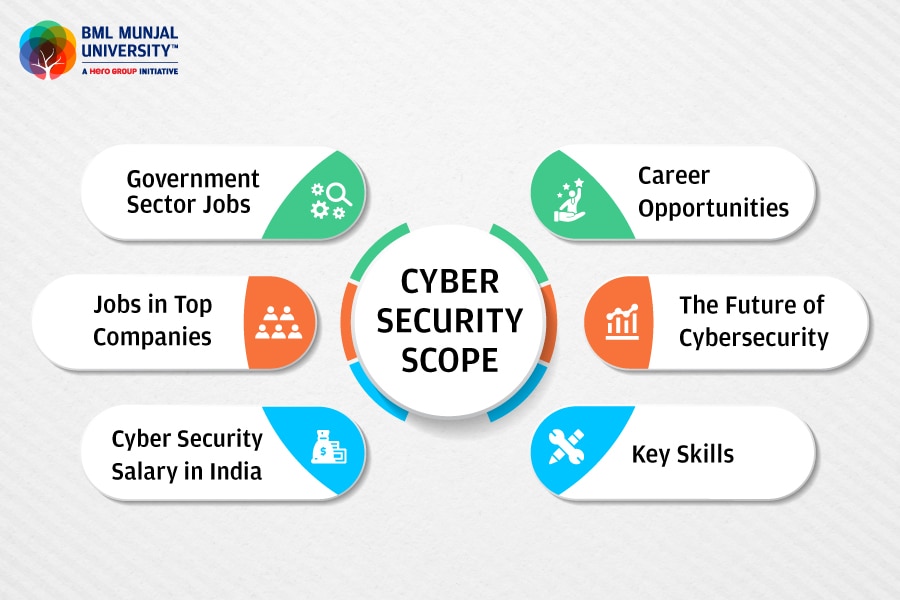
Key Takeaways
- Cybersecurity scope in India is expanding due to rising cyber threats and rapid digitalisation.
- Career opportunities span SOC, ethical hacking, cloud security, application security, GRC, digital forensics and AI security.
- BFSI, IT, government, healthcare, telecom and e-commerce are among the key sectors hiring cybersecurity professionals.
- Cybersecurity salaries increase with experience, specialisation and technical expertise.
- Key skills include networking, operating systems, programming, security concepts and hands-on practice.
- The future of cybersecurity in India is expected to create opportunities in AI, cloud, OT/ICS and other emerging security areas.
Every 18 seconds, CERT-In records another cyber security incident in India.
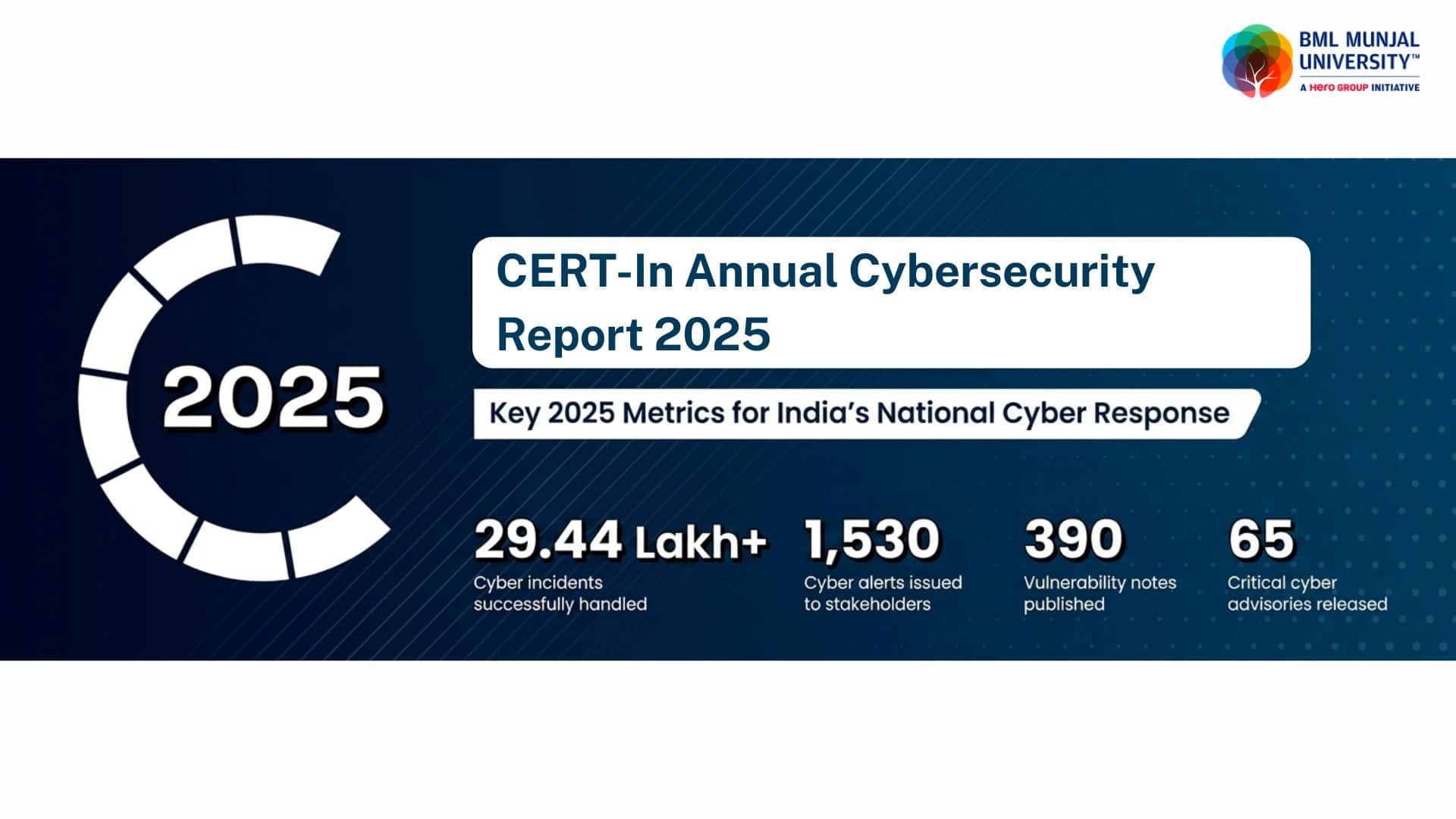
In 2025 alone, CERT-In handled over 29.44 lakh cyber incidents. Behind these numbers is a country digitising at remarkable speed while facing an equally rapid rise in cyber threats and a growing shortage of skilled cybersecurity professionals.
This widening gap is driving the cybersecurity scope in India.
As businesses, financial institutions, government services and individuals move more of their operations online, the demand for professionals who can protect networks, data, applications and cloud infrastructure continues to grow. Career opportunities span roles such as SOC Analyst, Penetration Tester, Cloud Security Engineer, Security Consultant and GRC Specialist, with salaries ranging from entry-level opportunities to ₹4.1-₹42.8 LPA or more for experienced professionals.
Whether you are a student exploring career options, a graduate choosing a specialisation or simply trying to understand the future of the field, this guide helps you understand the scope of cyber security in India, including career opportunities, salary prospects, in-demand skills and future growth.
What Areas Does Cyber Security Cover?
Beyond career opportunities, 'scope' also refers to how broad the field itself is. Cyber security spans several core domains that together protect an organisation's digital assets-
- Network Security- Protecting the infrastructure that connects systems, from firewalls to VPNs
- Application Security- Securing software and web applications against exploitation
- Cloud Security- Protecting data and workloads hosted on cloud platforms
- Data Security- Encryption, access control and protection of sensitive information
- Endpoint Security- Securing laptops, mobile devices and other access points
- Identity and Access Management (IAM)- Controlling who can access what and verifying that they are who they claim to be
- Governance, Risk and Compliance (GRC)- Policies, audits and regulatory alignment
Each of these domains maps to one or more of the career specialisations covered below- network security work feeds into network security engineer roles, application security into AppSec roles and so on.
Why Cyber Security Scope Is Expanding in India
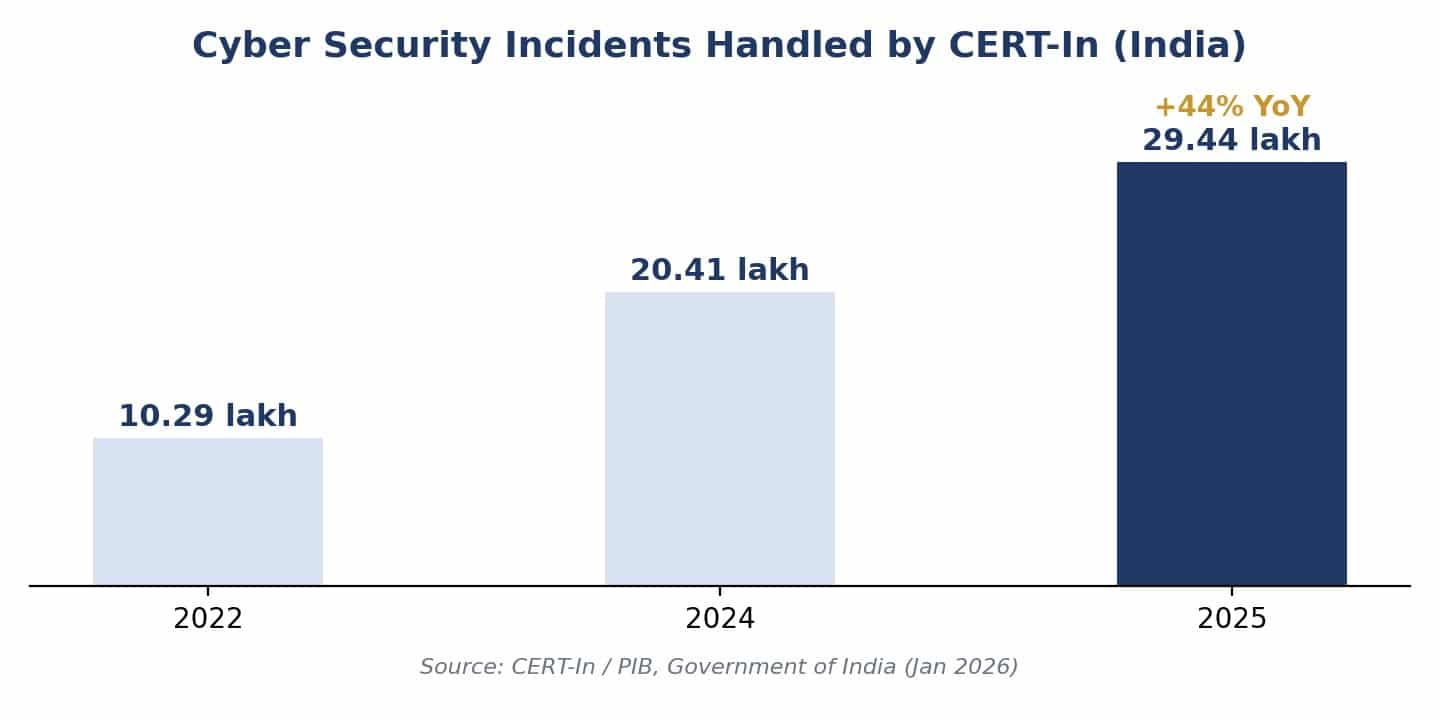
India's digital economy is expanding faster than its pool of trained security professionals and the government's own incident-response data shows exactly how fast. According to CERT-In data released by the Press Information Bureau, India's Computer Emergency Response Team handled 29.44 lakh cybersecurity incidents in 2025- up 44% from 20.41 lakh in 2024 and nearly triple the 10.29 lakh incidents recorded in 2022.
In response, CERT-In empanelled 231 certified cyber security audit organisations in 2025 and issued 1,530 security alerts and 390 vulnerability notes over the year. The Union Budget 2025-26 separately allocated ₹782 crore specifically for cyber security initiatives - a clear signal of how central the field has become to national digital infrastructure, not just corporate IT.
The India Cyber Security Skilling Landscape Report 2025-26, published jointly by the Data Security Council of India (DSCI) and the SANS Institute, quantifies the resulting talent gap: 73% of enterprises and 68% of service providers report difficulty finding skilled cyber security talent and key roles are taking up to six months to fill.
The same report found that 83% of organisations now consider AI security skills essential, showing how quickly the field is changing. It also found that many organisations are struggling to hire OT/ICS security specialists who protect industrial systems and infrastructure. This creates opportunities in specialised areas for freshers who develop these skills early.
What Career Paths Exist Within the Scope of Cybersecurity?
The scope of cybersecurity offers a wide range of career paths, including security operations, ethical hacking, cloud security, application security, incident response, digital forensics, risk management and security consulting. Professionals can choose a specialisation based on their technical interests, skills and career goals.
Here are some of the most common cybersecurity career paths in India and their indicative salary ranges-
| Career Path | What the Role Involves | Approx. Salary in India |
| Security Operations (SOC) | Monitoring systems, detecting threats and responding to security incidents. | ₹5.2-5.8 LPA |
| Ethical Hacking & Penetration Testing | Identifying vulnerabilities in networks, applications and systems before attackers can exploit them. | ₹9.9-10.9 LPA |
| Network Security | Protecting an organisation’s networks, infrastructure and connected systems from cyber threats. | ₹5-10 LPA |
| Cloud Security | Securing cloud platforms, applications, workloads and data against attacks and misconfigurations. | ₹12.2-13.5 LPA |
| Application Security | Finding and fixing security vulnerabilities in websites, software and applications. | ₹6-10+ LPA |
| Incident Response | Investigating and managing cyber incidents to contain threats and reduce their impact. | ₹7.6-9.1 LPA |
| Digital Forensics | Examining digital evidence to understand how a cyber incident occurred and identify relevant activity. | ₹4.6-5.7 LPA |
| Governance, Risk & Compliance (GRC) | Managing cybersecurity policies, risk assessments, audits and regulatory requirements. | ₹5-9 LPA |
| Cybersecurity Consulting | Helping organisations identify security risks and develop strategies to strengthen their cybersecurity posture. | ₹11.2-12.4 LPA |
| AI & Emerging Technology Security | Protecting AI systems and emerging technologies from security threats, misuse and vulnerabilities. | ₹14.6-19.5 LPA |
Note: Salary ranges are from Glassdoor and AmbitionBox and can vary based on experience, skills, location, certifications, organisation and job role.
Emerging Trends and Technologies in Cyber Security
The future of cybersecurity in India is being shaped by AI, cloud adoption, automation and increasingly complex digital infrastructure. Key trends influencing the cybersecurity scope in India 2026 include-
- AI-Powered Cybersecurity- AI is being used for threat detection, security monitoring, vulnerability analysis and incident response. This is also creating demand for professionals who can secure AI systems.
- Cloud Security- As businesses move applications and data to cloud environments, demand for cloud security skills is increasing.
- Zero Trust Security- Organisations are adopting continuous verification of users, devices and access instead of relying only on traditional network boundaries.
- Application and API Security- The growing use of digital applications and APIs is increasing the need for secure software development and application security.
- OT and ICS Security- Industrial systems and critical infrastructure require specialised protection, creating opportunities for professionals with operational technology security skills.
- Identity and Access Management- Protecting digital identities, privileged accounts and access rights is becoming increasingly important across cloud and enterprise environments.
- AI Security and Automation- The combination of cybersecurity and AI is creating opportunities in AI security, automated threat detection and security operations.
These trends are also reflected in India's growing cybersecurity market. Mordor Intelligence industry report estimates that the Indian cybersecurity market will grow from USD 6.56 billion in 2026 to USD 15.06 billion by 2031, at a CAGR of 18.07%. This growth indicates increasing demand for cybersecurity solutions and skilled professionals across emerging technology areas.
Which Industries Have the Largest Cybersecurity Scope and Needs?
Cybersecurity has strong scope across industries in India, especially sectors that handle sensitive data, financial transactions and critical digital infrastructure. The major industries creating demand for cybersecurity professionals include-
- Banking, Financial Services and Insurance (BFSI)
- Information Technology and IT-Enabled Services (IT & ITES)
- Government and Public Sector
- Healthcare and Life Sciences
- Telecommunications
- E-commerce and Retail
- Manufacturing and Industrial Sector
- Energy and Utilities
- Defence and Aerospace
- Education and EdTech
Top Companies Hiring Cybersecurity Engineering Graduates
Cybersecurity graduates can explore opportunities across IT services, technology companies, cybersecurity product firms, consulting organisations and financial institutions. Companies commonly associated with cybersecurity hiring include-
- TCS
- Wipro
- Cisco
- IBM
- Microsoft
- Fortinet
- Palo Alto Networks
- Sophos
- McAfee
- Trend Micro
- Check Point
- Dell Technologies
- DXC Technology
The exact roles and hiring requirements vary by company and experience level.
Cyber Security Scope in Government Sector
The cyber security scope in the government sector is expanding as public services, critical infrastructure and government systems become increasingly digital. Opportunities can exist across government departments, public-sector organisations, defence-related establishments, law-enforcement agencies and national cybersecurity initiatives.
Roles may involve areas such as-
- Cybersecurity monitoring and incident response
- Digital forensics and cybercrime investigation
- Network and infrastructure security
- Security auditing and compliance
- Threat intelligence
- Data and information security
- Critical infrastructure protection
Cyber Security Salary in India by Experience
The average cyber security salary in India varies by experience, technical skills, specialisation, location and employer. As professionals gain hands-on experience and move into specialised or leadership roles, their earning potential generally increases-
| Experience Level | Typical Salary Range (Per Annum) |
| 0-1 Years | ₹4.2-₹5.6 LPA |
| 1-3 Years | ₹4.8-6.4 LPA |
| 3-6 Years | ₹7.8-10.1 LPA |
| 6-9 Years | ₹11-16.4 LPA |
| 9-12 Years | ₹37.8-41.8 LPA |
Source: AmbitionBox
What Skills are Required for a Cyber Security Career?
To build a career in cybersecurity, you need a combination of networking, operating system, programming, security and hands-on technical skills. Building these skills step by step can help you develop the foundation needed for entry-level cybersecurity roles and later specialise in a specific area.
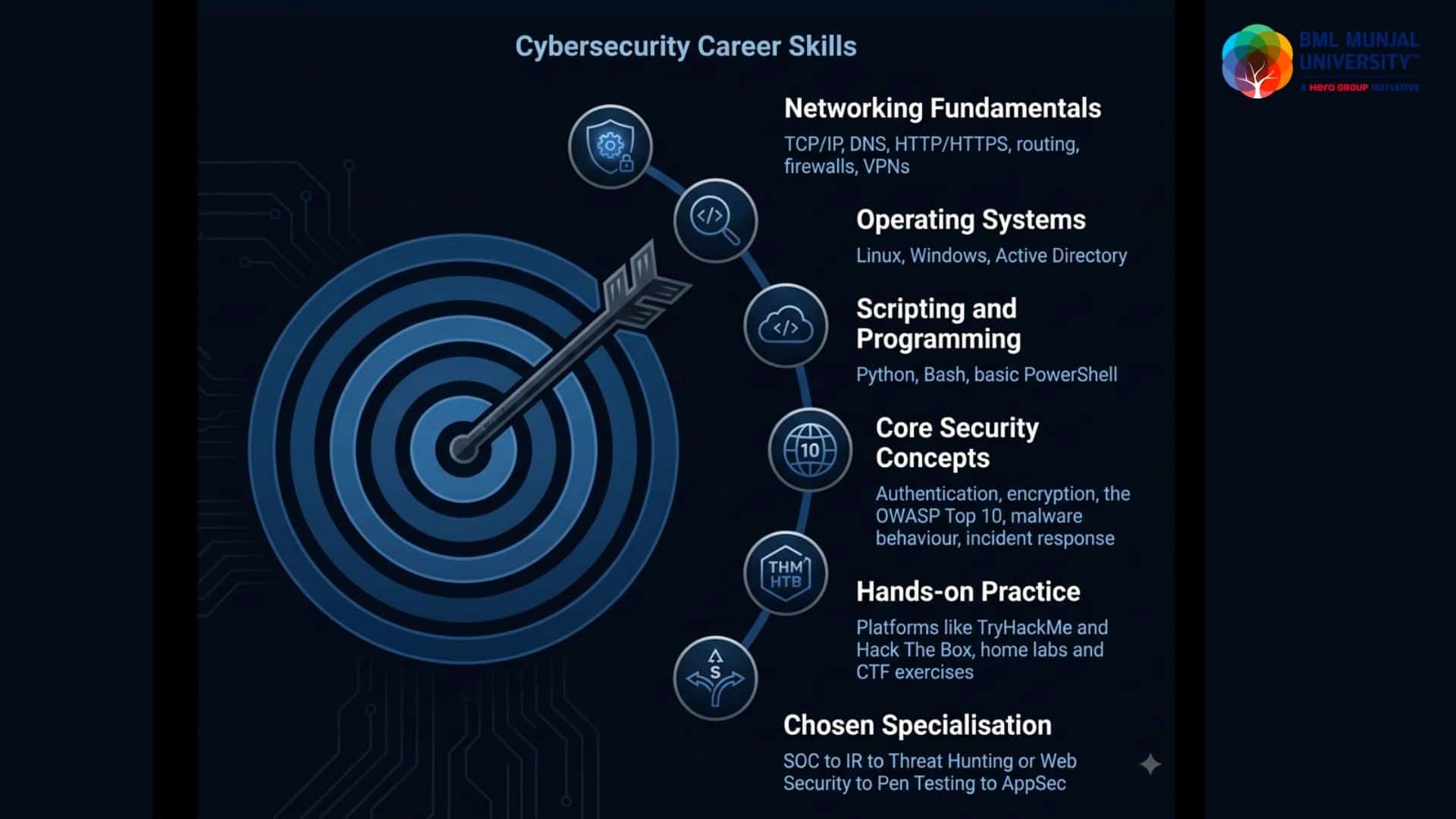
Below is the list of essential skills for a successful cybersecurity career-
- Networking Fundamentals- TCP/IP, DNS, HTTP/HTTPS, routing, firewalls, VPNs
- Operating Systems- Linux, Windows, Active Directory
- Scripting and Programming- Python, Bash, basic PowerShell
- Core Security Concepts- Authentication, encryption, the OWASP Top 10, malware behaviour, incident response
- Hands-on Practice- Platforms like TryHackMe and Hack The Box, home labs and capture-the-flag (CTF) exercises
- Chosen Specialisation- For example, SOC to Incident Response to Threat Hunting or Web Security to Penetration Testing to AppSec
How to Start a Cybersecurity Career in India in 2026
To start a cybersecurity career in India, build technical fundamentals, gain practical experience and specialise in an in-demand security area. Below are the steps that you can follow to enter this dynamic field-
- Step 1- Build technical fundamentals in networking, operating systems and programming.
- Step 2- Learn cybersecurity basics such as encryption, authentication, vulnerabilities and security operations.
- Step 3- Gain practical experience through labs, projects and security exercises.
- Step 4- Learn essential security tools for monitoring, testing and threat detection.
- Step 5- Choose a specialisation such as ethical hacking, SOC, cloud security, AppSec, GRC or AI security.
- Step 6- Build a project portfolio to demonstrate your practical cybersecurity skills.
- Step 7- Gain industry exposure through internships and entry-level cybersecurity roles.
- Step 8- Keep upskilling to stay updated with emerging threats and technologies.
Build Your Cyber Security Career with B.Tech. CSE at BML Munjal University
With the growing cybersecurity scope in India, choosing a programme that combines computer science fundamentals with specialised cybersecurity skills can help students prepare for evolving technology and security roles.
The B.Tech. Computer Science and Engineering at BML Munjal University (BMU) offers a Cyber Security specialisation alongside other CSE specialisations such as Data Science & AI and IoT & Cloud Computing. The programme focuses on industry-relevant learning and practical exposure.
Here are some key features that make this course stand out-
- Dedicated, industry-grade labs for practical learning
- AI integrated across the curriculum
- Hands-on learning through scenario-driven projects
- Cybersecurity exposure through penetration testing, cyber forensics and malware analysis
- Hackathons, guest lectures and industry interactions
- Faculty with real-world industry experience
- Career simulations, industry immersion and placement support
For students looking to build skills in the cybersecurity field, BMU's B.Tech. Computer Science and Engineering offers a focused pathway into the growing cybersecurity field. Apply Now!
Conclusion
The cybersecurity scope in India continues to expand as digitalisation, cyber threats and the need for skilled professionals grow. From network security and ethical hacking to cloud, AI security and GRC, the field offers diverse career opportunities across industries.
The future of cybersecurity in India is also expected to create demand for specialised skills in emerging technologies. For aspiring professionals, building strong technical foundations, gaining hands-on experience and choosing the right specialisation can help them prepare for a rewarding cybersecurity career.
FAQs
The scope of cyber security in India is strong and expanding, driven by rising cyber threats, rapid digitalisation and a shortage of skilled professionals. Career opportunities are available across BFSI, IT, government, healthcare, e-commerce, telecom and other industries.
Some of the highest-paying cybersecurity roles in India include Cloud Security Engineer, AI Security Engineer, Cybersecurity Consultant, Security Architect, Penetration Tester and senior Incident Response or Threat Intelligence roles. Salaries vary significantly based on experience, specialisation, technical skills, location and employer.
The cybersecurity scope for freshers is growing across roles such as SOC Analyst, Security Analyst, Junior Cybersecurity Engineer and IT Security Support. Building networking, programming and security skills, along with practical projects or internships, can improve entry-level opportunities.
Yes, cybersecurity is a strong career option in India in 2026. Rising cyber threats, cloud adoption, AI integration and digitalisation are increasing the need for skilled professionals. However, candidates need strong technical knowledge and practical skills to stand out in the job market.
Cybersecurity can be a high-paying career, particularly in specialised areas such as cloud security, AI security, application security and security architecture. Entry-level salaries are generally lower, while professionals with experience and specialised skills can command significantly higher compensation.
AI is unlikely to replace cybersecurity professionals completely. It will automate routine tasks like monitoring and threat detection, while human expertise remains essential for complex threats, risk management and securing AI systems.
A cybersecurity fresher in India may typically earn around ₹4-6 LPA, although the actual package varies by role, location, employer, qualifications and practical skills. Candidates with relevant internships, projects and specialised technical knowledge may have better opportunities.
Neither cybersecurity nor software development is universally better. Software development offers a broader range of programming and product-building roles, while cybersecurity focuses on protecting systems, applications, networks and data. Students should choose based on their interests, technical strengths and preferred career path.
Related Blogs

Data Science vs Computer Science: Which Course Should You Choose After 12th?
Key Takeaways Computer Science builds software; Data Science turns data into AI-driven insights. Choose Computer Science if you enjoy coding a...

Mechatronics Engineering Scope in India: Is This the Right Career for You?
Key Takeaways Mechatronics engineering combines mechanics, electronics, software and control systems to create intelligent and automated machines...
VLSI Design Course: Scope, Salary Insights & Global Career Prospects
Key Takeaways: VLSI (Very Large Scale Integration) is the discipline behind every chip in your phone, EV and data centre server, packing millions...

Direct Admission in B.Tech. 2026: Process, Eligibility Criteria & Fee Structure
The Indian technical market continues to grow significantly and represents more than 7.4% of the Indian economy. With the landscape expanding into art...

Why a B.Tech. for Working Professionals Could Be Your Smartest Career Move
The professional landscape is changing extremely quickly and it's common for diploma and technician holders working in industry to encounter an invisi...

B.Tech. for Working Professionals: The Complete Regulatory Compliance & ROI Guide 2026
A Diploma and years of hands-on Mechanical Engineering experience should open bigger career opportunities. But for many working professionals, growth ...