
Core Branches of Engineering: Which One Should You Choose?


Admissions Enquiry
Summary – The core branches of engineering, including computer science engineering, mechanical engineering and electrical engineering, offer different learning paths and career opportunities. Understanding their focus areas can help students choose a B.Tech. branch that matches their interests and career goals.
India’s engineering sector continues to play an important role in the economy, with engineering exports reaching a record US$116.67 billion in FY2025. At the same time, employers are placing greater emphasis on practical and tech-oriented skills, including expertise in areas such as AI, robotics and IoT. This makes your choice of B.Tech. specialisation an important decision.
Machines, circuits or code - which one sounds more like you? Your answer could be the first clue to finding the right engineering branch.
Among the core branches of engineering, mechanical engineering, electrical engineering and computer science and engineering remain popular options. But each takes you in a very different direction.
Before choosing a branch, it helps to understand what are the core branches of engineering and which one best matches your interests, strengths and career goals. Instead of choosing a branch simply because it is popular, it is better to understand what you will actually study, the kind of work you may do later and whether the subject matches your interests.
What Is Core Engineering?
Core engineering refers to foundational engineering disciplines that apply scientific principles and technical knowledge to solve real-world problems. These branches include Computer Science and Engineering, Electrical Engineering, Civil Engineering, Chemical Engineering and Mechanical Engineering, combining core engineering concepts with opportunities to explore specialised fields.
Core Engineering Branches - The Foundation of Every Innovation
Core engineering branches provide the scientific and technical foundation for developing technologies, solving practical problems, and improving the systems people use every day.
From computer software and digital security to machines, electronics, and industrial automation, these disciplines turn engineering concepts into real-world applications.
Understanding what each branch involves, the subjects you will study, and the career paths available can help you decide which specialisation matches your interests and future goals.
1. Computer Science Engineering
CSE focuses on designing, developing and maintaining software, computing systems and digital technologies. It brings together subjects like computing fundamentals, mathematics, programming and design with hands-on labs, industry projects and research.
The demand for digital skills makes CSE relevant across industries. The World Economic Forum’s report shows that software and application developers, big data specialists and AI and ML specialists are among the fastest-growing job roles globally through 2030.
What Does CSE Involve?
Students learn how to build software, manage data, solve computational problems and design secure and efficient systems. Key topics are-
- Programming languages and data structures
- Algorithms and software engineering
- Operating systems and computer networks
- Artificial intelligence and machine learning
- Database management and cloud computing
- Cybersecurity and Internet of Things (IoT)
Who Should Consider This Core Engineering Branch?
This branch may suit students who enjoy logical reasoning, mathematics, problem-solving and exploring how technology works.
Career Opportunities for CSE Graduates-
- Software Developer/Engineer
- Data Scientist/Analyst
- AI/ML Engineer
- Cybersecurity Analyst
- Cloud Solutions Engineer
- Full-Stack Developer
- Network Engineer
2. Mechanical Engineering
ME focuses on designing, analysing, manufacturing and maintaining machines and mechanical systems. It combines physics, mathematics, materials science and engineering design to solve practical problems across industries.
The field remains relevant as India's manufacturing sector expands. According to the PIB, manufacturing gross value added grew by 7.72% in Q1 and 9.13% in Q2 of FY 2025-26, which showcases the continuous growth in this field.
What Does Mechanical Engineering Involve?
Students learn how to design mechanical components, understand energy and fluid systems, improve manufacturing processes and develop automated solutions. Key areas of study include-
- Thermodynamics and heat transfer
- Fluid mechanics, hydraulics, and pneumatics
- Machine design and mechanical systems
- Manufacturing processes and industrial engineering
- Mechatronics, robotics, and automation
- CAD, CAM, SOLIDWORKS and ANSYS
- Automotive systems and combustion
- Applications of machine learning in engineering
What Kind of Students Should Choose This Branch?
This branch may suit students who enjoy physics, understanding how machines work, designing products, and solving technical problems.
Career Opportunities for Mechanical Engineering Graduates-
- Mechanical Design Engineer
- Manufacturing Engineer
- Automotive Engineer
- Robotics and Automation Engineer
- Thermal Engineer
- Aerospace Engineer
- CAD/CAM/CAE Engineer
- Research and Development Engineer
3. Electrical Engineering
Electrical Engineering focuses on the study and application of electrical systems, electronic circuits, communication technologies and intelligent devices. The field is relevant as India's electronics manufacturing industry expands. PIB reports that India's electronics manufacturing ecosystem supported approximately 25 lakh direct and indirect jobs in 2026, reflecting the sector's role in industrial employment.
What Does Electrical Engineering Involve?
Students learn how electronic circuits and computing systems function, how devices communicate and how embedded technologies are developed. The curriculum covers-
- Basic electrical and electronics engineering
- Circuit analysis and digital electronics
- Microprocessors and microcontrollers
- Embedded systems and communication systems
- VLSI design and semiconductor technology
- Artificial Intelligence and Machine Learning
- Internet of Things (IoT)
- Robotics and automation
Who Can Benefit from Studying This Branch?
This suits students who enjoy physics, electronic devices, circuits, logical reasoning, and understanding how hardware and software work together.
Career Opportunities for Electrical Engineering Graduates-
- Electronics Engineer
- Embedded Systems Engineer
- VLSI Design Engineer
- Communication Engineer
- AI/ML Engineer
- Cybersecurity Engineer
- Robotics and Automation Engineer
- Software Engineer
4. Civil Engineering
Civil Engineering focuses on planning, designing, constructing and maintaining infrastructure such as buildings, roads, bridges, airports, dams, and water supply systems. It blends mathematics, physics, material science and engineering design to develop safe, durable and sustainable structures.
India's National Highway network reached 1,46,572 km in FY 2025-26, compared with 91,287 km in FY 2013-14. This expansion highlights the importance of civil engineers in the country’s growth.
What Does Civil Engineering Involve?
Students learn how to design structures, assess construction materials, understand soil behaviour, plan transportation systems and manage infrastructure projects. Main learning areas include-
- Structural engineering and building design
- Construction materials and technology
- Surveying and geomatics
- Geotechnical engineering and soil mechanics
- Transportation and highway engineering
- Environmental engineering and sustainability
- Hydraulics and water resource management
- Construction planning and project management
Would You Enjoy Studying This Engineering Branch?
This branch is a good fit for students who enjoy physics, mathematics, design, construction, and solving practical problems related to buildings and infrastructure.
Career Opportunities for Civil Engineering Graduates-
- Civil Site Engineer
- Structural Engineer
- Construction Project Manager
- Transportation Engineer
- Geotechnical Engineer
- Environmental Engineer
- Water Resources Engineer
- Urban Planner
5. Chemical Engineering
Chemical Engineering focuses on applying chemistry, physics, mathematics, and engineering principles to transform raw materials into useful products.
Chemical Engineering plays an important role in India's manufacturing economy. According to the Economic Survey 2025–26, the chemicals and petrochemicals sector contributed 8.1% of manufacturing GVA in FY 2023–24.
What Does Chemical Engineering Involve?
Students learn how to design chemical processes, understand material and energy transfer, operate production systems, and improve industrial efficiency. They learn about-
- Chemical process calculations and thermodynamics
- Fluid mechanics and heat transfer
- Mass transfer and separation processes
- Chemical reaction engineering
- Process control and instrumentation
- Process plant design and simulation
- Industrial safety and environmental engineering
- Sustainable chemical processes and waste management
How to Know If This Branch Is Right for You
The branch may appeal if you’re interested in chemistry, mathematics, physics and practical experimentation.
Career Opportunities for Chemical Engineering Graduates-
- Process Engineer
- Production Engineer
- Quality Control Engineer
- Process Design Engineer
- Research and Development Engineer
- Environmental Engineer
- Petroleum Engineer
- Safety Engineer
Emerging B.Tech. Branches You Should Know About
Emerging B.Tech. branches combine traditional engineering principles with advanced technologies to address new challenges across industries. The specialisations given below suit students who enjoy innovation, interdisciplinary learning and exploring new technical applications.
| Sr. Number | Emerging branch | What it focuses on |
|
|
Artificial Intelligence and Machine Learning | Intelligent systems, algorithms, and predictive models |
|
|
Robotics and Automation | Robotic systems, sensors, and automated processes |
|
|
VLSI Design | Semiconductor chips and integrated circuits |
|
|
Nanotechnology | Materials and devices engineered at the nanoscale |
|
|
Renewable Energy | Solar, wind, and other sustainable energy technologies |
|
|
Internet of Things (IoT) | Connected devices, sensors, and smart systems |
Core Engineering Branches vs Emerging Specialisations
The line between traditional and emerging engineering is becoming less rigid. Core branches such as ME, EE and CSE continue to build the fundamentals students need, while newer specialisations allow them to apply those fundamentals to areas such as AI, robotics, nanotechnology, and renewable energy.
For a student choosing a B.Tech. after Class 12, the difference can be understood like this-
| Comparison factor | Core engineering branches | Emerging specialisations |
| Main focus | Fundamental engineering principles and established systems | New technologies and interdisciplinary applications |
| Examples | Civil, Mechanical, Electrical, Chemical Engineering | AI and ML, Robotics, Nanotechnology, Renewable Energy |
| Key learning areas | Structural design, mechanics, thermodynamics, chemical processes | Machine learning, automation, advanced materials, clean energy |
| Career opportunities | Design Engineer, Civil Engineer, Production Engineer, Process Engineer | AI Engineer, Robotics Engineer, Nanotechnology Researcher, Renewable Energy Engineer |
| Skills required | Mathematical reasoning, technical design, and problem-solving | Analytical thinking, adaptability, and specialised technical skills |
How to Choose the Right Core Engineering Branch?
Choosing a core engineering branch means matching your interests, academic strengths and career goals with the right discipline. Each branch offers different subjects, practical experiences and career opportunities. Consider the factors given below before making your decision-
- Identify Your Interests and Strengths
Choose a branch that matches your interests and motivates you to learn. Consider the subjects you enjoy, your academic strengths, and the type of problems you like solving.
- Understand the Syllabus
Review the subjects taught in each branch. Check whether the core topics match with what you like.
- Explore Career Options
Explore potential job roles, industries, salaries and higher-study options. Consider the type of work you would enjoy rather than focusing only on starting salaries.
- Consider Industry Trends
Explore how technologies such as AI, robotics and renewable energy are influencing traditional engineering fields.
- Evaluate the College
Compare faculty, labs, internships, industry collaborations, project opportunities and branch-specific placement data.
Shape Your Engineering Career at BML Munjal University
Pursuing a B.Tech. is about more than selecting a branch.
BMU structures its B.Tech. programmes around technical fundamentals, experiential learning, projects, internships and research-driven innovation. Students can choose from branches such as Computer Science and Engineering, Electronics and Computer Engineering and Mechanical Engineering, along with opportunities to explore areas such as AI and Data Science, Robotics & Automation, IoT, Cyber Security and VLSI Design.
Given below are some of the main reasons why you should choose BMU-
- Experiential Learning - Students learn through projects, laboratory work, internships and industry-oriented experiences rather than relying only on classroom theory.
- Exposure to Emerging Technologies - Students can explore areas such as AI and Data Science, IoT, Robotics & Automation, Cyber Security and VLSI Design alongside minor areas such as Energy Harvesting and Storage, Materials Science, Nanotechnology, Entrepreneurship and Computational Mathematics.
- Modern Labs and Facilities - BMU lists dedicated facilities including Robotics, CNC, Mechatronics, Automation, Electrical, Pneumatics & Hydraulics, Product Design & Validation and High Performance Computing labs.
- Research and Innovation - The programme provides exposure to research and innovation. The university's School of Engineering & Technology focuses on developing students as engineers, innovators and entrepreneurs, while its labs and research facilities support engineering R&D activities.
- Opportunities Beyond the Classroom - Alongside academics, students can participate in clubs, sports and other campus activities, creating a more rounded university experience.
Along with all these, the university’s placement record shows the highest package reaching 59.35 LPA, reflecting its strong industry connections and focus on career development.
The Bottom Line
Choosing among the core branches of engineering is an important decision that should go beyond trends or placement numbers. ME, EComE and CSE offer different learning experiences and career pathways, from machines, design and manufacturing to electronics, embedded systems, AI, software and data.
Ultimately, the right B.Tech. branch depends on your interests, strengths and career goals. Understanding each branch and its connection with emerging technologies can help you make an informed choice, while universities such as BML Munjal University provide opportunities to strengthen engineering knowledge through projects, internships, research and industry exposure.
Ready to build your future in engineering? Explore B.Tech. programmes at BMU and take the first step towards a rewarding career. Apply Now.
FAQs
The core engineering branches include Computer Science, Mechanical, Civil, Electrical and Chemical Engineering. Each focuses on different technical areas, industries and applications.
Demand varies with industry trends, location and skill sets. CS, Electrical and ME offer opportunities in many growing areas such as AI, electronics, automation and advanced manufacturing.
Graduates may start as software developers, design engineers, site engineers, electrical engineers, or process engineers, depending on their specialisation. Internships, practical projects, and relevant technical skills can help prepare them for these roles.
Electrical Engineering is often considered one of the hardest core branches due to its complex concepts in circuit theory, electromagnetics, and control systems. However, the difficulty depends on your interests, strengths, and learning style.
Related Blogs
Cybersecurity Scope in India 2026: Jobs, Salaries, Career Scope & Emerging Trends
Key Takeaways Cybersecurity scope in India is expanding due to rising cyber threats and rapid digitalisation. Career opportunities span SOC, e...

Data Science vs Computer Science: Which Course Should You Choose After 12th?
Key Takeaways Computer Science builds software; Data Science turns data into AI-driven insights. Choose Computer Science if you enjoy coding a...
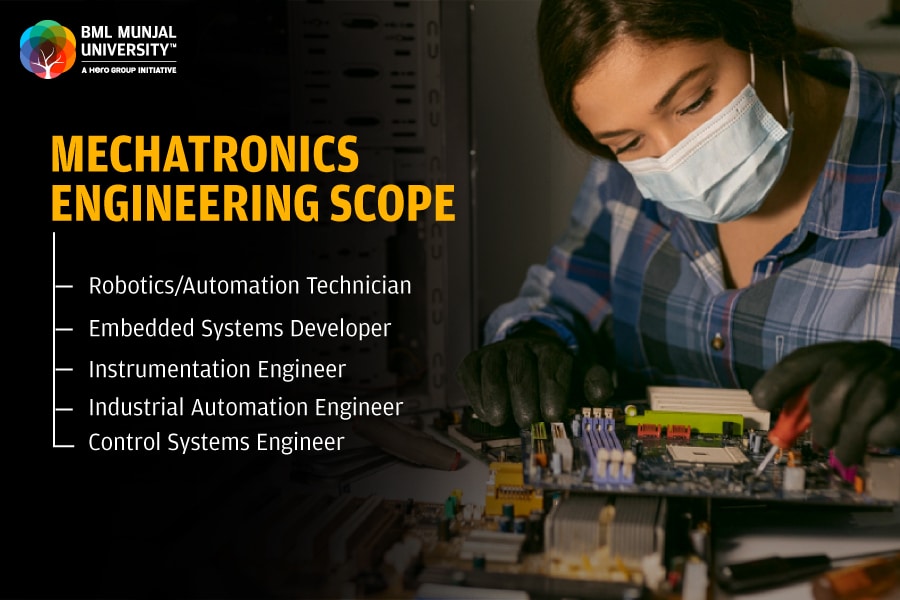
Mechatronics Engineering Scope in India: Is This the Right Career for You?
Key Takeaways Mechatronics engineering combines mechanics, electronics, software and control systems to create intelligent and automated machines...
VLSI Design Course: Scope, Salary Insights & Global Career Prospects
Key Takeaways: VLSI (Very Large Scale Integration) is the discipline behind every chip in your phone, EV and data centre server, packing millions...

Direct Admission in B.Tech. 2026: Process, Eligibility Criteria & Fee Structure
The Indian technical market continues to grow significantly and represents more than 7.4% of the Indian economy. With the landscape expanding into art...

Why a B.Tech. for Working Professionals Could Be Your Smartest Career Move
The professional landscape is changing extremely quickly and it's common for diploma and technician holders working in industry to encounter an invisi...