
Is Work-Life Balance Really Possible During an Executive MBA in India?


In Summary: Achieving perfect work-life balance during an Executive MBA (EMBA) is not realistic. What is realistic and what most working professionals actually achieve, is work-study-life integration: a system where your job, your coursework and your personal commitments run on a shared schedule instead of competing for the same hours. An EMBA typically adds 15 to 20 hours of academic workload onto an already full-time role, so something has to move. The good news is that this shift is manageable when you treat time as a fixed, weekly budget rather than a feeling you’re chasing.

Key Takeaways
- India has the highest employee burnout rate globally, with 59% of Indian professionals reporting burnout symptoms against a 20% worldwide average, according to the McKinsey Health Institute. This is the exact population EMBA programmes are designed to serve and it's why format matters so much.
- An EMBA adds roughly 15 to 20 hours of weekly academic load on top of a 45 to 55 hour work week. Sleep and essentials take another 45 to 50 hours, leaving a small but manageable "life" allowance.
- The format you choose (weekend, modular or online) affects your balance more than any personal productivity hack.
- EMBAC's 2025 Student Exit Survey found EMBA graduates' average salary rose from $192,644 to $226,428 during the programme itself, not after it, which changes how you should think about the "time cost" of enrolling.
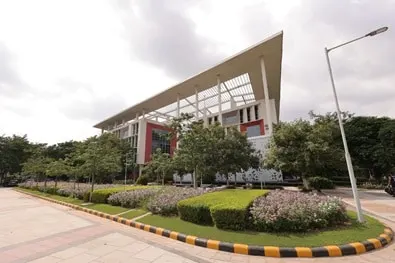
BMU's Executive MBA is structured around alternate-weekend classes and a live capstone project done on your own company's problems, so study time and work output aren't always separate hours.
If you're already stretched thin at work, the idea of adding an MBA on top of it probably sounds less like ambition and more like a risk. That instinct isn't wrong. Gallup's State of the Global Workplace 2026 Report found that only 17% of Indian employees say they're thriving in their overall lives, roughly half the global average of 34%. So asking "do I actually have any room left for this" is the right question to start with, not a sign you're not cut out for it.
The honest answer is that an Executive MBA does change your week in real, measurable ways. But it changes it in predictable ways, which means it can be planned for. This guide walks through exactly how many hours it takes, how the different EMBA formats change that math, a practical framework for managing work, study and family together, and how one Delhi NCR programme has built its structure specifically around solving this problem.
What Does Work-Life Balance Actually Mean During an Executive MBA?
Work-life balance during an EMBA doesn't mean splitting your time equally between work, study and personal life. It means building a repeatable weekly structure where each part gets protected time, even if that time isn't equal.
Instead of guessing your week, look at your 168 available hours as a fixed budget-
| Category | Approximate Hours/Week |
| Professional work | 45-55 hours |
| EMBA (classes + prep) | 15-25 hours |
| Sleep and essential rest | 45-50 hours |
| Remaining "life" capital (family, health, transit) | ~40 hours |
Once you see the number laid out, the goal changes. You're not trying to "find balance". You're deciding, in advance, how you'll spend a fixed and limited remainder. This is also why the professionals who do this well treat it as a planning problem, not a willpower problem.
If you're still deciding between an EMBA and a full-time MBA on this basis alone, our detailed comparison on Executive MBA vs Full-Time MBA breaks down the time commitment differences in more depth.
How Many Hours a Week Does an Executive MBA Really Require?
Most Executive MBA programmes require 15 to 20 hours a week outside of scheduled class time, covering case prep, assignments and group projects, on top of the weekend or evening class hours themselves. This figure is fairly consistent across Indian and global EMBA programmes, whether the format is weekend-residential, modular or online.
A few things affect where you land in that range-
- Cohort-based group work (case studies, simulations) tends to add more hours than solo assignments.
- Capstone or live projects can actually reduce net hours if your business school lets you apply the project to a real problem at your own company, since you're not doing "extra" work, you're doing your existing work with an academic lens.
- Exam and presentation weeks spike hours temporarily; plan for these rather than being surprised by them.
Can You Continue Working Full-Time During an Executive MBA?
Yes. Executive MBA programmes are specifically built for this. Unlike a full-time MBA, which typically requires you to leave your job, an EMBA is designed around weekend, evening or modular formats so you keep working while you study. This is the entire premise of the "executive" in Executive MBA: it targets professionals who already have 5+ years of experience and don't want a career break.
That said, continuing to work full-time is different from continuing to work at the same pace. Most professionals who succeed at this make three adjustments early-
- They tell their manager and team about their academic calendar before the term starts, not after a deadline collides with a class.
- They delegate recurring meetings or decisions during residency weekends.
- They apply what they're learning directly to live problems at work, which turns study hours into visible professional output rather than a separate, invisible commitment.
For a deeper look, see how an executive MBA can help advance your career growth without a break.
How Do EMBA Formats Affect Your Work-Life Balance? (Weekend vs Modular vs Online)
The single biggest lever on your work-life balance isn't a productivity hack. It's the format you pick.
| Format | Class Cadence | Best For | Balance Trade-off |
| Weekend / Alternate-Weekend | Classes on campus every weekend or every other weekend | Professionals who want full campus immersion and peer networking without quitting their job | Weekends are consumed, but weekdays stay mostly free for work and family |
| Modular / Block Residency | Concentrated 1-2 week residencies a few times a year | Professionals who can take short intensive breaks from work | Deep focus during residencies, but requires clearing your calendar for full weeks at a time |
| Online / Hybrid | Self-paced or scheduled evening sessions | Professionals with heavy travel or those outside metro cities | Most flexible day-to-day, but requires more self-discipline since there's no fixed weekend structure |
Alternate-weekend formats, like BMU's, tend to strike the most sustainable balance for professionals based in and around a single city, since they avoid the two extremes: Neither a weekly time drain nor the disruption of multi-week residencies away from home.
The Work-Study-Life Framework: How to Actually Manage All Three
Rather than treating "balance" as a mindset, treat it as three linked systems you set up before your programme starts.
1. Professional Alignment
- Communicate early: Share your class calendar with your manager and team before the term begins, not the week of a clash.
- Delegate recurring work: Hand off specific meetings or decisions to your direct reports during residency weekends.
- Apply classroom learning immediately: Use case studies and frameworks on your actual work problems so your study time compounds into professional output.
2. Domestic and Social Boundaries
- Set a shared responsibility map: Agree on household division of labour with your partner or family before the programme starts, not mid-term.
- Block non-negotiable study windows: A fixed 8 to 10 PM slot, protected from both work and family interruptions, works better than an open-ended "whenever I get time" approach.
- Say no on purpose: Decline non-essential networking events and social invitations during high-load weeks. This is a scheduling decision, not a social one.
3. Efficiency Systems
- Use dead time: Commutes and travel delays are natural windows for case study review or recorded lectures.
- Break large tasks into small blocks: A 10-hour group project becomes manageable in 30-minute focused chunks rather than one daunting session.
- Batch admin tasks: Group emails, approvals and small decisions into set windows instead of letting them interrupt study blocks throughout the day.
A quick summary: The professionals who report the least stress during an EMBA aren't the ones with the most free time. They're the ones who set these three systems up before week one, instead of improvising them under deadline pressure.
Do Employers in India Support or Sponsor an Executive MBA?
Yes, many Indian employers support Executive MBA study, either through direct fee sponsorship, partial reimbursement or flexible scheduling around residency weekends. Support is more common when-
- The employee's EMBA specialisation aligns with their current or future role at the company
- The programme includes a live, company-based capstone project, since the employer sees a direct return from the participant's coursework
- The employee proactively presents a business case for sponsorship rather than waiting to be offered one
If your organisation doesn't have a formal sponsorship policy, raising it as a "talent retention and leadership pipeline" conversation with HR, rather than a personal development request, tends to get a better response.
How BML Munjal University's Executive MBA Is Built Around a Working Professional's Time
Most advice on managing an EMBA focuses on personal discipline. What gets less attention is that programme design plays just as large a role in how manageable the two years actually feel. BML Munjal University's Executive MBA, offered through its Centre for Continuing Education, is structured around this exact problem in four ways-
- Alternate-weekend, full campus immersion classes, so your weekdays stay protected for work and family and you're not managing a weekly disruption to your schedule.
- A live Strategic Capstone Project, where you solve a real business challenge at your own company under dual mentorship from a senior executive sponsor and a faculty mentor. This means your final-phase coursework and your actual job output are the same hours, not two competing sets of hours.
- Dual mentorship and structured elective tracks across Finance, Analytics, Marketing, HR, Operations and Strategy, so you're not spending extra hours exploring a direction on your own; the programme structure does that work for you.
- Fee payment in four installments, which removes a lump-sum financial stress that often adds indirectly to the "life" side of the balance equation.
The programme runs 2 years (24 months), requires a minimum of 50% in graduation and 5+ years of work experience. Tuition is ₹10 lakhs + GST, with merit-based scholarships and group discounts available for sponsoring organisations.
If cost and long-term payoff are part of your decision, our detailed breakdown of Executive MBA ROI in India covers salary growth, promotion data and how the fee compares to the opportunity cost of a full-time MBA.
Conclusion
Work-life balance during an Executive MBA isn't about finding equal hours for everything. It's about building a weekly system where your career, your coursework and your personal life are planned around each other instead of colliding by accident. The professionals who manage this well pick a programme format that fits their actual life first and only then build the habits and boundaries on top of it. Contact our team to discuss your fit before applying.
FAQs
Not in the sense of equal time for everything, but yes in the sense of a manageable, planned system. Most professionals shift from seeking “balance” to building work-study-life integration, where each part gets protected time on a fixed weekly schedule.
Most EMBA programmes, including weekend and hybrid formats in India, require 15 to 20 hours a week outside class time for reading, assignments and group work, on top of the scheduled class hours themselves.
Yes. Executive MBA programmes are specifically designed for working professionals with 5+ years of experience. Weekend and alternate-weekend formats, like BMU’s, are built so you don’t need to pause your career.
Many do, especially when the specialisation aligns with the employee’s role and the programme includes a live, company-based project that delivers a visible return to the sponsoring organisation.
Programme format. Weekend, modular and online EMBAs each create a different balance trade-off and choosing the one that matches your travel schedule, family commitments and work intensity matters more than any individual productivity technique.
A regular full-time MBA usually requires leaving your job and attending classes five days a week. An Executive MBA is built around weekend or modular formats specifically so you can keep working while you study.
It requires a genuine trade-off, particularly in the first few months. Professionals who set clear household agreements and communicate their academic calendar to their family before the programme starts report a smoother adjustment than those who improvise as it goes.
BML Munjal University’s Executive MBA is a 2-year (24-month) programme with alternate-weekend, full campus immersion classes at the BMU campus in Gurugram, Delhi NCR.
Its Strategic Capstone Project is built around your own company’s real business challenges, so your final-phase coursework and your actual job output overlap instead of being two separate time commitments.
No. The programme is weekend-only and designed specifically so professionals can continue working full-time throughout the two years.
Related Blogs

MBA Without CAT in India: Top Colleges, Entrance Exams & Direct Admission 2026
Can you do an MBA without CAT in India? The answer is yes and it is more common than most students realise. CAT was designed as an entry filter for...

The Benefits of an Integrated BBA MBA: Career Growth & How It Compares to Traditional MBA
Integrated BBA MBA programmes are becoming increasingly popular among students who want to start building management careers right after Class 12. Wha...

MBA in Operations Syllabus: Semester-Wise Curriculum, Key Subjects & Practical Components
An MBA in Operations is one of the most sought-after management specialisations for students interested in business processes, supply chain systems, l...

MBA for Working Professionals: Transform Your Functional Expertise into Business Leadership
You have spent years building expertise, managing people and delivering results. But somewhere between your current role and the one you actually want...

MBA vs MCA in 2026: Which is Better for Your Career, Salary & Future?
You've recently graduated and you're excited for what’s next. Now comes the question- “Should you do an MBA or an MCA?” Both sound impress...

Online MBA vs Regular MBA: Which One Actually Gets You Better Career Growth?
If you are planning to pursue an MBA in 2026, one question naturally comes up- Should you go for an online MBA or a regular MBA? And that’s beca...