

Future Skills for Senior Managers 2026: Why AI Fluency Now Comes Before Everything Else


Admissions Enquiry
Summary: In 2026, senior managers need AI fluency, strategic thinking, data literacy and emotional intelligence to lead effectively. As AI reshapes business strategy, leaders who combine technical understanding with human judgement will drive growth, manage change and outperform those relying on traditional management skills alone.
Key Takeaways
- AI fluency is now the #1 future skill for senior managers, not coding, but knowing where to apply AI in decisions and strategy.
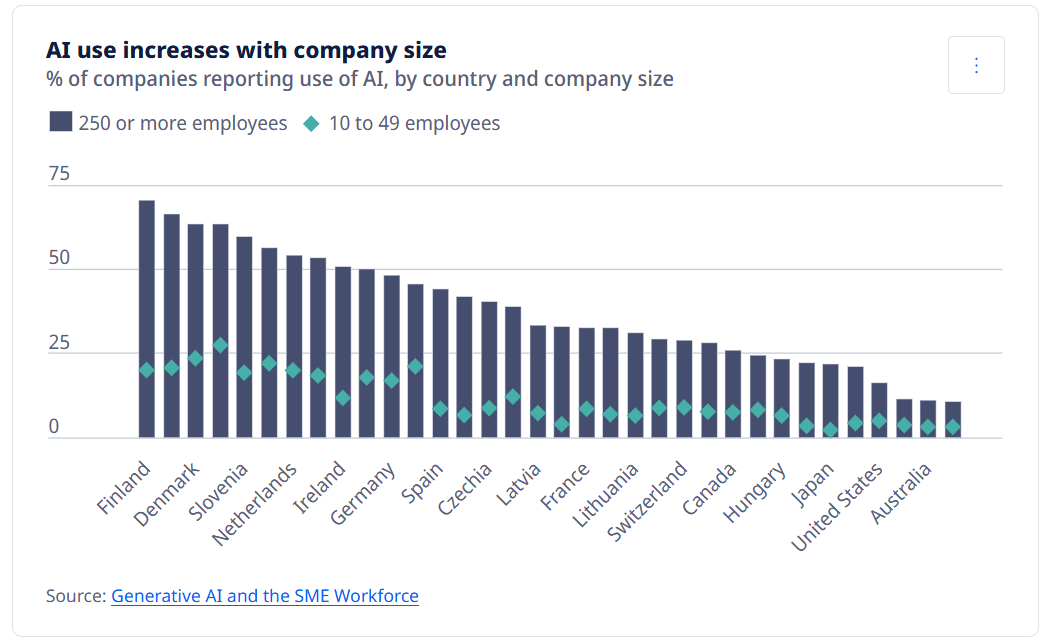
- The OECD finds skills, not technology access, are the real barrier to AI adoption and large firms outpace small ones 2-4x because of this.
- 10 future skills matter most in 2026: AI fluency, strategic thinking, data literacy, emotional intelligence, change leadership, communication, coaching, inclusive leadership, learning agility and systems thinking.
- 5 traditional skills are losing relevance: manual reporting, routine admin, command-and-control leadership, rigid process management and experience-only decision-making.
- Building these skills works best as a continuous cycle - audit, practise, get feedback, then formalise through structured learning.
BML Munjal University's Global Partner programme is structured to help students grow their leadership capabilities.
Every major business trend shaping 2026- from AI and automation to digital transformation- has one thing in common: it demands a different kind of leadership.
That's why the future skills for senior managers in 2026 are no longer limited to strategic planning and team management. Leaders must also understand how to use AI, interpret data and help their organisations adapt to rapid change.
The latest OECD report supports this shift. It found that the biggest obstacle to AI adoption isn't access to technology but the availability of skills. Its findings also show that large organisations adopt AI at two to four times the rate of smaller businesses, underscoring the growing importance of digitally skilled leadership.
For today's senior managers, AI fluency is quickly becoming the skill that connects strategy, innovation and business growth. Whether you're preparing for the next stage of your career or leading organisational change, this blog highlights the future skills worth investing in!
Why the Skillset for Senior Managers Is Changing in 2026
Three forces are converging on senior management roles at the same time and each one is reshaping what "good management" looks like.
- Artificial intelligence is reshaping decisions, not just tasks. 86% of employers expect AI and information-processing technologies to transform their operations by 2030 and AI and big data is the single fastest-growing skill category tracked by the World Economic Forum. Separately, Cornerstone's 2026 Skills Economy data shows demand for AI and machine learning skills grew 245% year-on-year between 2023 and 2025 - faster than any other technical skill.
- Hybrid and distributed teams have made trust load-bearing. Managers can no longer rely on hallway conversations to read a team. Communication, psychological safety and asynchronous clarity have moved from "nice to have" to core operating requirements.
- Development budgets are rising, but impact is not keeping pace. 75% of organisations have updated their leadership development programmes and more than half have increased spending, yet they are not seeing results. Only 4% of companies report having comprehensively embedded future skills into everyday work and 96% have not integrated them at all. The gap isn't awareness of what's needed - it's translating that awareness into practice.
The 10 Future Skills Every Senior Manager Needs in 2026
In 2026, leaders must combine AI fluency, strategic thinking, data-driven decision-making and people leadership to stay competitive. Mastering these future skills for senior managers helps drive business growth, lead high-performing teams and succeed in an AI-powered workplace.
1. AI Fluency and AI-Augmented Decision-Making
AI fluency for a senior manager means knowing where AI creates value in a decision, where it introduces risk and how to direct it - not writing code. Managers who can direct AI tools for research, drafting and scenario modelling free up real time every week for the judgement-heavy work only they can do.
2. Strategic Thinking and Decision-Making Under Uncertainty
This is the ability to set direction and commit resources when data is incomplete and the outcome isn't guaranteed. As AI absorbs more routine analysis, a manager's differentiated value increasingly lies in asking the right question, stress-testing an AI-generated recommendation and deciding with the information available rather than waiting for certainty that never arrives.
3. Data Literacy and Analytics-Driven Judgment
Data literacy is the ability to read KPIs, customer analytics and AI-generated outputs critically enough to combine them with qualitative context- company culture, team capacity, client relationships, before deciding. A manager doesn't need to build the dashboard, but does need to know what a metric is (and isn't) telling them and when a confident-sounding AI output needs a second look.
4. Emotional Intelligence and People-Centric Leadership
Emotional intelligence is the ability to manage your own reactions and read others accurately - it's what makes every other leadership skill land. In hybrid teams especially, EQ is what builds the psychological safety people need to flag problems early and take creative risks.
5. Change Leadership and Adaptability
Change leadership is the ability to guide a team through reorganisation, new tools or shifting priorities without losing momentum. With AI tools, policy shifts and market conditions all moving faster than annual planning cycles, the manager who treats disruption as a problem to work through — not a threat to resist — keeps their team stable.
6. Communication and Cross-Functional Influence
In distributed teams, written and asynchronous communication now carries as much weight as live conversation. Senior managers need to align stakeholders across marketing, sales, finance and operations, often without the benefit of shared physical space, which means clear agendas, explicit guidelines on which channel to use when and thorough follow-ups aren't optional extras, they're core management infrastructure.
7. Coaching, Mentoring and Talent Development
Modern managers act less like supervisors and more like coaches who help employees become autonomous. Leaders who build their own coaching capability multiply the effect of any L&D programme across their whole team, because coaching happens in the flow of daily one-on-ones rather than in an annual review.
8. Inclusive and Ethical Leadership
Inclusive leadership means actively seeking diverse perspectives and making decisions grounded in transparency and integrity, especially important as AI-assisted decisions raise new questions about fairness and bias. Employees judge managers on development, fairness and meaning, not compensation alone and transparent decision-making builds confidence even when an outcome isn't ideal.
9. Learning Agility and Continuous Upskilling
Learning agility is the habit of acquiring and applying new knowledge quickly - a meta-skill, since without it none of the other skills stay current. A practical starting point is auditing one or two skills per quarter rather than trying to overhaul everything at once.
10. Systems Thinking and AI-Era Workflow Redesign
Systems thinking is the ability to see how people, processes and AI tools connect across a function and to redesign the workflow itself, not just automate a single task inside it. Managers who think in systems are the ones who spot where an entire process can be rebuilt around AI, rather than bolting a tool onto an unchanged way of working.
Traditional Manager vs. Future-Ready Senior Manager (2026)
The table below summarises how the role is shifting in practice, from task supervision to judgement and enablement.
| Dimension | Traditional Manager | Future-Ready Senior Manager (2026) |
| Role in decisions | Holds the information, decides alone | Directs AI-assisted analysis, decides with context |
| View of AI | Delegates it to IT/data teams | Owns AI use in strategy, prompting and workflows |
| Communication style | Top-down, in-person default | Asynchronous-first, explicit, trust-building |
| Response to change | Resists disruption, seeks stability | Reframes disruption as a solvable problem |
| Team development | Annual review, task supervision | Ongoing coaching, autonomy-building |
| Core value-add | Domain/process expertise | Judgement, EQ and strategic synthesis |
The 5 Skills Declining in Importance for Senior Managers in 2026
The following skills are becoming less critical for senior managers as technology takes over routine work and leadership expectations continue to evolve.
| Declining Skill | Why It's Becoming Less Important | Future-Ready Alternative |
| Manual data analysis and reporting | AI-powered analytics tools can process, visualise and summarise business data much faster than manual reporting. | AI-assisted decision-making and data literacy |
| Routine administrative management | Workflow automation now handles scheduling, reporting, approvals and repetitive operational tasks more efficiently. | Strategic leadership and business transformation |
| Command-and-control leadership | Modern teams value collaboration, autonomy and coaching over hierarchical supervision. | Coaching, emotional intelligence and inclusive leadership |
| Rigid process management | Rapid technological and market changes require leaders who can adapt rather than simply follow established processes. | Change leadership and learning agility |
| Experience-based decision-making alone | Business decisions increasingly combine AI insights, real-time data and human judgement instead of relying solely on past experience. | AI fluency, strategic thinking and critical decision-making |
How Can Senior Managers Build the Top Skills Needed for 2026?
Skill-building works best as a continuous, practice-based cycle rather than a single event. Below is the simple four-step approach-
- Audit first: Pick one or two skills per quarter based on a genuine gap, not the skill that feels most comfortable to work on.
- Practise in the flow of work: Apply AI tools, coaching conversations and scenario planning to real decisions in your current role, not hypothetical case studies.
- Get structured feedback: Mentorship, 360° feedback and peer review surface blind spots that self-assessment misses.
- Formalise the learning: Structured executive programmes accelerate the first three steps by combining frameworks with applied, hands-on practice in a compressed timeframe.
Equip Yourself with the Future Skills of Leadership with Global Partner Programme at BML Munjal University
As organisations navigate AI disruption, geopolitical uncertainty and rapidly changing markets, senior leaders need the ability to think globally, lead strategically and make confident decisions in complex business environments. The Global Partner Programme by BML Munjal University's Centre for Continuing Education is designed to help experienced professionals build exactly these capabilities.
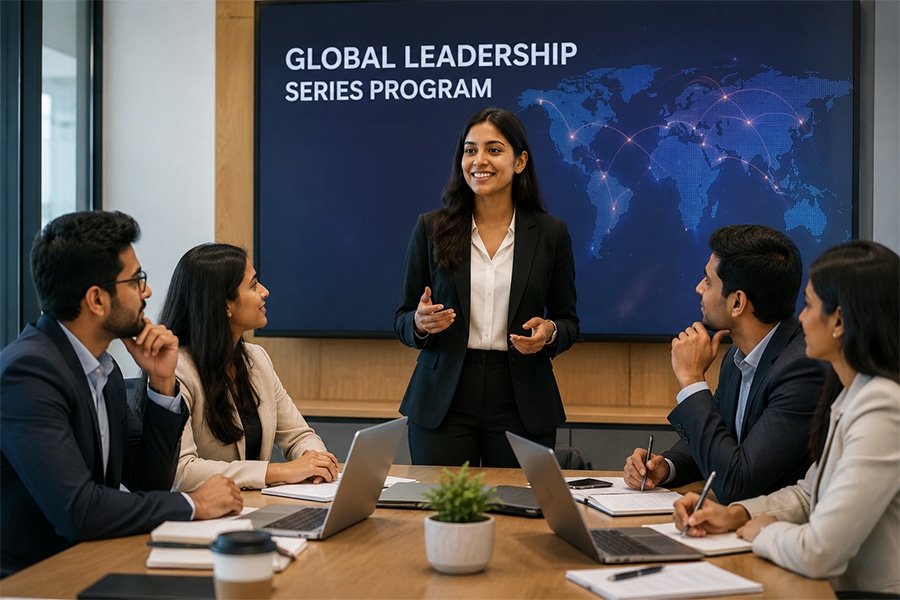
Key Highlights of Global Leadership Series Course-
- 100% offline sessions for immersive learning and executive networking.
- Customisable Programme aligned with organisational and leadership goals.
- Learn from Top Faculty from India and leading global institutions.
- Live Business Projects in consultation with participating organisations.
- Coaching and Feedback to strengthen leadership effectiveness.
- Action Learning Projects focused on solving real business challenges.
- Structured Programme Design that builds practical leadership capabilities.
- Certificate from BMU + Global Premier University Partner upon successful completion.
If you are looking to build the future skills for senior managers needed to lead in an AI-driven and globally connected business environment, the Global Partner Programme is worth considering. It offers a practical way to strengthen your leadership, strategic thinking and decision-making skills. Apply Now!
Conclusion
The future skills for senior managers in 2026 extend far beyond traditional leadership. As AI becomes an integral part of business operations, leaders must combine strategic thinking, emotional intelligence, adaptability and data-driven decision-making with AI in business strategy for senior managers.
The most successful senior managers will be those who continuously learn, embrace new technologies and apply AI responsibly to solve real business challenges. Whether you choose self-directed learning or a structured executive programme, investing in these future-ready capabilities today will help you lead with confidence, drive meaningful transformation and remain competitive in an AI-powered business landscape.
FAQs
AI fluency is the most in-demand skill in 2026, followed by strategic thinking, data literacy, adaptability and emotional intelligence for effective leadership.
AI in business strategy for senior managers improves decision-making, automates workflows, analyses data, forecasts trends and supports faster, more informed business decisions.
Skill development is ongoing rather than a fixed timeline. Focusing on one or two priority skills per quarter, backed by practice and feedback, produces measurable change faster than broad, unfocused training.
AI fluency helps senior managers understand where AI can improve decision-making, automate workflows, identify business opportunities and manage risks without requiring technical programming skills.
Related Blogs
Executive MBA ROI in India: Measuring the Real Value of Your Investment
For experienced professionals, pursuing an Executive MBA is no longer just about earning another degree; it’s about accelerating career growth, stre...
Women in Leadership in 2026: Exploring the Traits That Matter Most
Leadership is not a personality type. It is not something a few people are born with, while everyone else manages from the sidelines. It is a set of b...

Global Leadership Series at BML Munjal University: Building Strategic Leaders for the Future
At a certain stage in your career, technical expertise and operational efficiency alone are no longer enough. As you move into senior and executive-le...
The Real Value of a Global Leadership Series Programme: What Senior Leaders Need to Know Before Enrolling
There comes a point in a senior professional's career when technical expertise alone stops being enough. You have the experience. You understand your ...

Women Leadership in India 2026: Shifting from Self-Doubt to Strategic Influence
Women leadership in India in 2026 is no longer a question of whether women are capable of leading. It never was. What it has become is a question of s...

The ROI of Diversity: How Women in Leadership Roles Drive Innovation
For years, there has been a massive transformation in the corporate world, a shift that is reshaping the business world. The stereotypical, male-domin...