
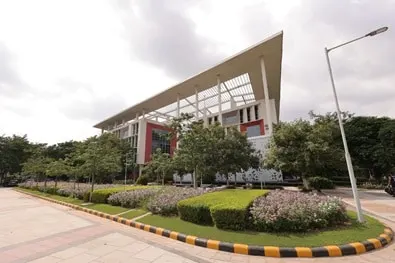
The ROI of Diversity: How Women in Leadership Roles Drive Innovation


Admissions Enquiry

For years, there has been a massive transformation in the corporate world, a shift that is reshaping the business world. The stereotypical, male-dominated boardroom is becoming more diverse, inclusive and effective. A prominent aspect of the transformation is the emergence of women in leadership roles.
In addition to being a question of social justice, women's leadership at the top of organisations is a business strategy that can improve innovation, profitability and sustainable growth. This blog will discuss the present landscape of women in leadership, the real impact they have in the leadership position and how institutions such as BML Munjal University are setting the stage for future female leaders.
The State of Women in Leadership: By the Numbers
As progress is being achieved, the path towards gender parity in leadership continues. The Fortune 500 report shows that 10.4% of companies now boast women CEOs, representing a record high, but still a minority.
There is compelling evidence that closing this gap brings benefits:
- Greater Profitability- Companies with good female leadership had an average annual Return on Equity (ROE) of 10.1% versus 7.4% for those without.
- More Effective Decision-Making- Harvard Business Review's study revealed women outperformed men in 17 out of 19 leadership capabilities, such as taking initiative, resilience and self-development.
- Economic Growth- Recent studies on the Indian corporate sector indicate that increasing the share of women in leadership roles could boost India's GDP by an additional 18% by 2030, as diverse leadership leads to better penetration into emerging consumer markets.
Why Women in Leadership Roles Matter
The 'why' of these statistics is the unique insights and emotional intelligence that women can often bring to leadership.
1. Diverse Perspectives Drive Innovation
The collision of ideas leads to innovation. Females may have different experiences in life and may have different perspectives from males. This variety allows for avoiding so-called “groupthink” and generating more creative problem-solving and product development that appeals to a wider audience.
2. Improved working relationships and communication
Women often are mentioned as being more transformational leaders. They prefer to learn through mentorship and collaboration and to communicate openly. This creates a culture of trust in the workplace, critical in today's “war for talent” in order to retain employees and improve morale.
3. Empathy and Emotional Intelligence (EI)
One of the key components of a successful leader in today's society is high EI. Female leaders are often very good at hearing the needs of fellow team members, handling conflict with dignity and building an environment that embraces diversity among team members, making each feel valued.
Overcoming the Challenges
Despite the clear advantages, women still face the "broken rung" - a phenomenon where women are bypassed for the very first promotion to manager. To overcome these hurdles, organisations must implement:
- Unconscious Bias Training- Teaching hiring managers about unconscious bias that impacts the process of hiring and promotion.
- Access to Mentorship and Sponsorship- Opportunities to connect high-potential women with senior leaders who can speak for their development.
- Flexible Work Models- Recognising the need for structures in order to balance work and personal life.
Empowering Tomorrow’s Women Leaders: Women-in-Leadership Programme @ BML Munjal University
The best weapon to bridge the leadership gap is education. This is understood by BML Munjal University (BMU) and it has created its own women enablement ecosystem with a special initiative, called Women in Leadership (WIL) programme.
With a range of programmes for women at different points in their careers, BMU has everything to offer to make the journey to the top accessible and supported:
- WIL Flagship Programme- A 9-month PGP Certificate (150+ hours) for mid- to senior-level leaders to be delivered with 1:1 coaching and Action Learning Projects (ALPs). On graduation, participants are inducted into a network of 250+ leaders with BMU Executive Education Alumni Status.
- WIL Ascent- A 3-month on-campus programme for women leaders in education (principals/headmistresses) covering Financial Literacy, Social-Emotional Learning and the use of AI tools to free up time, as well as a focus on wellness.
- WIL WISE- A 9-month journey for women entrepreneurs, centring on sustained growth. It focuses on Finance-Wise thinking, Design thinking for market engagement and the importance of Delegation.
- WIL Ignite Leadership- A high-impact, 3-day programme designed for mid- to senior-level leaders to develop executive presence and visibility while being true to their inherent leadership style in this Digital era.
- WIL Ignite Retreat- A 3-day off-site immersive experience for women leaders with 15+ years of experience that will provide strategic space to focus on emotional intelligence, dealing with ambiguity and regaining leadership perspective.
BMU's programmes are more than just about teaching management; they are about creating a community of empowered women who will redefine the future of global business.
Conclusion
The signs are everywhere: women's leadership is indisputable and it is proven that it is vital to the growth of business and society. The path to gender parity in the C-suite may have some hurdles, but it's unstoppable. This is possible by implementing certain policy changes in their working environment and providing focused learning programmes, such as those at BML Munjal University, we can ensure that women in leadership roles become the standard, not the exception.
Investing in women leaders isn't only the right thing to do; it's the smartest investment a forward-thinking organisation or person can make.
FAQs
A. Women in leadership roles are women who hold positions of authority and responsibility in organisations, businesses, governments or communities where they lead teams and make strategic decisions.
A. Women in leadership roles bring diverse perspectives, stronger collaboration and innovative decision-making that help organisations grow.
A. Organisations can support women leaders through mentorship programmes, flexible work policies and unbiased hiring and promotion practices.
Related Blogs
Future Skills for Senior Managers 2026: Why AI Fluency Now Comes Before Everything Else
Key Takeaways AI fluency is now the #1 future skill for senior managers, not coding, but knowing where to apply AI in decisions and strategy. ...

Executive MBA ROI in India: Measuring the Real Value of Your Investment
For experienced professionals, pursuing an Executive MBA is no longer just about earning another degree; it’s about accelerating career growth, stre...
Women in Leadership in 2026: Exploring the Traits That Matter Most
Leadership is not a personality type. It is not something a few people are born with, while everyone else manages from the sidelines. It is a set of b...

Global Leadership Series at BML Munjal University: Building Strategic Leaders for the Future
At a certain stage in your career, technical expertise and operational efficiency alone are no longer enough. As you move into senior and executive-le...

The Real Value of a Global Leadership Series Programme: What Senior Leaders Need to Know Before Enrolling
There comes a point in a senior professional's career when technical expertise alone stops being enough. You have the experience. You understand your ...

Women Leadership in India 2026: Shifting from Self-Doubt to Strategic Influence
Women leadership in India in 2026 is no longer a question of whether women are capable of leading. It never was. What it has become is a question of s...