
Top B.Tech. Mechanical Engineering Specialisations in India for Working Professionals


Admissions Enquiry
If you are working in manufacturing, automotive, energy or any mechanical domain and your career has hit a ceiling, the missing piece is usually your qualification. A B.Tech. Mechanical specialisation in India does not just add a degree to your name, but also tells employers exactly which domain you are trained for and at what depth.
The challenge is knowing which specialisation actually matches your work, your industry and where you want to go next. This guide covers six major B.Tech. Mechanical specialisations available in India, what each one involves, who it is built for and the career paths each one opens up.
B.Tech. Mechanical Engineering Specialisations in India
B.Tech. Mechanical specialisations in India range from domain-specific tracks like Robotics and Automation or Automobile Engineering to broader foundations like Core Mechanical Engineering. Each one is designed around a different industry context, skill set and career outcome. Here is a breakdown of the six most relevant specialisations for working professionals today-
1. Robotics and Automation
India's industrial automation market is valued at USD 8.22 billion in 2025 and is projected to reach USD 16.67 billion by 2034, growing at a CAGR of over 8%. PLI schemes and Make in India have together accelerated smart factory adoption across automotive, FMCG and electronics. For professionals already on the production floor, this specialisation converts hands-on exposure into the engineering credential that gets you into design and systems roles.
| Course/Programme | Robotics and Automation |
| What You Study | Industrial robotics, mechatronics, PLCs, SCADA systems, CNC programming, computer-integrated manufacturing, sensors and actuators, 3D printing and smart factory technologies. |
| Who It's Best For | Professionals in assembly lines, production units or process and FMCG manufacturing. |
| Job Roles | Automation Engineer, Robotics Engineer, Manufacturing Process Engineer, Systems Integration Engineer, Production Technology Lead. |
| Avg. Starting Salary | ₹5-8 LPA |
2. Automobile Engineering
India's EV market is on track to grow at a 49% CAGR between 2022 and 2030, with the government targeting 30% EV penetration across all vehicle categories by 2030. According to NITI Aayog, around 35% of ICE professionals will need to reskill into EV-specific domains as the transition accelerates. If you are already in the automotive ecosystem, this is the most direct specialisation upgrade available to you right now.
| Course/Programme | Robotics and Automation |
| What You Study | Vehicle dynamics, powertrain engineering, engine design, fuel and emission systems, EV drivetrain technology, automotive electronics, chassis and suspension and ADAS fundamentals. |
| Who It's Best For | Professionals in automotive OEMs, Tier-1 or Tier-2 auto component units, service engineering or vehicle testing. |
| Job Roles | Automotive Design Engineer, Powertrain Engineer, EV Systems Engineer, Vehicle Testing Engineer, Quality Assurance Manager. |
| Avg. Starting Salary | ₹4.5-7 LPA |
3. Thermal and Energy Engineering
India's renewable energy sector saw job demand grow 23.7% in FY2023-24 and by 2030, the sector is projected to generate over 3 million jobs. India also led global energy employment growth in 2024 at 5.8%, as per the IEA World Energy Employment Report 2025. Professionals in power generation, HVAC or oil and gas with a formal thermal engineering credential are well-positioned for roles on both sides of the energy transition.
| Course/Programme | Robotics and Automation |
| What You Study | Advanced thermodynamics, heat transfer, HVAC systems, power plant engineering, turbomachinery, refrigeration, renewable energy systems and energy auditing. |
| Who It's Best For | Professionals in power generation, oil and gas, HVAC maintenance, process industries or utility companies. |
| Job Roles | Thermal Engineer, Energy Auditor, HVAC Design Engineer, Power Plant Engineer, Renewable Energy Systems Engineer. |
| Avg. Starting Salary | ₹4-6.5 LPA |
4. Manufacturing and Industrial Engineering
PLI schemes across 14 sectors have created over 12.6 lakh jobs as of September 2025 and the National Manufacturing Mission targets 143 million jobs and a 25% GDP share by 2035. Per a 2025 hiring analysis, employers are increasingly hiring automation engineers, quality specialists and engineers who can combine shopfloor agility with digital-first execution — exactly the profile this specialisation builds.
| Course/Programme | Robotics and Automation |
| What You Study | Lean manufacturing, Six Sigma, production planning and control, operations research, supply chain management, quality engineering, ergonomics and CAD/CAM basics. |
| Who It's Best For | Professionals in production, operations, quality control or plant management. |
| Job Roles | Industrial Engineer, Production Engineer, Quality Engineer, Operations Manager, Supply Chain Engineer, Plant Manager. |
| Avg. Starting Salary | ₹4-6 LPA |
5. Mechatronics
India's aerospace, drones and space tech industry is expected to grow five times to USD 44 billion by 2033, generating over 200,000 new jobs. Meanwhile, defence manufacturing hiring data shows that nearly 65% of OEMs and Tier-1 suppliers report difficulty hiring for mechatronics and embedded systems roles. For professionals who already work across mechanical and electronic systems, this specialisation turns that cross-domain experience into a qualification that hiring managers can specifically evaluate.
| Course/Programme | Robotics and Automation |
| What You Study | Integration of mechanical, electrical and software systems; embedded systems, microcontrollers, sensors and actuators, control systems, robotics programming and IoT-based engineering. |
| Who It's Best For | Professionals in defence, aerospace, instrumentation or advanced manufacturing working across mechanical and electronic systems. |
| Job Roles | Mechatronics Engineer, Embedded Systems Engineer, Control Systems Engineer, Instrumentation Engineer, Robotics Programmer. |
| Avg. Starting Salary | ₹5-7.5 LPA |
6. Core Mechanical Engineering
Core Mechanical Engineering remains the most broadly accepted specialisation for PSU recruitment and GATE selection. India's defence exports hit an all-time high of ₹38,424 crore in FY2025-26 and sectors like railways, aerospace and steel continue to absorb mechanical engineers at scale. If you are not certain which sector you want to move into next, Core ME keeps every door open — from BHEL and NTPC to private sector design and project roles.
| Course/Programme | Robotics and Automation |
| What You Study | Thermodynamics, fluid mechanics, solid mechanics, manufacturing processes, machine design, materials science, metrology and CAD/CAM — the full breadth of mechanical engineering fundamentals. |
| Who It's Best For | Professionals in multi-domain environments or those targeting PSU recruitment, GATE, defence, aerospace, railways and steel sectors. |
| Job Roles | Mechanical Design Engineer, Production Engineer, Maintenance Engineer, Project Engineer, PSU Engineer (BHEL, NTPC, HAL, ONGC, DRDO), Plant Manager. |
| Avg. Starting Salary | ₹4-6 LPA |
How to Choose the Right B.Tech. Mechanical Specialisation
You must be very confused about which specialisation to choose with so many options. Match your current role and your career target using this table-
| Your Current Role | Recommended Specialisation | Reasons to Choose |
| Assembly line/production unit | Robotics and Automation | Formalises what you already operate; opens design and lead roles |
| Auto plant/workshop / EV role | Automobile Engineering | Direct path to OEM R&D and EV engineering positions |
| Power plant / HVAC / oil and gas | Thermal and Energy Engineering | Converts plant experience into design and audit credentials |
| Shopfloor/quality/operations | Manufacturing and Industrial Engg. | Bridges floor knowledge to engineering and managerial grades |
| Defence/aerospace/instrumentation | Mechatronics | Matches multi-system work with a qualification that reflects it |
| Mixed domain / PSU / GATE target | Core Mechanical Engineering | Most flexible; strongest for government and multi-sector roles |
If you are still undecided, Core Mechanical Engineering is the safest starting point. It keeps every door open and can be supplemented with a minor in Materials Science or Data Science, depending on the programme.
Why Choose BML Munjal University's B. Tech (Mechanical) Engineering Course for Working Professionals?
BML Munjal University's Centre for Continuing Education (CCE) offers a three-year work-integrated B.Tech in Mechanical Engineering designed specifically for diploma-holding working professionals. The programme is structured as six semesters. Each semester runs two modules simultaneously, with three to four courses at a time.
About 30 to 35 per cent of coursework is delivered online through MOOCs and hybrid sessions and alternate weekend classes or one-week monthly intensives keep the schedule manageable for full-time workers. The programme is approved by DGHE, Haryana and aligned with NEP-2020 guidelines.
- Three specialisations are offered-
- Robotics and Automation
- Automobile Engineering
- Core Mechanical Engineering
- Minor specialisation- Additional credits in areas such as Materials Science are available above the core programme.
- On-the-job Practice School- Here, you apply new learning directly in your workplace rather than in a separate lab setting. Dedicated faculty mentors are assigned to each student throughout the programme.
- Industry Ties/Partnerships- Automotive majors such as Hero MotoCorp, TVS, Rockman Industries and RANE Group, alongside an academic collaboration with Imperial College London. These partnerships shape the curriculum and provide real-world context for what you study.
Discover how BML Munjal University's work-integrated B.Tech. (Mechanical) Engineering programme can help you build industry-relevant skills while continuing to work. Learn more and apply today.
Conclusion
Choosing the right B.Tech. Mechanical specialisation in India is less about picking what sounds impressive and more about being honest about where you are and where you want to go. You can go for Robotics and Automation for production, Automobile Engineering for EV developments and Thermal & Energy for power systems. There’s also Manufacturing & Industrial Engineering for operations, Mechatronics if you bridge disciplines or Core Mechanical Engineering for a broad foundation.
The work-integrated format exists precisely because you should not have to pause your career to make this move. Your hands-on experience isn't a gap in your CV; it's the foundation for your specialisation.
FAQs
The most widely offered specialisations are Robotics & Automation, Automobile Engineering, Thermal & Energy Engineering, Manufacturing & Industrial Engineering and Mechatronics & Core Mechanical Engineering.
Robotics and Automation and Automobile Engineering (particularly EV-focused tracks) are showing the sharpest hiring growth in 2026.
Yes. Under the lateral entry route, diploma holders in relevant engineering fields can enrol directly into a work-integrated B.Tech. programme.
Mechatronics usually suits multi-system and cross-domain roles, while Robotics and Automation suit production and process environments.
Yes, provided the degree is from a UGC and AICTE-recognised university. A work-integrated B.Tech. is equivalent to a full-time B.Tech. for PSU recruitment, GATE eligibility and most government job applications.
Work-integrated B.Tech. programmes for diploma holders are typically three years, structured as six semesters. Classes are scheduled around your work week, so you can continue working throughout.
Related Blogs
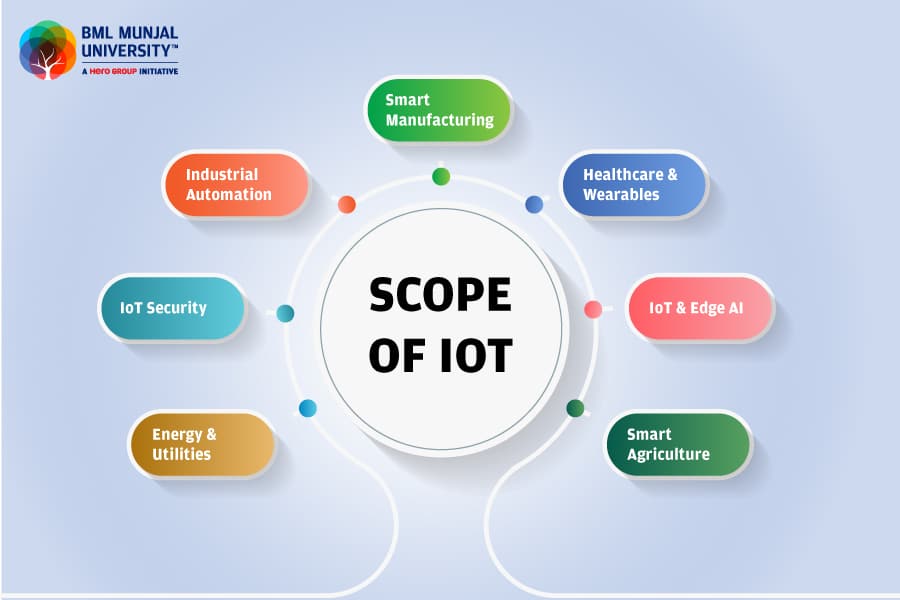
Scope of IoT in India: Careers, Skills and What Comes Next
Key Takeaways The scope of IoT is wide: about 21.1 billion connected devices in 2025, heading to 39 billion by 2030. The IoT future scope in I...
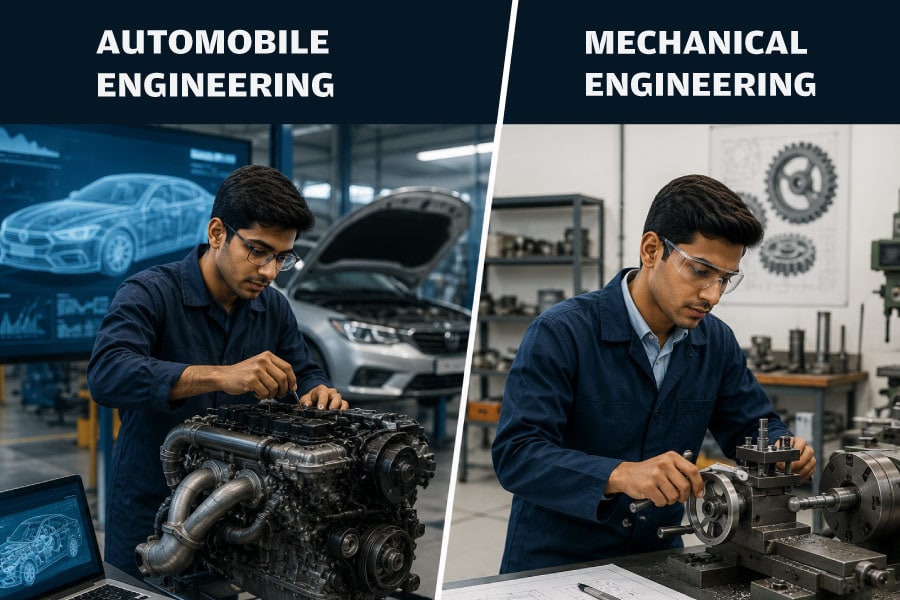
Automobile Engineering vs Mechanical Engineering – Which One Should You Choose After 12th?
The 12th class results are barely a memory and there's already a form to fill, a stream to lock in and a deadline closing in. For a lot of science stu...
10+ Best Engineering Colleges in India 2026: Top Government & Private Options with Rankings & Placements
Key Takeaways- Top government engineering colleges: IIT Madras, IIT Delhi, IIT Bombay, IIT Kanpur and IIT Kharagpur. Top private engineering c...

Top 10 Engineering Courses to Secure a High-Paying Job
Most students pick an engineering branch the way they pick a cricket team, i.e., based on loyalty, peer pressure or what someone's cousin is doing. Ve...

Top 10 Software Engineering Courses after 12th
Choosing the right software engineering course after 12th is the first and most important step toward a successful tech career. With software becoming...
JEE Main 2026 Latest Update: Check Session 1 Result, April Exam Dates, Syllabus, Pattern & More
If you are an engineering aspirant, preparing for JEE Main 2026 marks as a significant phase. As we know, the National Testing Agency has already clos...