
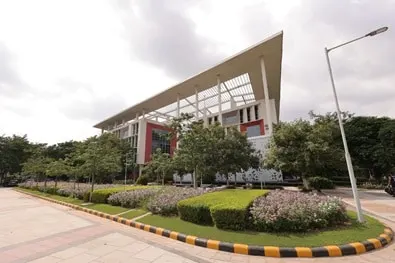
Executive MBA for Women: Why Is It the Right Move for Your Career?


Admissions Enquiry
In Summary: An Executive MBA (EMBA) is a two-year, part-time management degree built for working professionals with five or more years of experience who want to move into senior leadership without pausing their careers. It suits any professional ready to lead and it carries specific advantages for women navigating slower promotion cycles and thinner senior-level networks: structured re-entry into strategic roles, peer networks and a credential that carries weight in promotion conversations.

Key Takeaways
- An EMBA is designed for professionals with 5+ years of experience who want to grow into leadership roles while continuing to work.
- Weekend and alternate-weekend formats mean no career break and no lost salary.
- For women specifically, an EMBA offers a structured route back into visibility and sponsorship, areas where women professionals are often under-represented.
- A standalone women-in-leadership programme (like BMU's WIL) is a different, shorter, non-degree alternative worth knowing about.
BMU's Executive MBA is the only degree-granting EMBA in Delhi NCR, with 25% experiential learning and a live capstone project with your own organisation.
Most professionals reach a point where technical skill alone stops being enough to move up. An Executive MBA (EMBA) is built for exactly that moment: a two-year, part-time management degree for people who are already leading teams and want the strategic, financial and people skills to lead bigger ones.
It doesn't require leaving your job and it doesn't discriminate by gender in who it's built for. This blog covers what an EMBA involves, who it's for and a closer look at how it plays out specifically for women professionals weighing the decision.
What is an Executive MBA and How Does it Differ from a Regular MBA?
An Executive MBA is a management degree built for working professionals with substantial experience, typically five or more years, who continue working full-time while they study. A regular full-time MBA, by contrast, is usually built for early-career candidates or fresh graduates. Both lead to a recognised, MBA-equivalent qualification, but the eligibility, format and classroom experience differ in ways that matter when choosing between them.
| Metrics | Executive MBA | Regular MBA |
| Typical work experience | 5+ years | 0-5 years (freshers to early-career) |
| Career stage of cohort | Managers and senior professionals | Early-career professionals, recent graduates |
| Format | Weekend or alternate-weekend, part-time | Usually full-time, on-campus |
| Career impact during study | Continue working, no income break | Career pause, in most full-time formats |
| Classroom style | Case discussions grounded in current, real business problems | Broader foundational business theory |
| Typical goal | Move into senior leadership without pausing career | Build a first strong foundation in management |
Once you know which category you fall into on experience and career stage, the next question is whether you actually qualify and what that looks like in practice.
Who is an Executive MBA Designed for?
An EMBA suits professionals who are already in or close to leadership positions and want to formalise that trajectory. At BML Munjal University (BMU), eligibility is straightforward: a minimum of five years of professional work experience and a bachelor's degree with at least 50% marks, followed by an application review and a personal interview to assess leadership readiness.
It's built for people who:
- Are managing teams or projects and want the strategic vocabulary to operate at a higher level
- Are considering a shift into a new function, industry or venture
- Want a credential their organisation and peers recognise without stepping away from the job
Is an Executive MBA a Good fit for Women Specifically?
Yes, and often for reasons distinct from the general case. Women in mid-management frequently face what's sometimes called a “sponsorship gap”: they're mentored generously but sponsored less often, meaning fewer people are actively pushing their names forward for stretch assignments or promotions. An EMBA cohort changes that dynamic in a few concrete ways.
First, it puts women professionals in a room with senior peers across functions and industries, which is precisely the kind of cross-functional visibility that's harder to build organically in a single organisation. Second, it produces a credential that carries weight in promotion and hiring conversations independent of who's sponsoring you internally. Third, because most EMBA formats are weekend-based, it avoids the career pause that has historically pushed some women out of the leadership pipeline entirely.
Nationally, the data backs the underlying problem an EMBA helps address:
Women hold 34% of senior leadership roles in India, according to Grant Thornton's Women in Business 2026 report, above the global mid-market average of 32.9%. Progress isn't linear though: India's figure is down 2.6 percentage points year-on-year, even as representation across the C-suite (CHRO, CTO, CFO roles) stays comparatively strong. The gap to boardroom parity remains real and it isn't closing automatically. An EMBA doesn't close that gap by itself, but it's one of the more direct, credential-backed routes into the rooms where those decisions get made.
Executive MBA vs a Standalone Women-in-Leadership Programme: Which is Right for You?
These are genuinely different tools, not competing versions of the same thing and the right choice depends on what you're solving for.
| Criteria | Executive MBA | Standalone Leadership Programme |
| Duration | 2 years | Typically 3 to 9 months |
| Outcome | Full MBA-equivalent degree | Certificate, not a degree |
| Curriculum scope | Finance, strategy, operations, marketing, HR, analytics | Leadership, communication, executive presence, self-awareness |
| Best suited for | Professionals wanting broad, cross-functional business capability and a formal degree | Professionals wanting focused leadership and confidence-building, often alongside an existing degree |
| Time commitment | Alternate weekends, 2 years | Shorter, more concentrated formats (weekend intensives to part-time months) |
If you already hold a strong academic or professional credential and want deeper business fundamentals (finance, operations, strategy) alongside leadership skills, an EMBA is the more complete route. If your gap is specifically confidence, executive presence or navigating workplace bias and you're not looking to add a second postgraduate degree, a dedicated women-in-leadership programme is a faster, lighter-weight option. BMU offers both; more on that below.
How Does an Executive MBA Accelerate Career Progression?
The mechanism is fairly consistent across EMBA programmes:
- Apply learning immediately. Because you're studying while working, new frameworks (strategy, negotiation, financial analysis) get tested against real decisions the same week you learn them.
- Build a live capstone project. Most EMBAs, including BMU's, require a final project solving an actual business problem inside your own organisation, which gives your employer a direct, visible return on your degree.
- Expand your network deliberately. Cohorts are built from diverse industries and functions on purpose, so the peer network becomes a long-term professional asset, not just a study group.
- Signal readiness for the next role. An EMBA on a resume tells promotion committees and recruiters that a candidate has already been vetted for leadership-level thinking.
Executive MBA Council survey data cited across multiple industry sources put post-EMBA promotion rates in a meaningful minority of graduates within the first year of completion, though figures vary by cohort and region, so treat any single statistic as directional rather than a guarantee.
Why Choose BML Munjal University for Executive MBA?
BMU's Executive MBA is the only university-run, degree-granting Executive MBA programme in Delhi NCR, held entirely on campus in Gurugram on alternate weekends over two years.
- Structured for working professionals, not around them. Minimum five years of experience is required and the format is built so you never have to pause your career or income.
- 25% experiential learning, delivered through simulations, live case work and a capstone project inside your own organisation, one of the highest experiential ratios among Indian EMBA programmes.
- Specialisation choice across Strategy, Analytics and AI, Managing Innovation, Accounting and Finance, Marketing, Organisational Effectiveness and International Economy, with up to eight electives in modules 7 and 8.
- Faculty mix of full-time BMU professors and visiting faculty from Imperial College Business School, BMU's academic mentor institution, alongside senior industry practitioners.
- Programme fee of ₹10 lakh + GST, payable in four instalments, with merit-based scholarships available for exceptional candidates and group discounts for sponsoring organisations.
Explore the complete curriculum, eligibility criteria and application process on the BMU Executive MBA programme page.
If your priority is a focused, leadership-specific programme rather than a full degree, BMU's Centre for Continuing Education also runs the Women-in-Leadership (WIL) programme, a 9-month hybrid track built specifically for mid-to-senior women leaders with 7 to 14 years of experience, alongside shorter formats like the 5-day WIL-Ignite residential and the 3-month WIL-WISE track for women entrepreneurs. It's a different commitment and a different outcome to the EMBA, worth a look on the Women-in-Leadership programme page if a full degree isn't what you're solving for right now.
When Should You Apply?
BMU's Executive MBA applications are open. Ahead of the batch start date, you will go through a straightforward two-step process: Submit your application, then attend a personal interview to assess fit and leadership readiness. Given the five-year experience threshold and academic eligibility check, it's worth starting the application early rather than close to the intake deadline. Contact our team to discuss before you apply.
FAQs
Neither is objectively “better”; they serve different career stages. A regular MBA suits early-career professionals with two to five years of experience, while an EMBA is built for those with five or more years who want to keep working while they study.
Most EMBA programmes, including BMU’s, don’t set a hard age cap; eligibility is based on years of professional experience (typically 5+) and academic qualifications rather than age.
Generally yes, reflecting the seniority of the cohort, faculty mix and format. BMU’s two-year EMBA fee is ₹10 lakh + GST, payable in four instalments, with merit-based scholarships available.
Look for programmes with flexible, career-compatible formats, a diverse cohort and institutions that also offer complementary leadership tracks. BMU’s EMBA is gender-neutral by design and sits alongside its dedicated Women-in-Leadership programme for those wanting a leadership-specific, shorter alternative.
A minimum of five years of professional work experience and a bachelor’s degree with at least 50% marks, followed by an application review and personal interview.
Yes, BMU offers merit-based scholarships for exceptional candidates, along with group discounts for organisations sponsoring multiple employees.
Yes. Classes are held on alternate weekends on the Gurugram campus specifically so participants don’t need to pause their careers.
It’s a separate, non-degree leadership track from BMU’s Centre for Continuing Education, built specifically for mid-to-senior women professionals, ranging from a 9-month flagship hybrid programme to shorter formats like a 5-day residential and a 3-month entrepreneurship-focused track.
Related Blogs

Career in Health Insurance: From Graduation to a Future in the Industry
Key Takeaways India's health insurance premium volume exceeded ₹1.2 lakh crore in FY 2024–25, with the segment growing at around 9%. Healt...
Executive Education in India: A Complete Guide for Working Professionals
Key Takeaways Executive education is built for working professionals, not full-time students India's executive education market is growing fas...

How Women Professionals Build Authentic Leadership – Step-by-Step Guide
Key Takeaways Authentic leadership means leading with consistent values and self-awareness, not adopting a borrowed style Women professionals ...
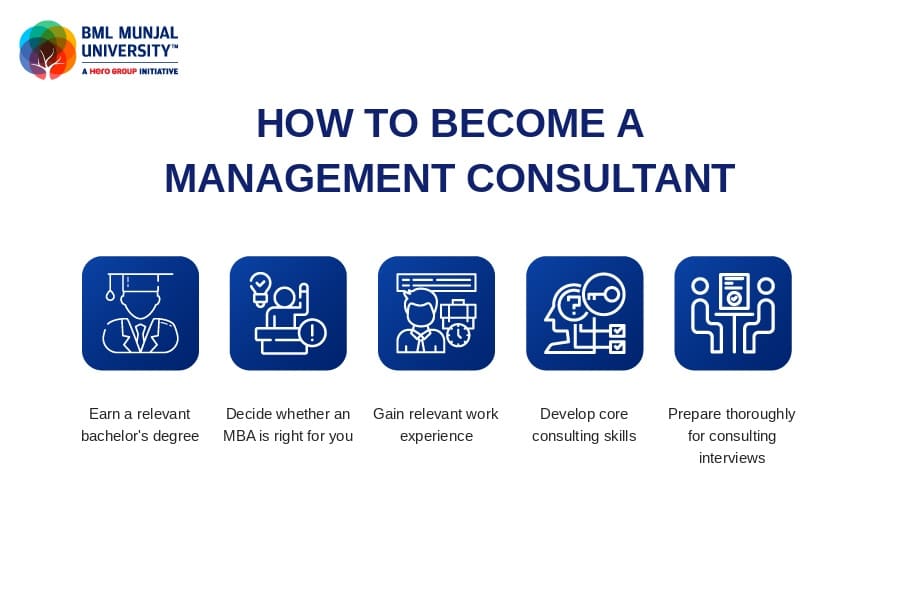
How to Become a Management Consultant in India: The Ultimate Career Guide
Key Takeaways A bachelor’s degree is the common starting point for a management consulting career. An MBA is valuable but not mandatory for ...
AI for Managers: Skills to Build, Tools to Master & Potential Risks
Key Takeaways AI supports managerial tasks like research, reporting, and decision-making, but managers retain judgment and accountability for out...

Leadership Development Programme for Senior Managers: Building Leaders for a Changing Business World
Key Takeaways Senior managers increasingly need to combine experience with AI, data and strategic thinking. Leadership development is shifting...