
Executive Education in India: A Complete Guide for Working Professionals


Summary: Executive education in India refers to short-duration, industry-aligned learning programmes built for working professionals who want to grow their leadership skills, switch career tracks or stay current in their field without pausing their job. Unlike full-time degrees, these programmes are flexible, outcome-driven and often shaped directly with industry input.
Key Takeaways
- Executive education is built for working professionals, not full-time students
- India's executive education market is growing faster than most major economies
- Programmes range from short open courses to full executive degrees
- The right format depends on your career goal, not just your job title or seniority
- BML Munjal University's Centre for Continuing Education offers formats across this entire spectrum
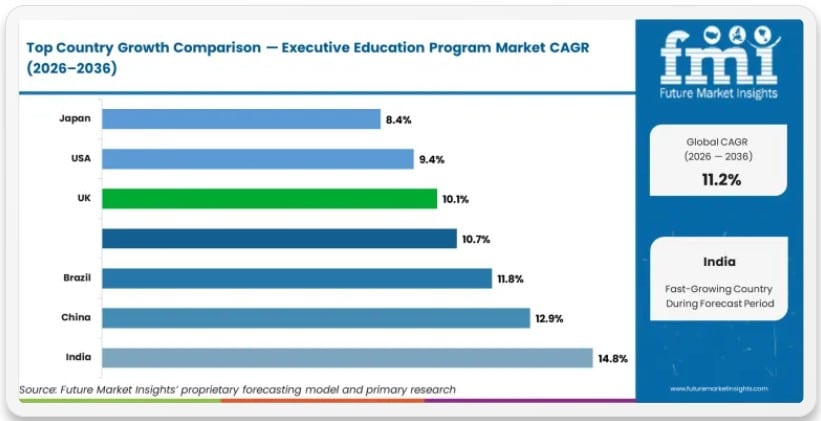
India's executive education segment is growing faster than almost anywhere else in the world. According to Future Market Insights, India is projected to grow at a 14.8% CAGR, placing it ahead of China and Brazil as the fastest-expanding major market for executive education globally. That growth isn't just visible at the institutional level.
According to Nexdigm's India Executive Education Market Outlook, Indian B-schools reported close to 25% growth in their executive education enrolments in a single year, driven largely by short-term certificate programmes. For a working professional, this raises a practical question. With so many formats and providers now competing for attention, how do you actually choose the one that fits your career?
What Is Executive Education?
Executive education refers to structured, short- to medium-duration learning programmes which are designed specifically for working professionals, managers and executives. These programmes are for those who want to build new skills or leadership capability without stepping away from full-time work.
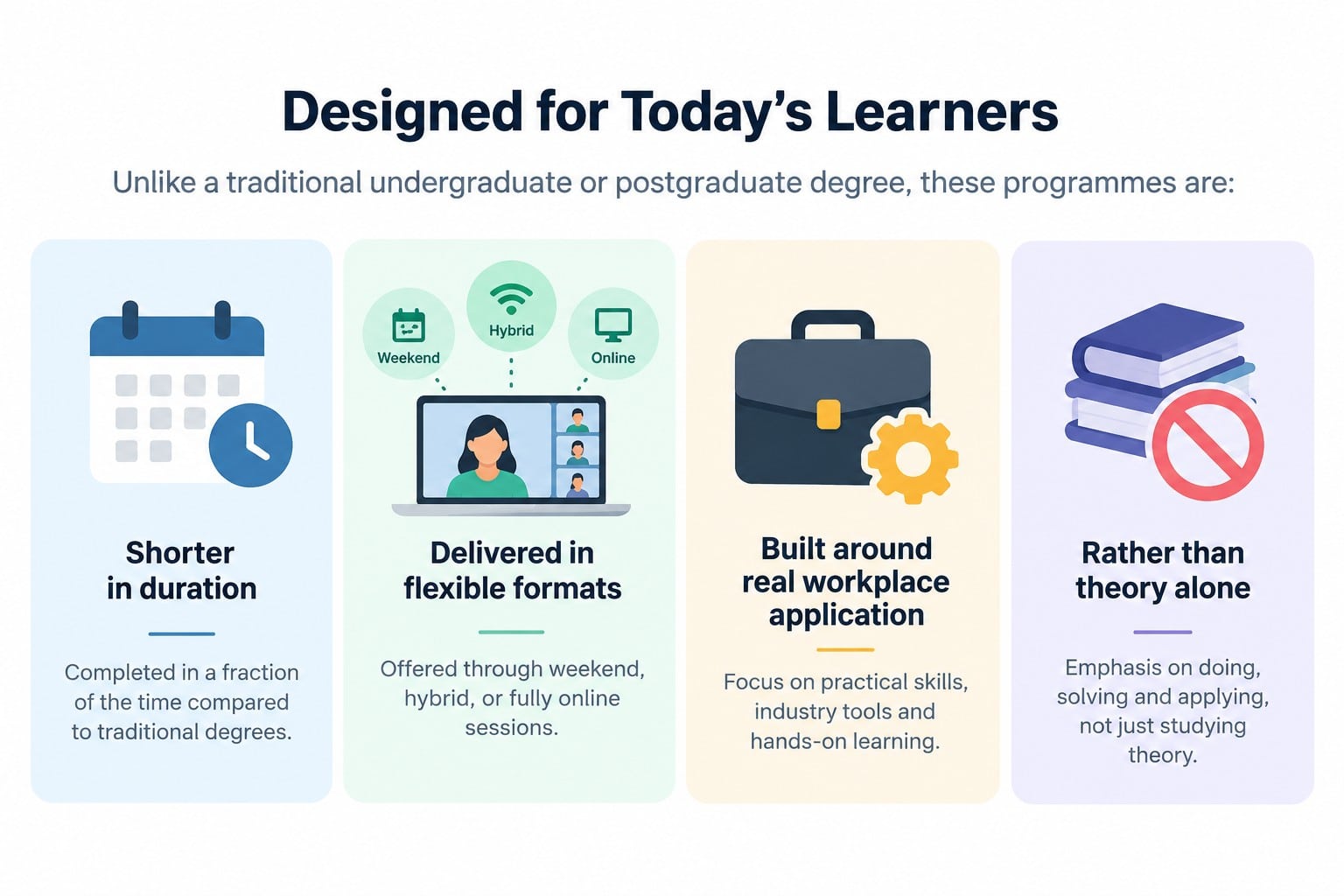
The goal is not to earn a general academic degree. Instead, it's about gaining specific skills, like a new technical ability, a leadership approach or a change in your job role. This learning should be easy to fit into a full-time job.
Why Are Working Professionals in India Choosing Executive Education?
Three forces are driving this shift in India-
- Skills are ageing faster than they used to, particularly around AI, data and digital tools, pushing professionals to treat learning as ongoing rather than a one-time milestone.
- Employers are increasingly sponsoring or recognising these programmes as part of internal growth paths.
- Flexible delivery formats mean professionals no longer have to choose between their career & their income to keep learning.
This shift shows up clearly in the data: according to Great Learning's Upskilling Trends Report, 85% of Indian professionals planned to invest in upskilling, with the intent especially strong among those with over 17 years of experience, showing that this isn't only an early career concern.
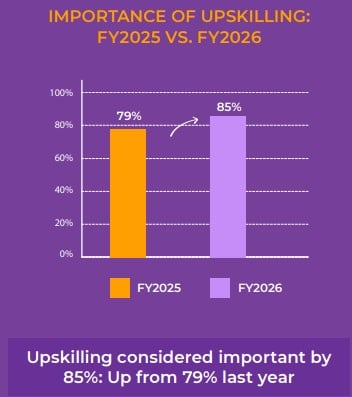
Image Source: Great Learning's Upskilling Trends Report 2025-26
For many professionals, the trigger isn't a single event. It's a slow realisation that their current skill set won't carry them to the next role and that waiting for a formal degree isn't practical while working full-time.
Who Should Consider an Executive Education Programme?
Executive education isn't one size fits all. Different career situations call for different formats and recognising which one you're in makes the rest of this decision much easier.
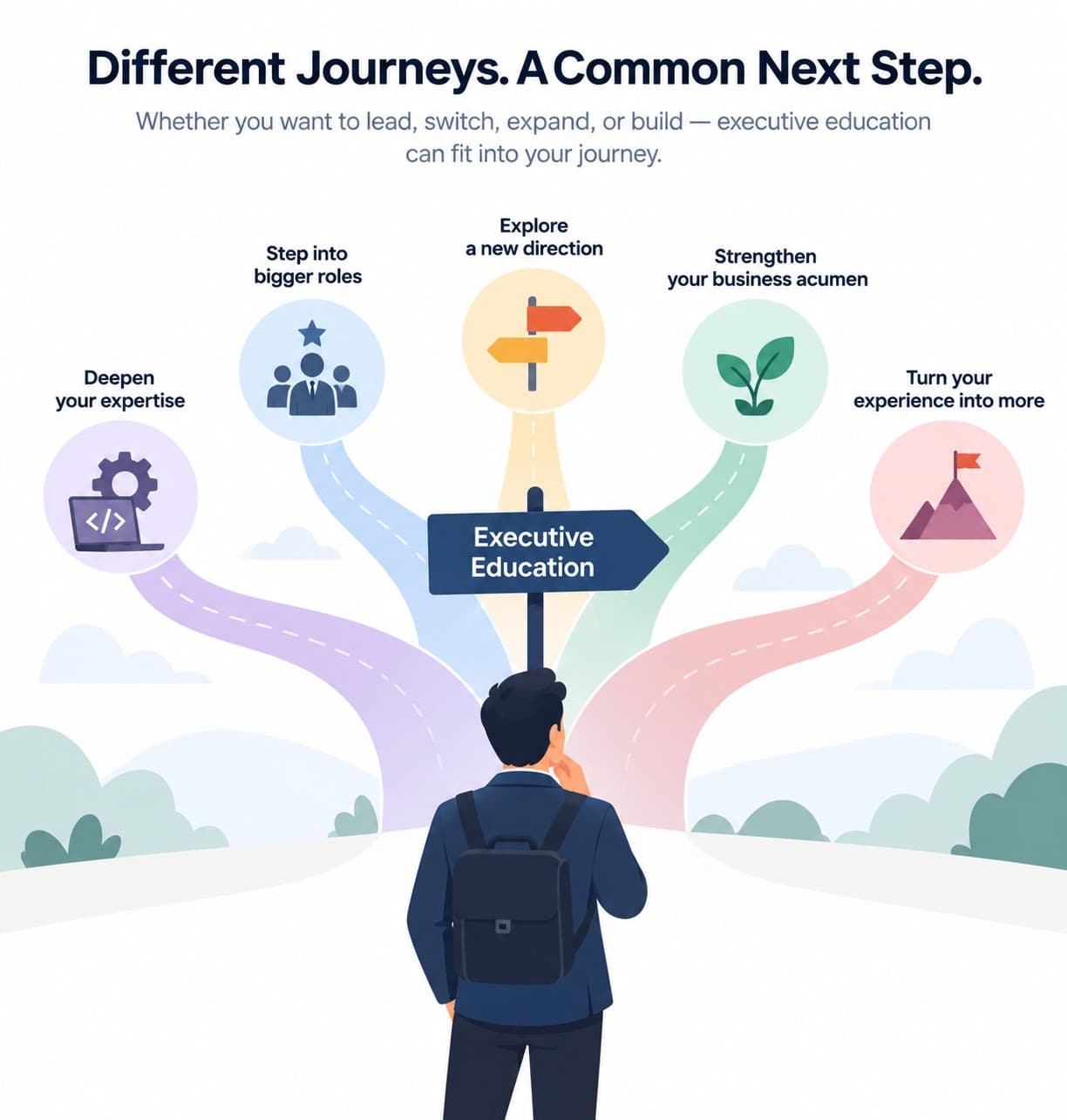
- Mid-level managers preparing to step into a leadership role and needing structured frameworks rather than on-the-job trial and error
- Technical professionals, such as engineers or analysts, who want to build business and management acumen alongside their core expertise
- Professionals aiming for a functional pivot, for example moving from operations into strategy or from a technical role into general management
- Entrepreneurs and founders who want to formalise skills they've picked up informally while running a business
- Senior professionals seeking a recognised credential, such as an executive degree, without pausing their career
What Are the Common Formats of Executive Education in India?
Executive education in India isn't a single category. It spans several formats, each suited to a different goal and time commitment.
| Format | Typical Duration | Best Suited For |
| Open/certificate programmes | A few weeks to a few months | Professionals who want a focused, specific skill quickly |
| Custom/corporate programmes | Varies, designed around the organisation | Companies upskilling teams around specific business needs |
| Executive degree programmes (e.g. Executive MBA) | One to two years | Senior professionals wanting a full academic credential |
| Industry partner programmes | A few weeks to a few months | Professionals in a specific sector, such as banking or insurance, needing role-specific training |
How Do You Choose the Right Executive Education Programme for You?
Before comparing programmes, it helps to answer a few questions honestly-
- How much time can you realistically commit each week without affecting your current job?
- Do you need a formal credential for your next role or is a specific skill enough?
- Will your employer sponsor or recognise this programme and does that change which formats make sense?
- Are you solving a personal skill gap or is your whole team or organisation facing the same gap?
- Would you prefer an open cohort with peers from different companies or a private, organisation-specific format?
Once you're clear on these answers, choosing between an open programme, a custom programme or a full executive degree becomes far more straightforward. This is exactly where a structured Centre for Continuing Education, one that offers multiple formats rather than just one, becomes useful.
Transform Your Career with Executive Education at BML Munjal University
BML Munjal University's Centre for Continuing Education (CCE) is built specifically around the questions above, offering programmes across every format working professionals typically need, rather than just one. CCE's approach rests on five pillars: industry-integrated learning, learner-centric design for working professionals, experiential and applied pedagogy, a collaborative ecosystem with industry partners and leadership development with purpose.
Its programmes are organised into four practical categories, each mapped to a different professional need:
- Open Programmes: Short, focused courses such as AI for Managers, designed for professionals who want a specific, high-demand skill without a long-term commitment.
- Custom Programmes: Organisation-specific offerings, including the Women-in-Leadership programme and the Global Partner Programme, built for teams or cohorts with a shared development goal.
- Industry Partner Programmes: Sector-specific training built with corporate partners, such as the Axis Bank Bharat Banking programme and the Niva Bupa Udaan programme for insurance professionals.
- Executive Degrees: Full academic credentials for professionals who want a recognised degree without pausing their career, including the Executive MBA and the B.Tech for Working Professionals.
If you already know AI is the skill gap holding you back, read our detailed guide on how managers can use AI to see how the AI for Managers programme addresses it.
Conclusion
Executive education in India has moved from a niche option to a mainstream part of how working professionals build their careers. However, the right choice still isn't about picking the most popular programme, but about matching the format to your actual goal. Whether that's a quick skill, a leadership shift or a full credential. Explore BMU's Centre for Continuing Education to find the programme that fits where you are in your career right now.
FAQs
Executive education in India refers to short- to medium-duration learning programmes designed for working professionals, covering formats from open certificate courses to full executive degrees, all built around flexible, job-compatible delivery.
A traditional MBA is typically a full-time, multi-year academic degree. Executive education programmes are usually shorter, more flexible and designed to run alongside a full-time job, though some, like an Executive MBA, still lead to a full degree.
Yes. Most executive education programmes are specifically designed for working professionals, using weekend, hybrid or online formats so participants don’t need to pause their careers.
This varies by format. Open and certificate programmes can run for a few weeks to a few months, while executive degree programmes typically take one to two years.
Recognition depends on the issuing institution and the programme’s industry relevance. Programmes co-designed with industry partners and delivered by established universities tend to carry stronger credibility with employers.
Open programmes are designed for individual professionals from different organisations to join a shared cohort. Custom programmes are built specifically for one organisation’s team, around that organisation’s specific needs.
Eligibility varies by programme, but most are designed for working professionals with some prior work experience, ranging from early career to senior leadership, depending on the specific programme’s focus.
Costs vary widely depending on the format, duration and institution, ranging from short affordable certificate courses to higher investment executive degree programmes. It’s best to check individual programme pages for current fee details.
Related Blogs
How Women Professionals Build Authentic Leadership – Step-by-Step Guide
Key Takeaways Authentic leadership means leading with consistent values and self-awareness, not adopting a borrowed style Women professionals ...
How to Become a Management Consultant in India: The Ultimate Career Guide
Key Takeaways A bachelor’s degree is the common starting point for a management consulting career. An MBA is valuable but not mandatory for ...
AI for Managers: Skills to Build, Tools to Master & Potential Risks
Key Takeaways AI supports managerial tasks like research, reporting, and decision-making, but managers retain judgment and accountability for out...

Leadership Development Programme for Senior Managers: Building Leaders for a Changing Business World
Key Takeaways Senior managers increasingly need to combine experience with AI, data and strategic thinking. Leadership development is shifting...

Executive MBA for Women: Why Is It the Right Move for Your Career?
Key Takeaways An EMBA is designed for professionals with 5+ years of experience who want to grow into leadership roles while continuing to work. ...