
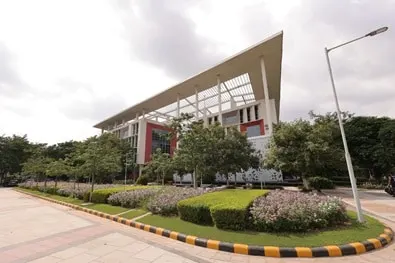
5-Year Integrated MBA After 12th 2026: Is the BBA+MBA in One Programme Worth It?


Admissions Enquiry

Just finished your class 12th? Also want to build a business career?
But looking at the familiar route makes things difficult- BBA for 3 years then MBA for 2 more. That's a total of 5 years, two separate admissions, two entrance exams as well as two big tuition bills.
Here is a way for you to choose- an Integrated MBA after 12th that takes the same 5 years. But after you apply once, you will pay one programme fee and walk out at 22-23 with a full MBA degree. This makes you two years ahead of the student who went the traditional route.
If your choice is clear about making a management career, this comparison matters the most. This guide covers everything you need to make an informed choice.
Integrated MBA vs Traditional MBA Path- The Core Comparison
This is the table most students need before they can make a rational decision. Read it against your own goals and timeline.
| Factor | Integrated MBA (5 Years) | Separate BBA + MBA |
| Total Duration | 5 years (fixed) | 5-6 years (often stretches) |
| Entrance Exams | Once- CUET / UGAT / SAT / IPMAT | Twice- CUET for UG + CAT/MAT/XAT for MBA |
| MBA Seat Guaranteed? | Yes - no separate competition | No - you compete again at PG level |
| Total Fees (approx.) | ₹15-22 lakh (one package) | ₹18-35 lakh (two separate programmes) |
| First Internship | Year 2 onward | Year 3-4 (after BBA) |
| MBA Entry Age | 22 years | 24-25 years |
| Career Head Start | 2 years earlier in the workforce | Standard timeline |
The bottom line- if you are certain about a management career, the integrated path is almost always the better financial and strategic decision. The only real argument for the traditional path is if you want to work for 2-3 years before an MBA and want that experience to factor into a top IIM or ISB application.
Can I Do an Integrated MBA After 12th?
Yes, you can pursue an integrated MBA course after completion of your class 12th. But it is also true that eligibility requirements vary slightly by institution.
Below is the general integrated MBA eligibility criteria for you-
- Passed Class 12 from a COBSE-affiliated board or a National / International Board recognised by AIU
- Minimum 60% aggregate in Class 12 (some institutions require 70-75%)
- Open to all streams- Science, Commerce and Humanities
- Entrance exam score accepted- CUET-UG, IPMAT (IIM Indore format), UGAT, SAT or NPAT
- Some universities provisionally admit students awaiting Class 12 results
Which Integrated MBA Programme Should You Choose in India?
BML Munjal University offers an Integrated BBA MBA programme, which is built on academic insights and frameworks that were developed in collaboration with Imperial College London. In India, it is one of the few integrated management courses that are designed in structured global exposure from Year 1.
Not only this, here are some key highlights of the programme-
- Early Exit Options- Undergraduate Certificate (Year 1), Diploma (Year 2), UG Degree (Year 3), PG Diploma (Year 4)
- Experiential Learning- 45% of the programme is project and lab-based
- First Internship- Students get real-world industry experience via internships integrated within the course structure
- Global Immersion- Partner universities include London School of Economics, University of Warwick, University of Leeds, UK and University of Salerno
- Hero Group Backing- Deep industry connect across manufacturing, mobility and services sectors for real recruiter relationships
Integrated BBA MBA Specialisations Offered
At BMU, students find their specialisation track in Year 4 (MBA phase). Below is the list of areas where students can choose dual specialisation-
- Marketing
- Human Resources
- Finance
- Family Business & Entrepreneurship
- Strategy
- Business Analytics
- International Business & Global Trade
- AI Applications in Business
Combining two specialisations - for instance, Finance + Business Analytics or Marketing + Strategy becomes a differentiator for students.
Integrated BBA MBA Semester-Wise Curriculum Overview
Here is how five years break down at BML Munjal University-
| Year | Phase | What You Study |
| Year 1 | BBA Foundation | Business Communication, Statistics, Managerial Accounting, Economics for Managers, Principles of Management, Business Law |
| Year 2 | BBA Core | Organisational Behaviour, Operations Management, International Business Management, Financial Management, Marketing Management - plus Summer Internship (Social Project) |
| Year 3 | BBA Advanced + UG Degree Exit | HRM, Strategy, Electives (Major & Minor), Capstone Simulation Project, Integrated Project - UG degree awarded |
| Year 4 | MBA Entry | Personal Journey for Excellence, Business Acumen I & II, Creativity & Innovation, Data Management & BI, Case Study Skills, Specialisation Electives (8-9 subjects) |
| Year 5 | MBA Final + PG Degree | Extended Internship (full semester), 3 MOOCs in chosen discipline, Leadership Project / Business Venture / Sankalp Social Entrepreneurship - MBA degree conferred |
BBA-MBA Integrated Course Fees
The total tuition for Indian students across 5 years is ₹21.55 lakh - roughly what a standalone 2-year MBA at a mid-tier private institution costs today. Here is the detailed fee structure of Integrated MBA after 12th at BML Munjal University-
| Year | Indian Students (₹) |
| 1st Year | ₹3,35,000 |
| 2nd Year | ₹3,35,000 |
| 3rd Year | ₹3,35,000 |
| 4th Year | ₹5,75,000 |
| 5th Year | ₹5,75,000 |
| Total | ₹21,55,000 |
Note- The above is tuition only. Hostel, mess and other fees are additional. Scholarship support of up to 100% is available for eligible students. You can check the BMU Scholarships page for current criteria.
Admission Process for Integrated MBA After 12th (2026)
The admission process at BMU for the Integrated BBA-MBA is as follows-
Step 1- Require 60% in Class 12 from a recognised board
Step 2- Submit the application form online at admissions.bmu.edu.in with required documents and application fee
Step 3- Appear for entrance exam (CUET-UG, UGAT, SAT or IPMAT as applicable) or merit-based assessment
Step 4- Shortlisted candidates attend a personal interview
Step 5- Receive provisional offer letter
What are the Career Opportunities After an Integrated MBA?
Integrated MBA graduates enter the job market at roughly 22-23 years of age with a full dual degree. Roles they compete for are the same as standalone MBA graduates and in many recruitment processes, they are evaluated identically.
| Job Role | Average Salary (India) |
| Management Consultant | ₹16-29 LPA |
| Investment Banker | ₹6-18 LPA |
| Financial Analyst | ₹3-8 LPA |
| Entrepreneur | ₹8-12 LPA (vary) |
| Sales Manager | ₹4-9 LPA |
| Marketing Manager | ₹8-18 LPA |
| Operations Manager | ₹6-14 LPA |
| Chief Executive Officer | ₹9-41 LPA |
*Salary estimates are based on publicly available data from Glassdoor.
BMU's placement ecosystem includes recruiters across consulting, FMCG, banking, e-commerce and technology. It includes Genpact, EY, Zomato, Hero MotoCorp, JLL, HDFC Bank, Accenture and TCS.
Students who choose the Entrepreneurship specialisation can access BMU's incubation centre (ACIC-BMU) and Innovation & Entrepreneurship Institute (I2E) during their programme, giving them infrastructure to build a venture before graduation.
Who Should Choose an Integrated MBA After 12th?
This programme is not for everyone. The table below helps you make an honest assessment before applying.
| Choose an Integrated MBA if you… | Choose a separate BBA → MBA if you… |
| Know you want a management career from Class 12 | Are unsure about long-term goal after 12th |
| Want to avoid a second round of entrance exams | Want flexibility to explore before committing to MBA |
| Want to enter the workforce 2 years earlier | Plan to work for a few years between UG and PG |
| Want a guaranteed MBA seat without CAT stress | Want to apply to IIM/ISB based on work experience |
| Want cost savings vs. two separate programmes | Prefer splitting the financial commitment over time |
The integrated MBA is the best fit for students who are decisive about business as a career, want to avoid the entrance exam cycle a second time and are willing to commit five years. The traditional path makes sense if you want flexibility, want to accumulate work experience before an MBA or are targeting an IIM/ISB where work experience adds significant value.
FAQs
Yes. BMU’s Integrated BBA-MBA is open to students from Science, Commerce and Humanities streams. There is no stream restriction.
No. In an integrated programme, the MBA is part of the same admission you completed after Class 12. There is no separate entrance exam for the MBA phase.
The minimum eligibility is 60% aggregate in Class 12 from a recognised board. Students awaiting results can apply provisionally.
CUET-UG, IPMAT (IIM Indore), UGAT and SAT are the most commonly accepted exams. Merit-based admission is also available.
Related Blogs
Management Entrance Exams in India: Which One Is Right for You?
Key Takeaways There is no single best management entrance exam for every MBA aspirant. Compare CAT, XAT, CMAT, NMAT, GMAT, SNAP, MAT and ATMA ...
Is Work-Life Balance Really Possible During an Executive MBA in India?
Key Takeaways India has the highest employee burnout rate globally, with 59% of Indian professionals reporting burnout symptoms against a 20% w...
MBA Without CAT in India: Top Colleges, Entrance Exams & Direct Admission 2026
Can you do an MBA without CAT in India? The answer is yes and it is more common than most students realise. CAT was designed as an entry filter for...
The Benefits of an Integrated BBA MBA: Career Growth & How It Compares to Traditional MBA
Integrated BBA MBA programmes are becoming increasingly popular among students who want to start building management careers right after Class 12. Wha...

MBA in Operations Syllabus: Semester-Wise Curriculum, Key Subjects & Practical Components
An MBA in Operations is one of the most sought-after management specialisations for students interested in business processes, supply chain systems, l...

MBA for Working Professionals: Transform Your Functional Expertise into Business Leadership
You have spent years building expertise, managing people and delivering results. But somewhere between your current role and the one you actually want...